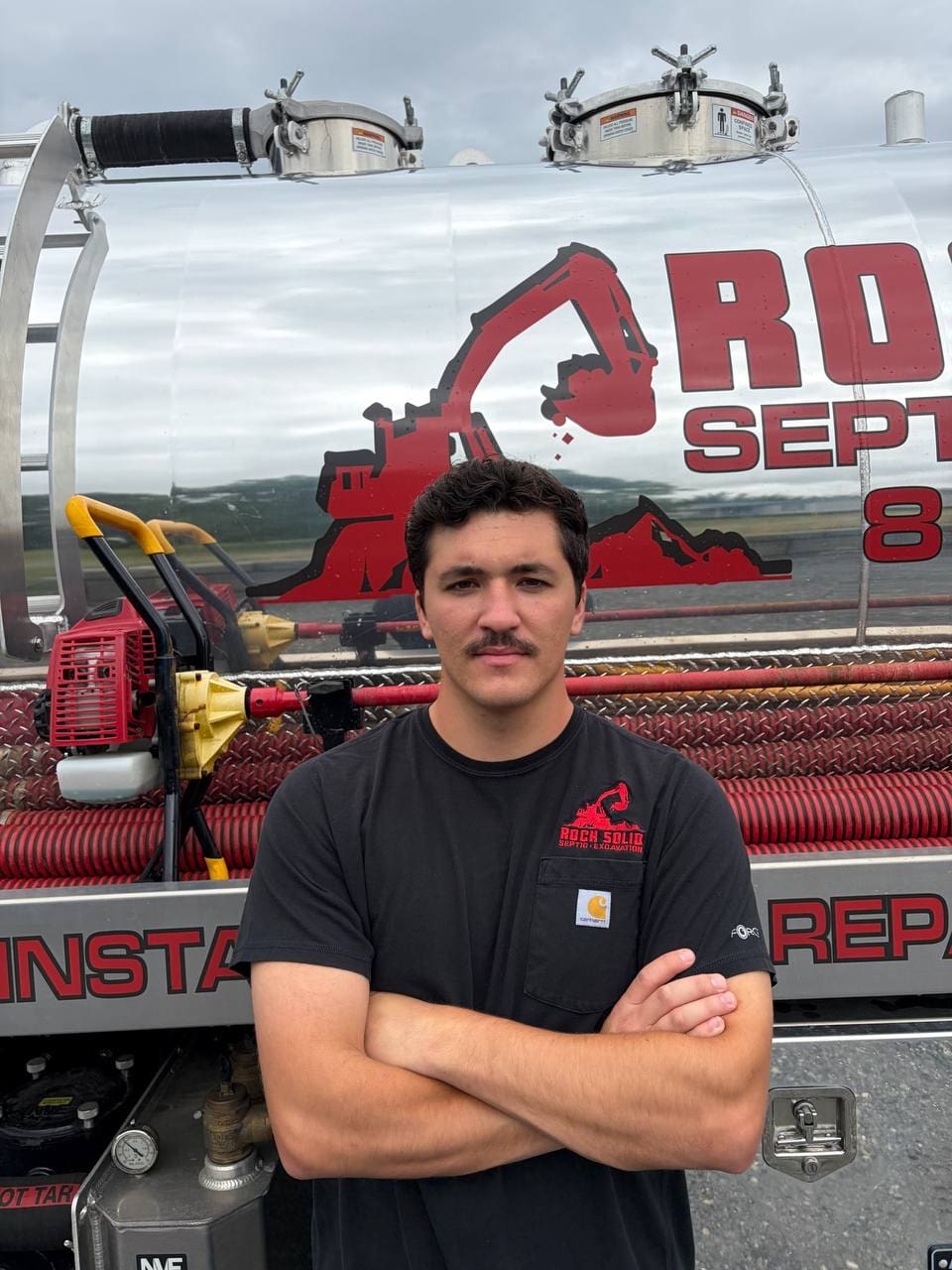
John is a contractor and the owner of Rock Solid Septic ~ Excavation. Most of his time is spent in the field, not behind a desk: digging, fixing, figuring things out when something doesn’t go the way it was supposed to.
He got into this line of work after seeing too many situations where people paid for a job once… and then had to deal with it again a year later. Sometimes sooner. A lot of it came down to shortcuts or just not doing things right the first time.
So when he started his own company, the idea wasn’t complicated: just do solid work, be upfront with people, and don’t leave problems behind.
A big part of what he’s learned comes from working underground, literally. Septic systems, excavation, drainage… that’s where a lot of real problems start. And even though that work isn’t visible once everything is finished, it affects everything that comes after it.
Including things like foundations, flooring, even countertops. If something below isn’t right, it shows up later. It always does.
His approach is pretty simple:
Do it like it’s your own place.
That means taking a little more time when needed, not rushing through steps, and leaving a job site the way you’d want someone to leave yours. Clean, done right, no guessing.
He works with homeowners, builders, and other contractors, so he sees both sides: what’s planned on paper, and what actually happens once the work starts. And those two don’t always match.
Most of what he shares comes from that gap. The stuff you don’t really learn until you’re out there dealing with it.
No theory. Just what actually works.