A sewer backup tells you something is wrong, but it does not tell you whether ten feet of pipe needs repair or the entire line needs replacement. That distinction matters because I do not want a homeowner paying to replace a good pipe just because one section failed, and I also do not want to keep patching a line that has deteriorated in several places.
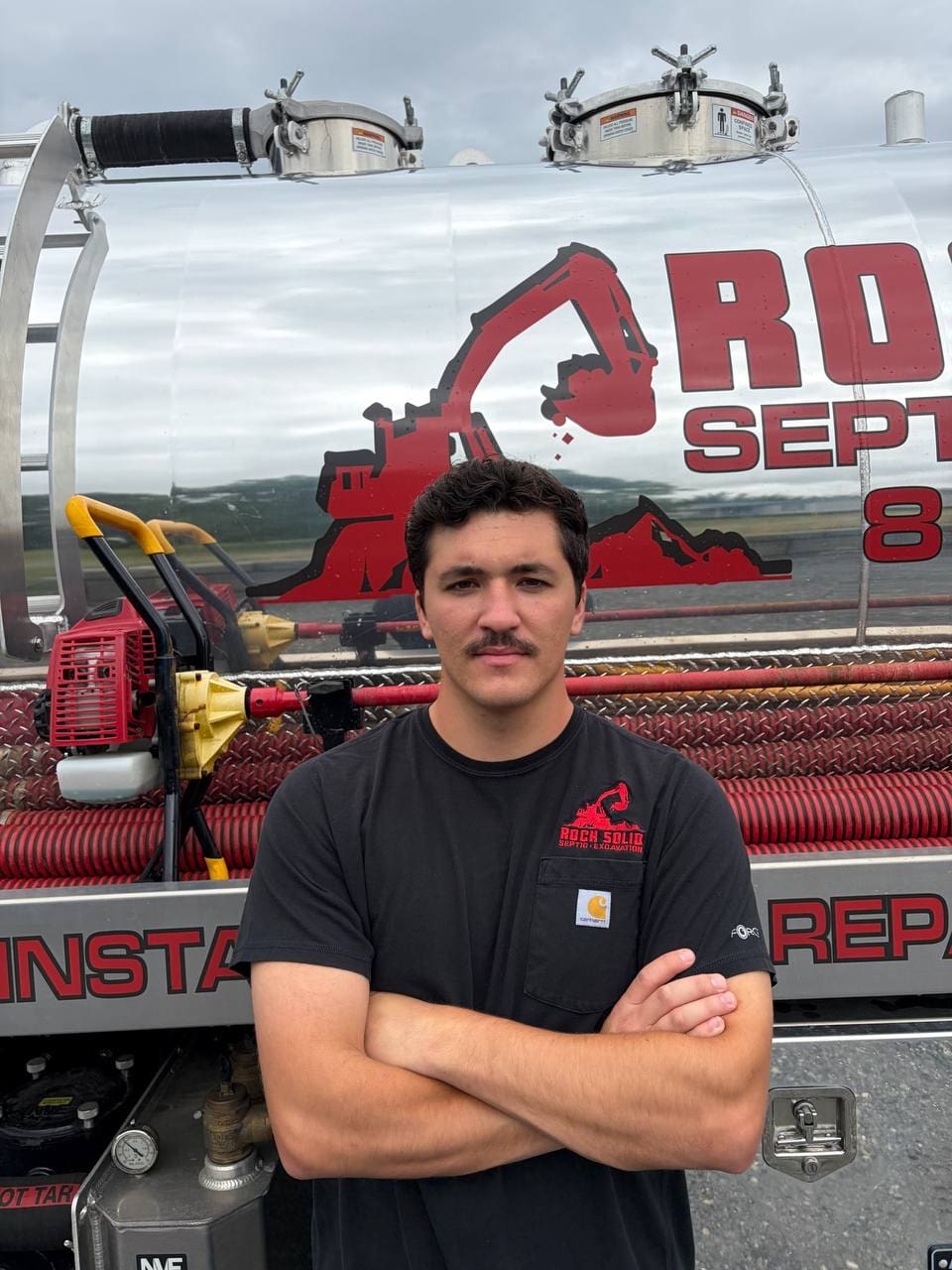
I’m John (Ivan) Rusev, Co-Owner and Operations Manager at Rock Solid Septic & Excavation. We work on sewer lines throughout Spartanburg, Greenville, Cherokee, Anderson, and Pickens Counties, and most of the problems we see can be handled with a localized repair. Full replacement becomes more reasonable when the pipe has collapsed, deteriorated extensively, or developed multiple failures that make another isolated repair a short-term solution.
Several Slow Fixtures Usually Point Beyond a Simple Drain Clog
One slow sink is usually a local plumbing problem. When several fixtures start draining slowly at the same time, a toilet or tub overflows after another fixture is used, sewer odor appears inside or outside, or the ground over the line stays wet without recent rain, I start thinking about the main line.
Recurring clogs are another clue. Cleaning can remove grease, buildup, and some root intrusion, but it cannot repair a cracked joint, collapsed section, or damaged pipe. If the blockage keeps coming back, we need to find out why rather than keep clearing the same symptom. A sewer camera can often show roots, damaged joints, obstructions, or other problems inside an accessible line. Sometimes the footage gives us enough information to define the repair, while other failures need to be exposed before we can confirm what happened.
The diagnosis also changes if the property uses septic. Slow fixtures and backups can come from the tank or drainfield rather than the sewer line itself, so we may begin by pumping the tank and looking at what the system does afterward. On a municipal sewer property, we also need to confirm whether the problem is in the homeowner’s private service line or farther downstream in the public system before anybody authorizes excavation.
One Damaged Section Does Not Mean the Whole Line Is Bad
A localized repair makes sense when the problem has a clear boundary and the pipe on both sides remains serviceable. A cracked section, damaged joint, or isolated area of root intrusion may require excavation and replacement of only that portion.
Tree roots are common in older Upstate sewer lines. A root can enter through a joint or small opening and grow inside until wastewater flow is restricted. Cutting the root may restore flow, but that does not automatically repair the opening that allowed it inside. If the joint or pipe is damaged, that section still needs attention or the root problem may return.
Pipe material matters too. Older cast iron and clay can crack, settle, or develop bellies over time, while Orangeburg fiber pipe can deform and collapse. PVC and HDPE generally have tighter joints, which makes root intrusion more difficult. I still would not replace an entire line because of its age or material alone. I want to see its actual condition and determine whether the damage is isolated or spread through a larger section.
We explain that decision process in more detail in our full guide to sewer line repair versus replacement, including camera inspections, excavation, pipe materials, costs, and warning signs.
Replacement Makes More Sense When Repair Becomes a Series of Patches
Full replacement becomes more practical when a line has collapsed, deteriorated through a substantial length, or developed several problem areas that cannot be repaired reliably one at a time.
Most sewer problems I encounter do not immediately reach that point. If the pipe is relatively modern and one section has failed, I would rather repair what is actually damaged. The economics change when the remaining line is in poor condition too. Repeated excavation and repair of individual sections can eventually cost more than replacing a line that is clearly reaching the end of its useful service.
Rock Solid uses traditional excavation rather than trenchless rehabilitation. That does not mean we automatically excavate the entire route. If the problem is concentrated in one section, we expose that section, remove or repair the damaged components, reconnect the line, and verify flow before closing the excavation. If deterioration extends through a much larger portion, then the excavation and replacement scope grows with it.
Homeowners sometimes ask about pipe lining or pipe bursting because those methods can reduce continuous trench excavation in certain situations. We do not currently offer trenchless sewer repair, so somebody specifically pursuing those options would need a contractor who specializes in them.
Depth and Access Can Matter as Much as the Length of the Repair
There is no useful flat price for sewer line work because ten feet of pipe in an open lawn is a very different excavation from ten feet several feet deep beneath a driveway.
For a sagging section of sewer line, often called a pipe belly, jobs I have discussed at Rock Solid can fall around $1,500 to $5,000. I would use that only as a planning reference. The actual price depends on how deep the pipe is, how much of it is affected, and what we have to disturb to reach it.
Location is one of the biggest variables. A shallow section in an open yard is relatively straightforward to expose. A line beneath concrete, landscaping, or another finished area requires more work both to reach and to restore afterward. Depth affects excavation and safety, while the length of damaged pipe determines how much material and labor the repair needs.
The written estimate should also explain restoration. Backfilling the trench is one thing. Restoring grading, lawn, pavement, or another finished surface can add a different scope. I want homeowners comparing what each contractor proposes to do rather than comparing two bottom-line numbers that may include different work.
The Camera Is Evidence, Not an Automatic Answer
Camera footage is extremely useful because it can show the inside of a pipe without immediately excavating it, but I do not treat the camera as a replacement for judgment.I want to know whether the footage shows one damaged joint or deterioration extending farther down the line. I look at what the surrounding pipe looks like, what kind of material we are dealing with, and whether the visible problem explains the homeowner’s symptoms. There are also cases where excavation reveals something that could not be understood completely from inside the pipe. That is why I would be cautious about anybody recommending a complete replacement before establishing how much of the line has actually failed. I would also be cautious about a contractor who repeatedly clears a blockage without asking why the same line keeps clogging.
The goal is not to choose repair because it sounds cheaper or replacement because it sounds more permanent. The goal is to match the amount of work to the amount of damaged pipe.
Excavation Should Start Only After the Underground Utilities Are Addressed
Before excavation, South Carolina requires a locate request through SC811. As of May 22, 2026, notice generally must be submitted 3 to 12 full working days before digging, excluding the day the request is made. The ticket responses should be reviewed before excavation starts. Homeowners should also understand what an 811 locate does not cover. Utility operators mark facilities they own or maintain. Private sewer, septic, irrigation, and other privately owned lines may still require separate locating.
I also recommend asking for the camera footage, the proposed scope in writing, and the warranty terms before signing. If the work involves licensed plumbing, verify which license covers the job instead of assuming the company name alone answers that question.
Homeowners dealing with recurring backups, suspected sewer damage, or a line that may need excavation can see more of our sewer and septic work at Rock Solid Septic & Excavation.
John Rusev Explains When a Sewer Line Is Still Worth Repairing
The Stone Magazine (TSM): John, do most sewer line problems you see require full replacement?
John (Ivan) Rusev (JR): No. Most of them are repairs. If we have one damaged section and the rest of the pipe looks good, I would rather repair that section than replace a good line.
TSM: What makes you start considering full replacement?
JR: When the pipe is deteriorated through a larger area, collapsed, or damaged in several places. At some point, continuing to patch sections stops making sense.
TSM: Can the age of the pipe tell you which option is right?
JR: Not by itself. Older materials can have more problems, but I still want to see the actual condition. An old line can have one repairable section, and a newer line can still be damaged.
TSM: What can a sewer camera tell you?
JR: It can show blockages, roots, damaged joints, and other problems inside the line. It helps us figure out where the damage is and whether the surrounding pipe looks good.
TSM: Does clearing tree roots fix the line?
JR: Not necessarily. If the root entered through a broken joint or cracked pipe, cutting the root removes the blockage, but the opening is still there. You have to address the reason it got inside.
TSM: What is a pipe belly?
JR: It is a sagging section where the pipe has lost proper grade. Wastewater and solids can collect there instead of flowing through normally.
TSM: How much can that kind of repair cost?
JR: Around $1,500 to $5,000 is a range I have discussed for those jobs, but depth, access, and how much pipe is involved can change it a lot. I would not quote a property from that number alone.
TSM: Why does access make such a difference?
JR: A pipe under an open yard is easier to expose than one under a driveway or another finished surface. You have the excavation itself, and then you have whatever needs to be restored afterward.
TSM: Do you offer trenchless repair?
JR: No. We use traditional excavation. If somebody specifically wants lining or pipe bursting, they would need a contractor who specializes in those methods.
TSM: What should homeowners ask before agreeing to replace an entire sewer line?
JR: Ask what shows that the whole line is bad. I want to see where the damage is, how much pipe is affected, and what condition the rest of the line is in before we decide how much needs to come out.