South Carolina Department of Environmental Services (SCDES) took over the onsite wastewater program from the former South Carolina Department of Health and Environmental Control (DHEC) on July 1, 2024. Older permits and records may still identify DHEC as the state health department responsible for septic regulation. A Permit to Construct must be obtained before work starts. The applicant may be the developer, homeowner, septic installer, or soil classifier. The system cannot be used until SCDES issues the Approval to Operate. For a new home that is not served by public or community sewer, the county cannot issue the building permit until the septic permit is in place.
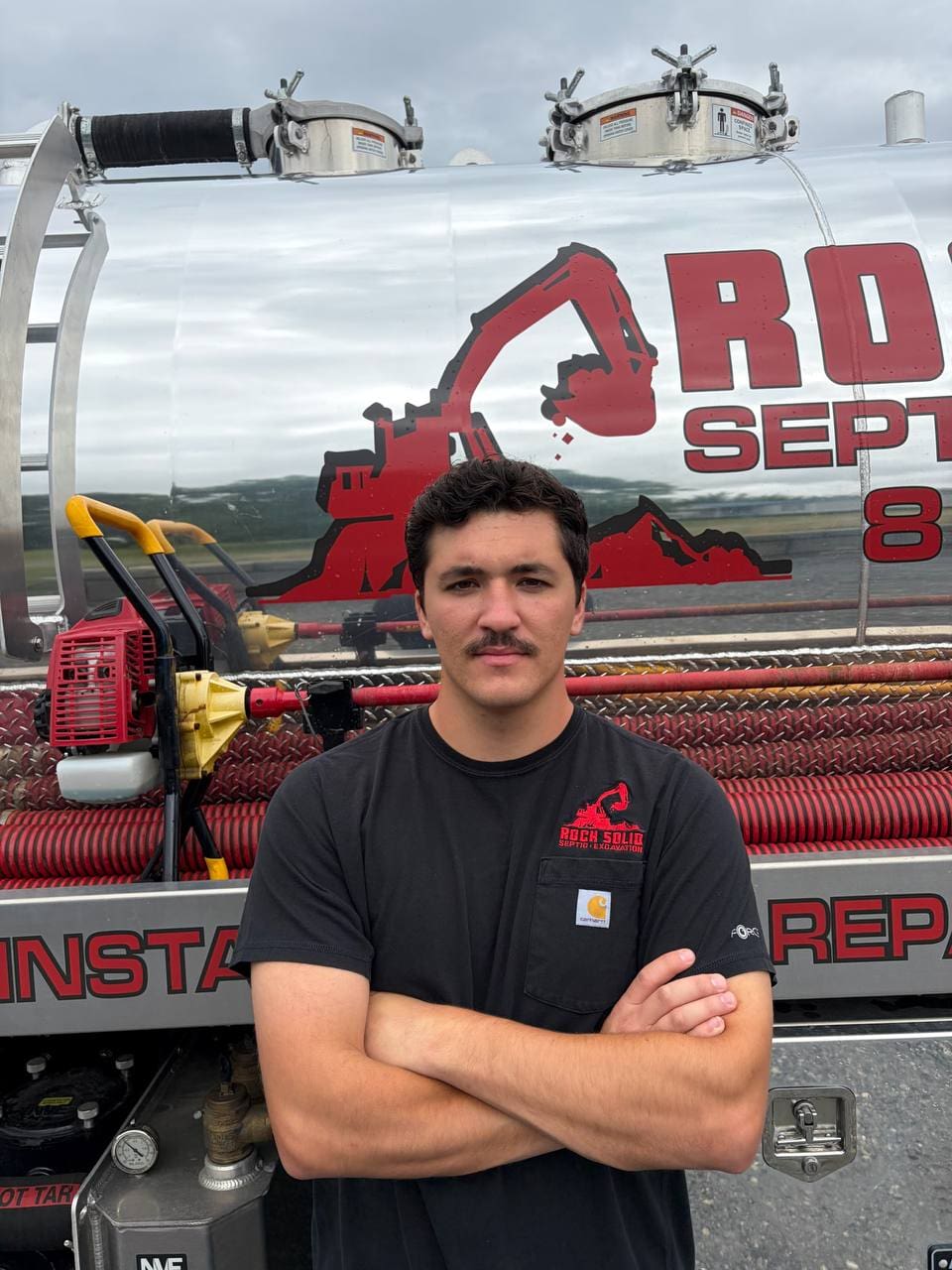
I’m John Rusev, co-owner of Rock Solid Septic ~ Excavation. Most property owners do not deal with this process often. Our job is to help them understand what SCDES approved, what has to be prepared before installation, and which licensed installer tier the permitted system requires.
This guide explains the current permit process, the $150 state site-evaluation fee, final inspection requirements, and South Carolina’s three installer license tiers. Regulations and procedures can change, so applicants should confirm current requirements through the SCDES residential septic permitting page before starting a project.
Quick Takeaways:
- South Carolina requires a Permit to Construct before installing a new septic system that requires SCDES approval. The system cannot be placed into service until SCDES issues the Approval to Operate
- The state site-evaluation fee is $150, and a septic permit remains valid for five years
- Septic applications reached 17,336 in 2023-2024, up 132% from 2010-2011
- New installers must score at least 80% on the SCDES exam, while Tier 3 is required for specialized systems
What Is a Septic System?
A septic system is an onsite wastewater treatment system used by homes without access to a public sewer. It collects household wastewater and treats it on the property before returning the liquid to the soil.
A conventional system includes a septic tank and an underground drainfield. Wastewater enters the tank, where heavy solids settle at the bottom. Lighter waste rises to the surface, while liquid effluent remains between these layers.
Anaerobic bacteria break down part of the solid waste inside the tank. The liquid then flows through underground pipes into the drainfield. Soil and natural microorganisms continue treating the sewage effluent as it moves through the ground. Sunlight warms the surface and supports evaporation. Open soil also lets oxygen reach the bacteria that break down the remaining waste below.
The drainfield needs unsaturated, uncompacted soil so oxygen can support wastewater treatment below the surface.Buildings or parked vehicles can compact the ground and damage underground pipes. Roof drainage and other surface water should also stay away from this area because excess water can overload the soil.
A failing septic system may allow inadequately treated wastewater to reach the yard or nearby water sources. Regular inspections and timely pumping help protect the system and reduce the risk of expensive repairs.
Common Septic System Categories in South Carolina
The property owner does not choose a septic design from a general product list. SCDES or the qualified professional preparing the layout determines which system standard fits the soil, seasonal saturation, slope, wastewater flow, and available space.
Conventional Gravity Systems
A conventional residential system moves effluent from the tank to the drainfield by gravity. Tier 1 installers may install gravity-fed residential systems when the design shown on the permit falls within their license scope.
Shallow and Fill-Cap Systems
Regulation 61-56 includes several standards that adjust trench depth or add suitable fill above the natural soil. These systems may be considered when the site does not meet the conditions for a standard conventional layout but still qualifies under an established SCDES standard.
Systems With Pumps or Mounded Components
Some approved layouts require a pump, elevated infiltration area, mound, curtain drain, or other additional component. These systems fall within the scope of a Tier 2 or Tier 3 installer rather than a Tier 1 installer.
Standard 610 Specialized Systems
A property that cannot qualify under a conventional or established alternative standard may be evaluated for a Standard 610 specialized system. Only a South Carolina Registered Professional Engineer may prepare that design, and a Tier 3 installer is required to install it.
The Permit to Construct identifies the approved system and installation requirements. A contractor cannot move major components or substitute another design without SCDES approval.
When I review an installation, I want to see the permit before we price the work or put equipment on the property. It tells us which system was approved, where the components are supposed to go, and which installer license tier the project requires. Two quotes are not really comparable when one contractor is pricing the approved layout and another is quietly leaving part of it out.
Our Moore drainfield relocation project shows why the layout matters even after a system has been installed. Rock Solid originally installed the septic system in 2023. When a later homeowner planned a pool, the existing drainfield occupied the only practical pool area. The replacement layout had to account for the lot, existing structures, required spacing, and the future pool before excavation began. Before comparing septic installation quotes, make sure every contractor has reviewed and priced the same approved design.
Why South Carolina Law Requires a Septic Permit
South Carolina requires a septic permit to ensure that wastewater is treated safely on properties without access to a public sewer. An improperly designed system can release harmful organisms into the soil, contaminate groundwater or private well water, and damage nearby waterways and local water quality.
The permit process confirms that the property can support a septic system. A site evaluation examines the soil and slope. It also considers groundwater conditions and the amount of available land. These factors determine whether the site can support a septic system and what drainfield design is required. Tank capacity is based mainly on the number of bedrooms or the permitted wastewater flow in gallons per day (GPD).
The approved permit shows where the tank and drainfield must be installed. It also identifies an area that should remain available for future repairs. The installer must follow this design rather than choosing the system location during construction.
A final inspection must take place before the system is covered. SCDES normally performs the inspection. A Professional Engineer must inspect a system they designed, while an eligible installer may complete a self-inspection under Regulation 61-56.
This process reduces the risk of system failure and protects public health. It also helps prevent expensive corrections caused by installing the wrong system for the property.
The South Carolina Septic Permit Process
South Carolina requires approval from the SCDES before a new septic system can be installed. The process confirms that the property can support the system and that the final installation follows the approved design.
1. Check Sewer Availability
Contact the local sewer authority before applying for a septic permit. A property may need to connect to a public or community sewer system when service is available. You can continue with the septic permit process when no sewer connection is available.
2. Prepare the Property
Complete the required site preparation before the SCDES site evaluation. The application may be submitted before the property is fully prepared. Clear enough vegetation for the inspector to access the proposed system area. Mark the planned building location and the preferred septic system area. Proper preparation can prevent delays or additional fees.
Properties above South Carolina’s Fall Line require backhoe pits for the site evaluation. SCDES may also require them below the Fall Line when soil conditions need further investigation.
3. Submit the Application
Complete the Onsite Wastewater System Application, Form D-1740, through the SCDES ePermitting Portal. A copy of the property plat or deed must be submitted with the application.
SCDES may request additional information based on the property and proposed system. The state application fee is $150 as of July 2026.
4. Complete the Site Evaluation
Under the traditional permitting process, an SCDES inspector evaluates the site. When a privately prepared soil report is submitted, SCDES reviews the professional’s findings and proposed layout. The inspector also considers groundwater conditions and the amount of available space. These findings determine whether the site is suitable and what type of septic system can be installed. The evaluation also establishes the system location and the area that must remain available for future repairs.
5. Receive the Permit to Construct
SCDES issues a Permit to Construct when the site is approved. The permit includes the required system design and installation location. A South Carolina Permit to Construct is valid for five years. If the site is not approved, the inspector may explain alternative system options or additional professional evaluations that could be considered.
6. Hire a Licensed Installer
Choose a South Carolina-licensed septic installer who is qualified for the system type listed on the permit. The installer must follow the approved layout and cannot move major components without authorization.
7. Schedule the Final Inspection
The installer must contact SCDES before covering the system. An inspector checks that the tank and drainfield match the permit requirements.
If the scheduled SCDES inspector has not arrived after the full 30-minute waiting period, a Tier 3 installer may complete a self-inspection. A Tier 1 or Tier 2 installer may do so only when specifically directed by SCDES. SCDES must review and accept the submitted form before issuing the Approval to Operate.
Property owners can contact SCDES Onsite Wastewater Customer Support at 1-855-731-2504 or OSWWCentral@des.sc.gov for application questions and permit guidance.
When a property owner calls Rock Solid about a permitted installation, I ask them to send us the Permit to Construct before we schedule the work. That allows us to confirm the system standard, approved location, access requirements, and equipment the crew will need. We do not want to arrive at the property and discover that the quote was based on a different design from the one SCDES approved.
Our septic system installation service covers excavation and installation of the approved system. We also coordinate the permit requirements and final inspection process. The permit still controls the work. Our role is to build the approved system correctly and explain the process clearly to the property owner.
Required Documents and Site Preparation
A standard single-home application begins with two documents:
- The Onsite Wastewater System Application, Form D-1740, submitted through the SCDES ePermitting Portal
- A copy of the property plat or deed showing the legal property and its boundaries
Additional documents depend on the project. Submit a private soil report and proposed layout when a Professional Soil Classifier or Registered Professional Engineer has already evaluated the property. Engineered, commercial, large, community, or specialized systems may require separate professional plans and supporting documents.
The property must also be ready for the site visit. Mark the proposed building and septic area and provide access for the evaluator. Properties above the South Carolina Fall Line require properly prepared backhoe pits when SCDES performs the soil evaluation.
The current state application fee is $150. SCDES reviews the submission for completeness and sends a correction request through ePermitting when information is missing.
Applicants can use the SCDES ePermitting Portal to submit Form D-1740, upload supporting documents, respond to correction requests, and access issued permit documents. Check the account regularly until the Permit to Construct is issued.
Site Evaluation and Soil Evaluation
Everything starts with the ground. Soil and drainage conditions vary across South Carolina, from the Piedmont region that includes much of Upstate South Carolina to the Coastal Plain and lower coastal areas. An applicant for a permit to construct must pay the site evaluation fee at the time the application is submitted, and Section 102.2 sets that fee at exactly $150 to evaluate the site of a proposed onsite wastewater system. That number comes from the regulation itself, not from a contractor's estimate, and it is identical statewide.
The soil evaluation is separate work with its own requirements. Under Section 102.1, soil evaluations may only be conducted by a certified Department staff member, a licensed Professional Soil Classifier or other licensed person qualified to practice soil classifying, or a Registered Professional Engineer licensed in South Carolina. SCDES has also opened a program allowing qualified contractors to conduct a soil evaluation for permit issuance, with the contracting rate capped at no more than three times the Department's permitting fee per site.
SCDES will not perform the soil evaluation or prepare the system layout for a subdivision, or part of a subdivision, with ten or more lots without access to all available utilities. The soil evaluation must be completed by a qualified licensed professional, and the layout must be prepared by an eligible Professional Soil Classifier or Registered Professional Engineer.
Only a South Carolina Registered Professional Engineer may design Standard 610/611 specialized systems, Standard 150 large or community systems, nonwater-carried systems, wastewater combustion systems, or gray water subsurface reuse systems.
Soil Evaluation: What the Evaluator Is Looking For

A soil evaluation determines whether the property can safely support a septic system. The evaluator studies how wastewater is likely to move through the ground and whether the soil can provide enough treatment before the water reaches groundwater.
Soil Texture and Structure
The evaluator identifies the amount of sand, silt, and clay in the soil. Sandy soil usually drains faster, while clay-rich soil may hold water and slow absorption. The way the soil forms into layers is also important. Dense or compacted layers can restrict wastewater movement even when the upper soil appears suitable.
Seasonal Groundwater and Limiting Layers
The evaluator looks for signs that the soil becomes saturated during part of the year. Soil color changes and mottling can indicate a seasonal high water table. Shallow bedrock or another restrictive layer may also limit the depth available for treatment. These conditions can prevent the use of a conventional system or require a different design.
Property Slope and Drainage
The slope affects how wastewater moves below the surface. It also controls where rainwater collects and enters the soil. A steep or poorly drained area may require pressure distribution or another engineered solution. The evaluator also looks for low areas where water may remain after heavy rain.
Space and Required Setbacks
The property must have enough suitable land for the septic tank and drainfield. The evaluator also considers the required distance from the house and property boundaries. Wells and nearby water sources can further limit the installation area.
South Carolina permits normally identify a separate area that should remain available for future drainfield repairs. A lot may fail even with acceptable soil when there is not enough space to meet these requirements.
Final Site Determination
The evaluation helps determine whether the property is suitable for a conventional septic system. A site with limiting conditions may require a mound system or another alternative design.
A Professional Soil Classifier may be needed when SCDES determines that the lot cannot support a conventional system. Property owners may also hire a licensed classifier before applying and submit the soil report with the permit application.
Septic Installer License Requirements in South Carolina
Septic system installers who install or repair septic systems generally must be licensed by SCDES. The installer’s tier must cover the system shown on the Permit to Construct.
|
License Tier
|
Systems the Installer May Handle
|
Continuing Education
|
Additional Requirements
|
|
Tier 1
|
Gravity-fed and fill-cap residential systems
|
8 hours every 2 years
|
May self-inspect systems they installed when directed by SCDES
|
|
Tier 2
|
All Tier 1 systems, plus systems with pumps, grease traps, curtain drains, elevated infiltration areas, mounded systems, and all commercial systems
|
12 hours every 2 years
|
May self-inspect systems they installed when directed by SCDES
|
|
Tier 3
|
All Tier 1 and Tier 2 systems, plus Standard 610 specialized systems
|
18 hours every 2 years
|
Must maintain bond and insurance coverage and may self-inspect installed systems
|
New applicants must pass an SCDES examination based on Regulation 61-56 with a score of at least 80%. Installer licenses renew annually. Current annual fees (2026) are $100 for Tier 1, $100 for Tier 2, and $200 for Tier 3.
Self-inspection does not allow a contractor to cover and use a system without documentation. The installer must follow the SCDES inspection procedure and submit the current final inspection form. The system cannot be used until SCDES issues the Approval to Operate.
How to Get a Septic Installer License
The path to becoming a licensed onsite wastewater system installer starts with an exam based on Regulation 61-56. Contact a local SCDES office to arrange the in-person test. Applicants must score at least 80% before submitting the license application through the SCDES ePermitting system.
As of July 2026, the application and annual renewal fee is $100 for Tier 1 or Tier 2 and $200 for Tier 3. Contractors who clean onsite wastewater systems and haul septage need a separate SCDES pumping and hauling license.
Tier 3 applicants must also document the required experience. They must have actively installed septic systems in South Carolina for the previous three years without applicable enforcement or disciplinary action, or document five years of qualifying out-of-state experience. Tier 3 applicants must also provide proof of bond and insurance coverage.
Continuing Education and How to Renew Your License
Section 701 governs renewal, and it is stricter than most trade licenses. All installers must complete the required continuing education units every two years from the date of licensing to renew their licenses, and CEUs must come from the Department-approved list of courses and providers. The Department will not renew a license for any installer who failed to meet the training requirement for the previous period.
The hour requirements scale by tier at 8, 12, and 18 hours respectively. Onsite wastewater professionals who overshoot get a small break, since as many as three hours above the requirement can roll over into the next licensing period.
Bonding and Insurance for Tier 3
Section 703 adds a financial layer for the top tier only. Proof of both insurance and bond coverage must be furnished to the Department before licensure as a Tier 3 installer and again upon renewal, and the installer must maintain both for as long as the license is held. Failure to maintain either results in suspension or revocation of the Tier 3 license.
The distinction matters for property owners. A surety bond guarantees the installer's performance to the public, and the surety company that pays a claim then seeks reimbursement from the installer. The bond is not the same thing as liability insurance, which is why the regulation requires both.
When a Property Owner Can Work Without a License
South Carolina allows a property owner to construct or repair an onsite wastewater system without an installer license when the work is for personal use at the owner’s own residence. This exemption does not allow the owner to perform septic work for other people or operate as a septic contractor. The license exemption does not remove the permit requirement. The owner must obtain an SCDES Permit to Construct before starting the work and must follow the approved location, system design, and installation conditions. The system must remain uncovered until the required inspection has been completed. It cannot be used until SCDES issues the final Approval to Operate.
Counties and municipalities may enforce additional contractor or construction requirements. Property owners should confirm local rules before deciding to complete septic work themselves. Complex systems generally require careful planning, and installation by a licensed contractor with the appropriate SCDES tier is usually the safer option.
Working With Rock Solid in Upstate South Carolina
I’m John Rusev, co-owner and operations manager of Rock Solid Septic ~ Excavation. I handle most customer calls, estimates, scheduling, and coordination between the property owner and our crews. Before we quote a permitted installation or repair, I want to understand what SCDES approved and what the property will require in the field.
Alex Rusev holds our South Carolina Tier 3 installer license, OSWWI0667. I hold our pumping and hauling license, OSWWP0109. You can read what those credentials cover in our guide to septic licensing in South Carolina.
The permits and license numbers matter, but the completed work matters too. In Moore, our team relocated a working drainfield to make room for a pool while preserving the use of the property. In Inman, an emergency pump-out revealed a larger system problem, and the team completed the full repair the next morning.
Rock Solid provides septic system installation, septic repairs, inspections, and pumping across Spartanburg, Greenville, Cherokee, Pickens, and Anderson counties.
Our service area includes Spartanburg, Boiling Springs, Inman, Chesnee, Clifton, Duncan, Cowpens, Pacolet, Reidville, Campobello, Lyman, Wellford, Landrum, Woodruff, Enoree, Gaffney, Greenville, Greer, Taylors, Mauldin, Simpsonville, Travelers Rest, Fountain Inn, Central, Pickens, Anderson, and Iva. The complete coverage area is listed in our five-county septic service guide.
Call (864) 431-2822 to discuss your property and approved design. Estimates are free, and new customers who book online can receive 10% off their first service.
FAQ
Q: What is the process for getting a septic permit in South Carolina?
A: Permitting runs through SCDES, which took over the onsite wastewater program from DHEC on July 1, 2024 without changing the standards. You submit the D-1740 application through the ePermitting Portal with a copy of the plat or deed, pay the fee, and wait for a site evaluation. Before that visit, the lot has to be prepared: boundary corners cleared and marked, an identification marker posted at the front center, building corners staked, and the proposed tank, drainfield, and well locations marked. If the soils pass, SCDES issues a Permit to Construct, and your licensed installer builds to it. A final inspection has to happen before backfill, and the approval to operate comes after the paperwork is reviewed. Your county will not issue a building permit until the septic permit exists, so this is the first call on a new build, not the last.
Q: How much does a septic permit cost in South Carolina?
A: The state application fee is $150 as of July 2026. It covers the SCDES site evaluation and permit process for a standard application.
Additional professional costs may apply when the standard permitting path does not fit the property. A professional soil classifier working through the SCDES referral program may charge no more than three times the Department’s permitting fee, or up to $450 per site based on the July 2026 fee. A registered professional engineer is also required when the property needs an engineered or specialized system design.
Permit modifications that require another site evaluation may require a new application and another state fee.
Q: What are South Carolina's septic system requirements, including soil evaluation and lot size?
A: There is no single statewide minimum lot size that guarantees septic approval. The property must contain enough suitable area for the approved system, required setbacks, and the repair or replacement area. The actual space depends on soil, wastewater flow, number of bedrooms, wells, surface water, buildings, property lines, and the system standard. That reserve has to equal at least 50 percent of the original system, sit on suitable soil, and stay clear of pavement, buildings, and easements. On soils, evaluators read texture, depth to restrictive horizons, and depth to the zone of saturation.
Setbacks decide more projects than soil does. The system has to stay 75 feet from a private well, 100 feet from a public well, 75 feet from the critical area line or mean high water, 25 feet from a drainage ditch or detention pond, and 5 feet from any property line or building. Add a pool, a basement, or a curtain drain and the usable envelope shrinks fast.
Q: How long is a South Carolina septic permit valid, and can it be expedited?
A: Five years from issuance, as long as the property has not physically changed and the original permit conditions can still be met. After that, renewing or changing it means a new application and a new fee.
SCDES launched a Permitting Dashboard in early 2026 and states a general agency goal of issuing permit decisions within 90 days after receiving a complete application. That is not a guaranteed septic permit turnaround time, and weather, incomplete documents, site conditions, or requests for additional information can extend the process.
A privately hired professional soil classifier may reduce the time required for the site evaluation. A complete application and properly prepared property also help prevent avoidable delays.
A Tier 3 installer may perform a self-inspection only after scheduling a final inspection with SCDES and waiting the required 30 minutes. Tier 1 and Tier 2 installers may also self-inspect when directed by the Department.
Q: Can I install my own septic system in South Carolina, or do I need a licensed installer?
A: Regulation 61-56 allows a person to construct or repair an onsite wastewater system for personal use at that person’s residence without obtaining an installer license. This is a narrow license exemption, not a permit exemption. The regulation does not give homeowners the same self-inspection authority as licensed installers. The property owner must obtain the Permit to Construct, follow the approved design, leave the system uncovered for inspection, and wait for the Approval to Operate.
Anyone considering the exemption for a rental, spec home, business-owned property, or another nonstandard ownership arrangement should confirm eligibility directly with SCDES before beginning work.
Q: How do I find existing septic records in South Carolina?
A: For a home built within the last 20 years, contact SCDES and ask whether a septic permit is available. Provide the tax map number, physical address, lot and block number, approximate installation date, original permit holder, and subdivision name when available.
If the home is older than 20 years or SCDES cannot locate the permit, the agency recommends contacting a licensed septic contractor to identify the system on the property. A formal SCDES public-records request must be submitted in writing and should describe the requested records as specifically as possible.
Q: Do I need a new permit to repair or modify an existing septic system in South Carolina?
A: Contact SCDES before relocating or replacing the system or one of its components. The agency determines whether the proposed work requires a new Permit to Construct. A permit is also required when a change to the property, such as adding a bedroom, increases the expected wastewater flow.
Pumping does not require a construction permit, but pumping alone may expose a problem that does. In our Inman emergency pumping and repair case, the initial pump-out showed that the backup was caused by a larger system issue. Alex Rusev returned the following morning and completed the required repair rather than leaving the homeowner with temporary relief.
When public sewer is accessible, SCDES may require the property to connect instead of approving repair or replacement of a failing septic system. In that situation, compare the proposed septic work with a complete septic-to-sewer conversion, including the tap, private lateral, excavation, and tank abandonment.