


What Is Inside a Septic Tank? Everything You Need to Know
I'm Art Nikolin, Operations Manager at Septic Solutions. Before managing the company, I was in the trenches with my brothers, installing pipes and tanks. Today, we work across Snohomish, King, Skagit, Island, and Whatcom counties, including Arlington, Everett, Seattle, Mount Vernon, Oak Harbor, Bellingham, and the surrounding communities. When someone asks what's actually inside their septic tank, I know the answer like the back of my hand.
For most homeowners, a septic system is out of sight and out of mind until it causes problems. Still, knowing what's in a septic tank and how a typical septic system works can help you catch problems before they turn into an expensive repair. This is the first article in a short series on septic systems, and we're starting with what happens once wastewater reaches the tank.
Quick Takeaways:
- In Washington, residential septic tank sizing is based on bedroom count, but 1,000 gallons is the minimum tank capacity even for homes with fewer bedrooms
- Inside the tank, solids settle while grease and other lighter material rise to the surface. Effluent remains between those layers before moving downstream
- Routine pumping keeps sludge and scum from taking up too much tank capacity and reaching the drainfield
How a Septic System Works
A septic system treats wastewater on the property instead of sending it to a municipal sewer. More than one in five U.S. households rely on an individual septic system or a small community system. Wastewater from the house flows through the main drain line into the septic tank.
Once it reaches the tank, heavier solids settle to the bottom and form sludge. Oils, grease, and other lighter material rise and form the scum layer. The liquid between them is the effluent that eventually leaves the tank and moves to the next part of the system.
What Is Inside a Septic Tank?
Here are the key components of a septic tank you'll find in a conventional setup:
|
Component |
What It Does |
|
Inlet pipe |
Conveys the wastewater from the residence to the container |
|
Inlet baffle |
Directs incoming wastewater downward and helps keep the scum layer from moving back into the inlet pipe |
|
Scum layer |
Floating fats, oils, grease, and other lightweight material that collects at the surface |
|
Effluent |
Liquid wastewater that flows out toward the drainfield |
|
Sludge layer |
The layer of solids present at the bottom of the container |
|
Outlet baffle |
Helps prevent the scum layer from entering the outlet pipe |
|
Effluent filter |
Installed in the outlet baffle and helps keep suspended solids in the effluent from moving farther into the septic system |
|
Outlet pipe |
Carries effluent out of the tank and farther into the septic system |
|
Access riser |
Extends the tank opening to or near ground level so the tank can be inspected and pumped without excavating the lid each time |
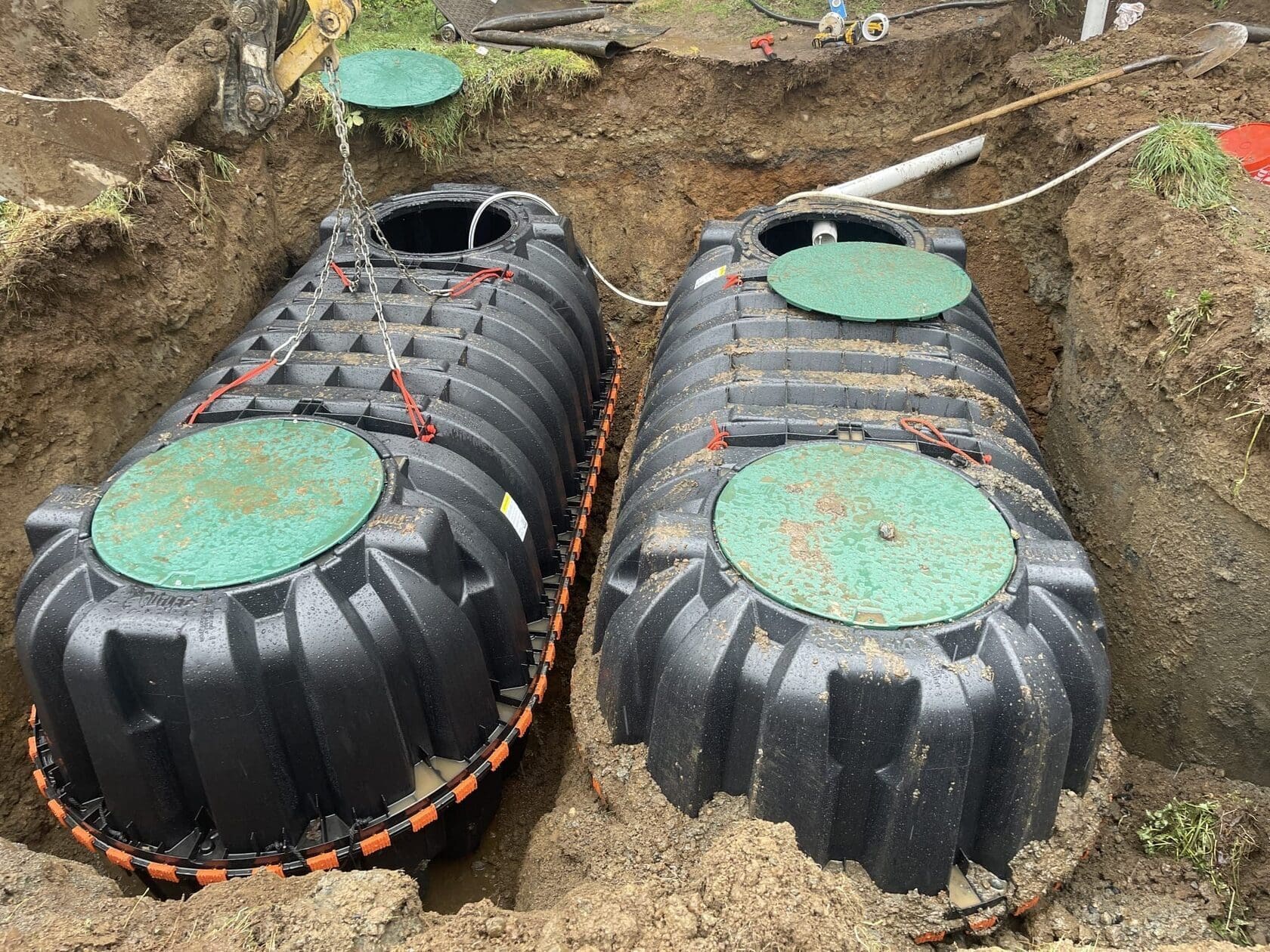
Septic tanks in Washington may be made from concrete, fiberglass, or polyethylene. Older properties may still have steel tanks, but steel is no longer allowed for new sewage tanks under current Washington rules because of corrosion concerns. Lighter fiberglass and polyethylene tanks also have to be installed with groundwater and buoyancy in mind so they remain stable when the surrounding soil is saturated.
What Happens in the Drainfield
Once effluent leaves the tank, it moves to the drainfield, where the soil provides the next stage of treatment. A conventional system may use perforated pipe in gravel trenches, while other systems use chambers or different methods of distributing effluent into the soil.
As the wastewater moves through unsaturated soil, naturally occurring microorganisms continue the treatment process. The soil also filters out much of what remains before the water eventually reaches groundwater. A properly designed and maintained drainfield can last for decades, but too much water or solids reaching the field can shorten its life.
Septic Tank Size and Bacteria
For homes in Washington, tank sizing starts with bedroom count. As of August 2026, a single-family home with up to four bedrooms requires at least 1,000 gallons of liquid capacity. Each additional bedroom adds another 250 gallons to the minimum. The approved design can call for a larger tank when the property or system requires it.
The bacteria in the tank are doing more than breaking down sludge. Anaerobic bacteria help break down material in both the sludge and scum layers, which is why what you put down the drain matters. Heavy grease use can affect conditions inside the tank as it breaks down, while tougher toilet paper may break down more slowly and keep solids from settling as efficiently. When that balance gets disrupted, the scum layer can build up faster than it should. Large or frequent doses of harsh drain cleaners, bleach, and antibacterial products can also interfere with the bacteria doing that work.
Septic System Maintenance
Keeping your septic system running well isn't rocket science, but it does require some consistency:
- Tank pumping every 3 to 5 years is a common starting point, but the actual schedule depends on the tank and solids buildup.
- Keep records of every inspection and pumping, since missing service history can make future septic work more difficult.
- Spread laundry loads throughout the week to avoid overloading the tank and drainfield with too much water at once.
- Don't plant trees near the tank or drainfield, because roots find pipes.
Alternative Septic System Designs
A conventional gravity system does not work on every property. Depending on the soil and site conditions, an approved design may use a mound, aerobic treatment unit, sand filter, or another type of onsite system. These designs can solve problems that a conventional system cannot, although they may require additional equipment or more maintenance.
A Granite Falls Tank That Hadn't Been Pumped in 12 Years
We once handled a septic tank overflow in Granite Falls after the tank had gone 12 years without pumping. Our crew arrived at 8 AM the next morning and got the system working again during that visit. That's much longer than I would ever recommend waiting. Once a tank is overflowing, we're no longer talking about routine maintenance. The system is already telling you something has gone wrong. Read the full Granite Falls case study.
Talk to a Professional Septic Tank Team
Our septic tank pumping and septic system inspection services are a good place to start if you don't know when your tank was last serviced or what condition it's in. We can open the system, see what's going on, and explain what actually needs attention. You don't have to wait for sewage to back up into the house before calling us.
FAQ
How often should I pump my septic tank?
For many homes, pumping every three to five years is a reasonable starting point. The actual interval depends on your tank, household use, and how quickly sludge and scum accumulate.
What is a septic tank made of?
Most residential septic tanks are made of concrete, although fiberglass and plastic tanks are also used in newer installations.
Can I connect to a municipal sewer instead of using a septic system?
Only if your property has access to a municipal sewer line and the local utility allows a connection. Many rural properties in our service area rely on onsite treatment systems because public sewer service is not available.
What happens if I never pump my septic tank?
Sludge and scum keep taking up space inside the tank. If too much builds up, solids can leave the tank and reach the septic drain field, also called a leach field, where they may clog the soil or distribution system. In a failing system, wastewater can eventually back up into the home or surface outside.
How do I know my septic tank size?
Start with the septic records for the property, which may list the tank size and original system design. If the records are incomplete, a septic professional can inspect the tank and help identify its capacity.
Is it normal to smell septic odors in my yard?
A persistent septic smell around the tank or elsewhere in the yard is worth checking. The source could be as simple as a poorly sealed lid, but it can also point to a problem elsewhere in the system.