

Heavy Rain, Saturated Soil, and Why Remodelers Should Care About Septic Systems
When remodelers think about moisture risk, they usually think about roofing, flashing, grading, or vapor barriers.
Rarely does anyone think about the septic system.
But in regions like South Carolina, especially across Spartanburg and the Upstate, heavy rain events and rapid soil saturation can turn a hidden wastewater system into a serious liability for finished interiors.
And when septic systems struggle, the damage doesn’t stay underground.
It shows up in kitchens, bathrooms, cabinetry, flooring and sometimes, in brand-new remodels.
Rain in the Upstate Isn’t Gentle
South Carolina doesn’t typically experience slow, soaking rain over weeks. Storms often arrive fast and heavy. In short bursts, soil can go from stable to saturated.
When that happens, drain fields, which depend on unsaturated soil to properly absorb and treat wastewater, lose their ability to function efficiently.
As John, CEO of Rock Solid Septic ~ Excavation, explains: “In the Upstate, rain doesn’t come gradually. It comes all at once. The ground fills up fast. If a system is already marginal, that’s when homeowners start seeing problems.”
Those problems rarely start as dramatic failures. Instead, systems begin to strain:
- Slower drainage
- Gurgling toilets
- Temporary backups
- Standing water near the yard
But when a home is mid-renovation or recently remodeled, even temporary stress can create real interior damage.
Why Remodelers Should Pay Attention
Most remodelers focus on visible infrastructure: framing, plumbing lines, appliance loads, finish materials.
But septic capacity is rarely evaluated before adding:
- Larger kitchens
- Double dishwashers
- Pot fillers
- Expanded household occupancy
- In-law suites
When water usage increases, tank loading increases. During dry seasons, that added demand might not show obvious consequences.
During heavy rain, it’s a different story.
“Soil saturation changes everything,” John says. “A system that seems fine during dry weather can struggle when groundwater rises. The drain field just can’t absorb water the same way.”
If wastewater can’t disperse properly, it backs up and that backup often surfaces in the lowest fixtures first.
Which, in many homes, is the kitchen sink.
The Remodeler’s Worst-Case Scenario
Imagine this:
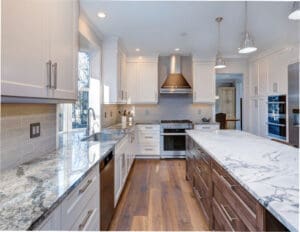
A homeowner invests $30,000–$60,000 in a kitchen remodel. New cabinets. Quartz countertops. Custom flooring. Upgraded plumbing fixtures.
Two months later, after a series of heavy storms, the sink gurgles. Then it drains slowly. Then sewage backs up through the floor drain.
It’s not just a plumbing issue anymore.
It’s:
- Cabinet toe-kick damage
- Swollen MDF or plywood boxes
- Warped hardwood or LVP
- Insurance claims
- Disputes over responsibility
“People think septic problems are random,” John explains.
“But most failures are gradual. They build over time. Rain just exposes the weakness.”
For remodelers and builders, that matters. Because even if the septic system wasn’t part of the renovation contract, interior damage often becomes a shared headache.
Soil Saturation and Foundation Moisture
There’s another layer to this that contractors sometimes overlook.
When septic drain fields struggle during heavy rain, excess moisture can accumulate near the home’s footprint. Saturated soil doesn’t just affect wastewater dispersal. It also affects:
- Slab moisture levels
- Crawlspace humidity
- Foundation stability
- Exterior grading performance
If wastewater rises to the surface or moves laterally instead of downward, it increases hydrostatic pressure in surrounding soils.
Over time, that moisture migration can contribute to interior humidity issues: something countertop installers and cabinet builders are very familiar with.
High moisture environments can:
- Cause wood expansion
- Affect seam integrity
- Compromise adhesive bonds
- Increase mold risk
And once moisture is inside the building envelope, surface materials are often the first visible casualty.
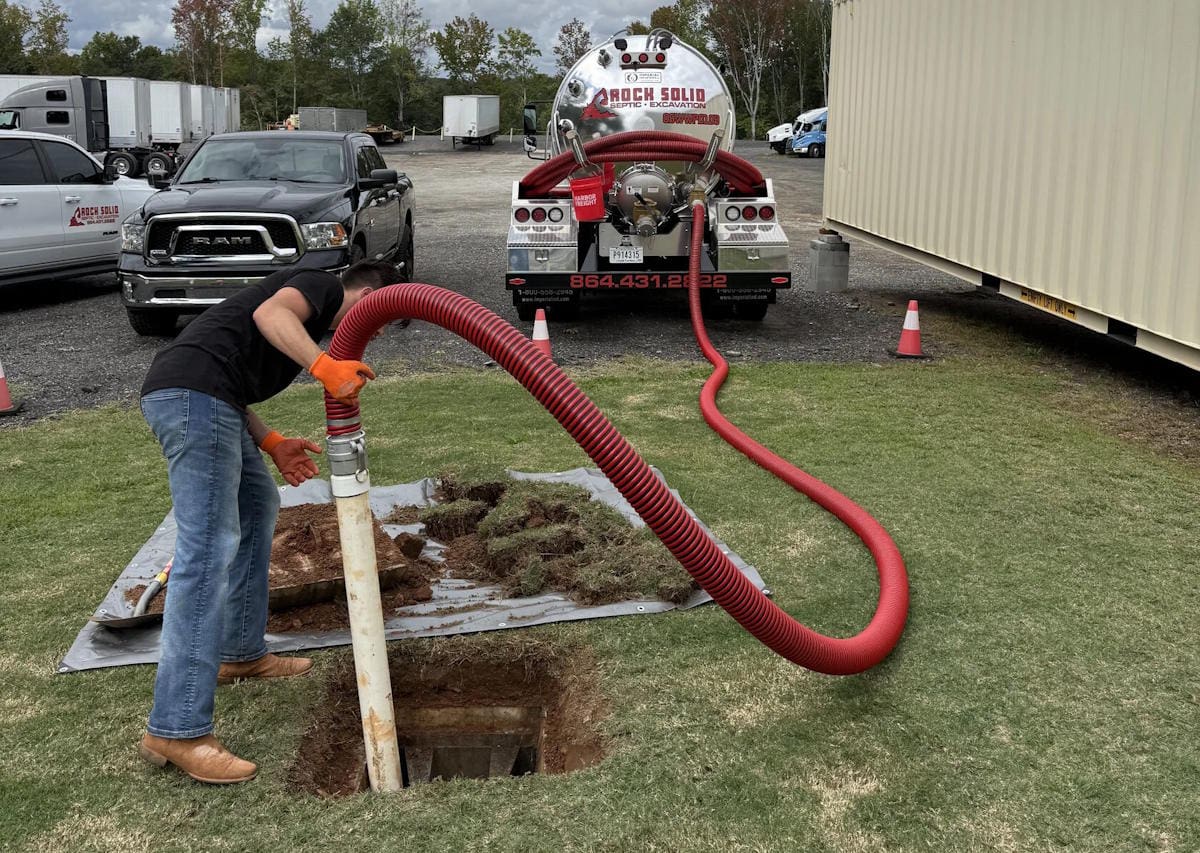
Septic Pumping Isn’t Just Maintenance. It’s Risk Management
One of the biggest misconceptions homeowners have is that pumping follows a fixed calendar schedule.
National guidelines say every 3–5 years. But that assumes average occupancy and average usage.
“In reality,” John notes, “the number of people in the house matters more than the calendar. Someone with 10 people in the home shouldn’t be on the same schedule as someone with four.”
When remodels increase occupancy or water demand, pumping frequency often needs adjustment.
And during prolonged wet seasons, systems that are overdue for service are far more likely to show stress.
From a cost perspective, routine pumping ( often a few hundred dollars) is minor compared to interior repair costs when backups occur.
For insurance-conscious homeowners, that’s an important distinction.
Why This Matters for Builders and Remodelers
No one expects a countertop contractor to inspect septic tanks.
But asking one simple question before major plumbing upgrades can prevent significant downstream problems:
“When was the system last evaluated?”
In high-rain regions like South Carolina, especially where soil types vary and storms can saturate ground quickly, septic capacity becomes part of overall risk management.
Heavy rain doesn’t create septic problems out of nowhere. It exposes systems that are already operating at their limits.
And when wastewater has nowhere to go, it eventually finds the path of least resistance.
Too often, that path leads back inside.
Infrastructure Beneath the Finish
Remodeling focuses on surfaces such as stone, wood, cabinetry, layout. But beneath every upgrade is infrastructure that must support it.
Septic systems operate quietly until environmental conditions change. As climate patterns shift and heavy rain events become more intense in many regions, soil-dependent systems are being tested more frequently.
For remodelers, builders, and homeowners alike, understanding that connection is no longer optional.
Because protecting high-end finishes sometimes starts 3–5 feet underground.