What You Should Never Use to Clean Engineered Granite Countertops. A complete guide with proven at-home care solutions
Introduction
When we hear “granite countertop,” the first thing that comes to mind is strength and durability. It seems like nothing can damage it — not grease, not spilled coffee, not even cleaning agents. Especially if we’re talking about engineered granite — a more affordable and popular imitation for kitchens and bathrooms. But the truth is a little more complicated.
Over the past few years, I’ve seen dozens of countertops lose their shine, become stained, or start looking dull after just a few months. The cause is almost always the same — improper cleaning. People often try their best to take care of their surfaces but go about it the wrong way: some use vinegar, others use baking soda, or a generic spray from the nearest store. And then they wonder why their countertop ends up looking worse every day.
In this article, we’ll go over everything you should absolutely avoid when cleaning engineered granite countertops, which products are actually safe, and why those “natural” DIY recipes — mixing together whatever you find in the kitchen — can sometimes do more harm than good. I’ll share the best store-bought products, how to make a gentle homemade cleaner, and even explain why something as simple as microfiber can make a huge difference. We’ll also cover budget-friendly “faux-granite” surfaces — which require a unique approach — and I’ll teach you how to effectively read ingredient labels so you don’t get misled when buying a product.
If you want your countertop to stay looking beautiful, smooth, and shiny like new — keep reading. Everything I share is based on real-life experience. And yes, I once poured vinegar on engineered granite myself. I’ve never made that mistake again, and hopefully, you won’t either.
What You Should Know If You’re New to This
The term “granite countertop” is often used to describe very different materials. Visual similarity creates confusion, which leads to the wrong cleaning choices.
Engineered granite is a composite material. It consists of mineral fillers bound together with polymer resins. The surface looks like stone, but it reacts to chemicals very differently than natural granite.
Low-cost granite-look countertops are often laminate, acrylic, PVC, or melamine with a decorative pattern. These are not stone and have an even more sensitive top layer.
What Not to Use When Cleaning Engineered Granite — And Why
Before we talk about what not to use, let’s clarify what we’re dealing with. Engineered granite is a composite material — not solid stone, as it might seem at first glance, but a mix of crushed granite, quartz, or other mineral fillers bound together with polymer resin. These countertops can look impressive — glossy and smooth like real stone — but in reality, they’re much more vulnerable to improper care.
I’ve worked with this material many times. It’s been installed in kitchens and bathrooms — usually when the goal was to save money without sacrificing the high-end, luxury look. But these are exactly the surfaces that suffer the most: stains, dull spots, and fading. The problem is that people treat them just as they would natural granite, but this material is finicky — it demands a careful and deliberate approach.
Here’s what you should never use to clean engineered granite — under any circumstances:
Vinegar, lemon juice, and other acids with a pH below 6
Household bleach or chlorine-based gels
Cleaners that contain ammonia
Abrasive powders or creams
Steel wool or brushes with stiff bristles
“Multi-surface” sprays that don’t specify compatibility with composite stone
Why does this matter? The polymer base that “glues” the mineral particles together is easily damaged by acids or alkaline solutions. Over time, this leads to loss of shine, staining, and even microcracks. And if you’re using abrasives — the outer layer just gets worn down, especially on budget countertops.
“I rubbed with vinegar a few times and now the stains won't go away even after a special cleaner. It's like the surface is burnt through.”— u/Katefix76 (Reddit)
In the next section, I’ll show you which store-bought products actually work and are safe for your surface.
Best Store-Bought Cleaners for Engineered Granite
Now that we’ve covered what to avoid, the next logical step is figuring out what you can safely use to clean engineered granite. And this is where it often gets confusing: store shelves are packed with sprays that all claim to be “stone-safe,” but many of them are not suitable for composite materials.
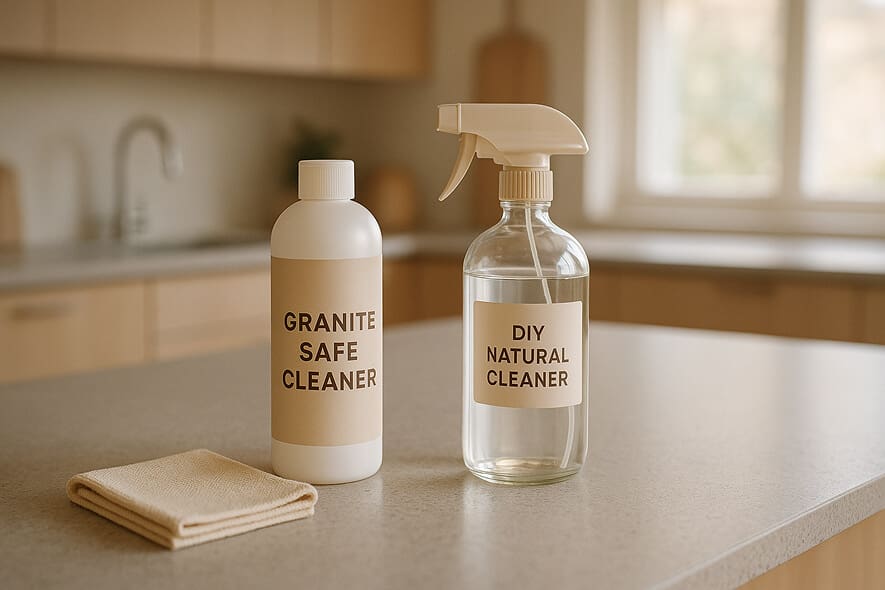
If you have an engineered granite countertop, always choose a granite-safe cleaner. That’s not just a marketing label — it means the product contains no harsh acids, alkalis, or solvents that could damage the surface.
No ammonia, bleach, or abrasive particles present in the formula
The label should specify compatibility with engineered stone, solid surface, or composite stone
Ideally, it should be certified by Safer Choice, Green Seal, or another eco-label
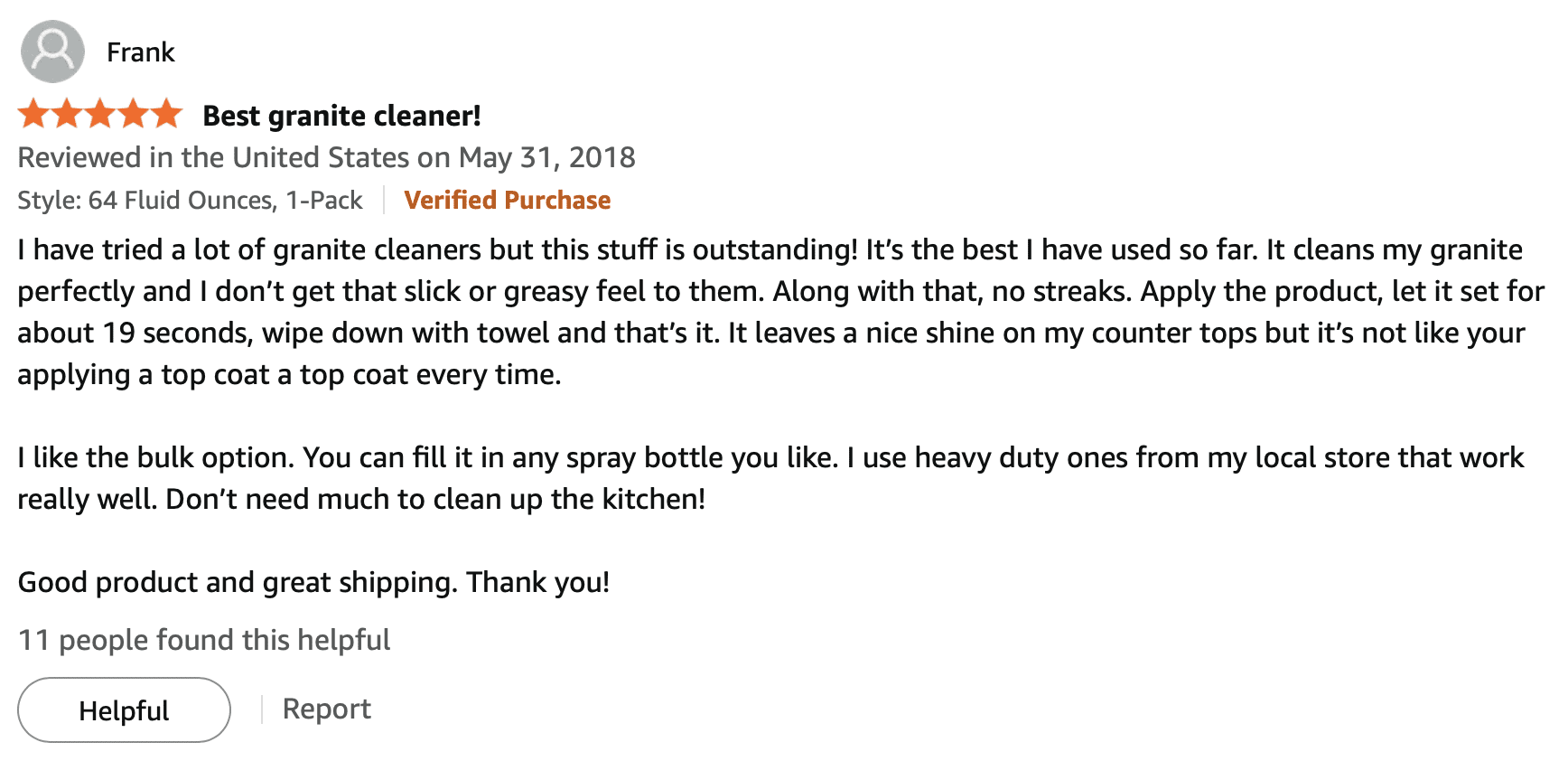
Here are a few products that have proven effective in real-life use:
Granite Gold Daily Cleaner — a simple, scent-free product that doesn’t require rinsing. Safe for both natural and engineered stone.
Source: amazon.com
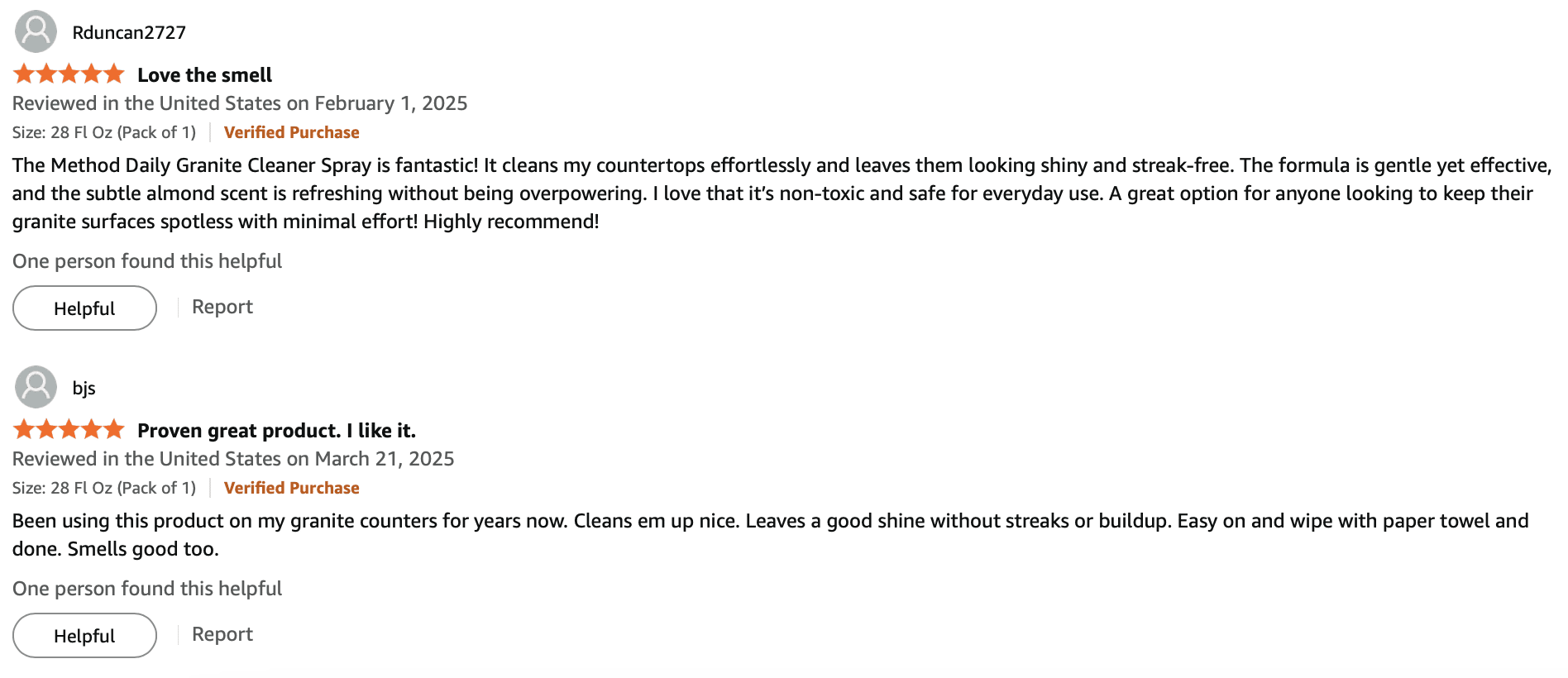
Method Daily Granite Cleaner — made with a gentle, natural formula and a light citrus scent. No harsh chemicals, safe for daily use.
Source: amazon.com
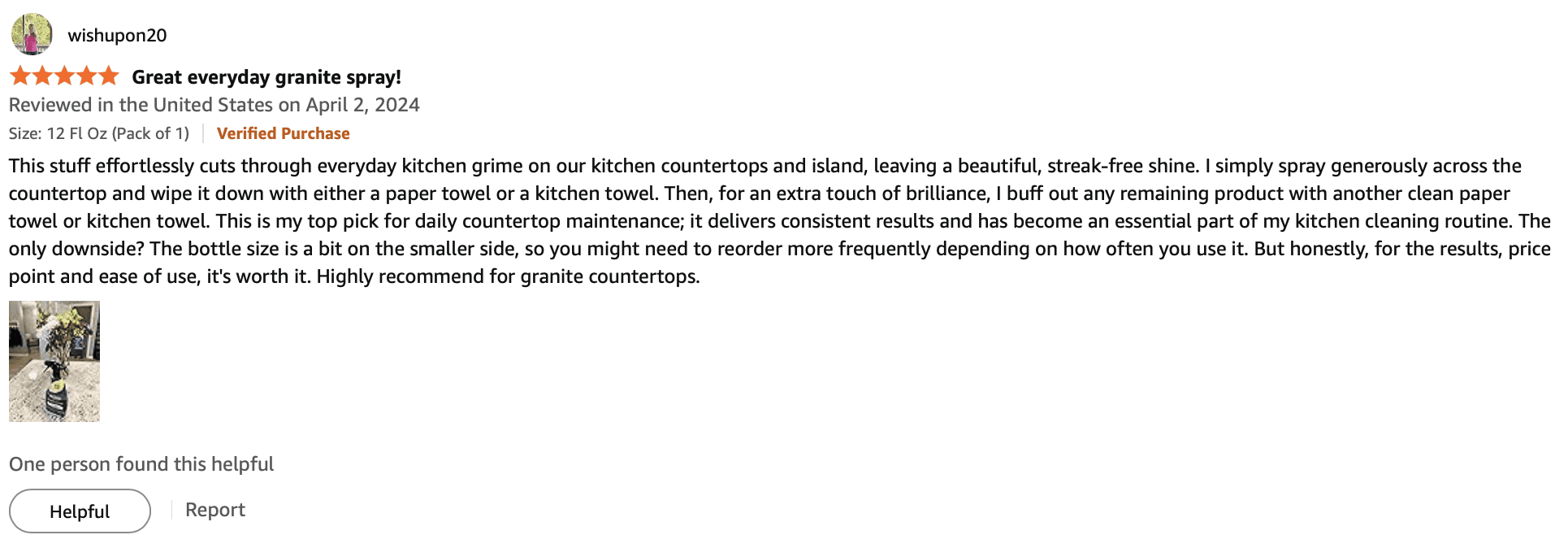
Weiman Granite Cleaner and Polish — a popular option that offers light polishing effects. Leaves a streak-free shine.
Source: amazon.com
Important: If a bottle just says “stone cleaner,” but contains vinegar or ammonia — it’s not suitable. Always double-check the ingredients and stick with non-aggressive formulas.
In the next section, I’ll explain how to make a safe and simple cleaner at home — budget-friendly, easy, and personally tested.
Natural and DIY Cleaning Solutions
Sometimes, you just want to skip store-bought chemicals. Some people prefer a more eco-friendly approach, others simply don’t trust commercial products. That makes sense — but it’s important to remember: natural doesn’t always mean safe, especially when it comes to caring for engineered granite.
What you can use
There are a few simple, time-tested recipes that I’ve recommended to clients many times. The key is to stick to the right proportions and always test on a hidden spot first. One of the best options is a DIY cleaner for granite made with an alcohol base.
Ingredients:
1½ cups water (preferably distilled)
½ cup isopropyl alcohol (70–90%)
¼ teaspoon liquid castile soap (unscented)
5–10 drops of essential oil (optional — lavender or mint works well)
Instructions:
Pour the water and alcohol into a clean spray bottle.
Add the castile soap and essential oil, if using.
Shake well before each use.
Spray on the surface and wipe with a soft cloth or microfiber towel.
Important: Test on a small, hidden area before full use.
Why is this recipe safe for engineered granite?
Isopropyl alcohol disinfects effectively and evaporates quickly, leaving no streaks.
Castile soap is a gentle, plant-based soap with a neutral pH, safe for stone surfaces.
Essential oils add a pleasant scent and have mild antiseptic properties — just use them sparingly.
What to avoid
Despite their popularity in blogs, ingredients like vinegar, lemon juice, baking soda, or even hydrogen peroxide are not great allies for engineered stone. They disrupt the pH balance, damage the bonding resin, and leave stains — especially on light-colored surfaces.
Things to keep in mind:
Don’t mix acid and baking soda — the reaction is harsh and ineffective..
Don’t add vinegar “for shine” — it can do more harm than good.
Don’t overdo it with essential oils — start with 1 drop and increase only if needed.
If you’re making a homemade granite cleaner, don’t chase after “foam” or “fragrance.” Simplicity is your friend. Mild soap, alcohol, water, and a drop of oil — that’s all you need.
“I used a mixture of water, alcohol and a drop of lavender oil. The countertop is shiny, no streaks. The main thing is not to overdo it with the essential oil.” – u/Pennyperry93 (Reddit)
Cleaners for Countertops That Look Like Granite, But Aren’t
This might be the trickiest category of surfaces. They look like stone, but in reality, they might be laminate countertops, solid surface countertops, PVC-based countertops (or thermofoil surfaces, depending on the construction), or melamine-faced boards with a decorative granite-like texture. In marketing, these are often labeled as “engineered stone” or “artificial granite.” In reality, they’re simply more affordable alternatives with varying levels of durability.
In my work, I’ve seen these countertops lose their luster in just six months: the gloss fades, edges bubble up, and coffee cup rings become permanent. And the problem isn’t poor quality — it’s improper cleaning. That’s why it’s essential to understand: these surfaces need their own care approach.
The best cleaning material for the cheap fake granite countertops:
Microfiber cloths (avoid rough rags or brushes)
Neutral liquid soap (castile, baby, or eco-friendly)
Warm water in a spray bottle
Dry towel for wiping (don’t leave moisture behind)
The process is simple: spray – wipe – dry. No harsh chemicals or scrubbing needed.
What to avoid:
High-concentration alcohol — can damage the top coating
Abrasive powders — scratch the decorative texture
Vinegar or lemon juice — even diluted, they can “eat away” at the printed finish
Hot water — especially on seams or edges
If you’re unsure what your countertop is made of, err on the side of caution: simple, gentle cleaners are safest. And to avoid mistakes when buying a ready-made spray or gel, you need to know how to read product labels like a pro. Up next, I’ll explain which ingredients are acceptable — and which are red flags.
How to Know If a Cleaner Is Safe — Reading the Label Correctly
I’ll be honest: I used to just glance at the front of the bottle, read “safe for granite,” and call it good. But after hearing a few horror stories from clients about damaged countertops, I realized: you have to read not the front label, but the fine print on the back.
Manufacturers love to use marketing buzzwords like “natural,” “eco-friendly,” or “stone safe” — but those don’t always mean what you think they do. So here’s a practical cheat sheet for what to look for — and what to avoid — in your cleaning product’s ingredients list.
What should be in a granite safe cleaners:
Water — should always be listed first
Plant-based surfactants — gently clean and are safe for polymers
Isopropyl alcohol ≤ 10% — acceptable in small amounts, especially in DIY recipes
Neutral pH: 6.5–7.5 — preserves the binder and surface finish
What should not be in it:
Sodium hypochlorite / bleach — breaks down the top layer and causes fading
Ammonia — harsh on polymers, commonly found in “all-purpose” cleaners
Acetic acid / vinegar — even diluted, it compromises the surface structure
Sodium hydroxide / lye — can make the surface rough or porous
Grit or abrasives — scratch the finish, especially on glossy surfaces
If you see any of those listed — put the product back on the shelf.
Shopping tip:
Check the brand’s website and look for the “SDS” (Safety Data Sheet) or “Ingredients” section. These often reveal more than what’s printed on the bottle. Especially when ordering from Amazon or eBay — double-checking the formula can save your money and your countertop.
Next, I’ll explain how to build a simple daily and monthly maintenance routine to keep your engineered granite shining — and give you peace of mind that you’re doing it right.
How to Care for Engineered Granite So It Lasts 100 Years
Clients often ask me: “Okay, but how should I actually care for engineered granite? Do I need to scrub it every day? Polish it? Seal it?”
The answer is simpler than you might think: consistency, gentleness, and common sense.
Engineered granite doesn’t require complex maintenance, but it definitely doesn’t forgive neglect. If you regularly leave moisture, grease, or crumbs on the surface — they’ll eventually seep into the top layer.
And if you use the wrong cleaners daily, you might lose the shine or, even worse, end up with stains that no safe product can remove.
Here’s the basic care plan I recommend to clients:
Daily Care:
Wipe the countertop with a microfiber cloth slightly dampened with water
If needed, use a gentle neutral soap or a homemade granite countertop cleaner from the previous section
Always dry the surface thoroughly — this one simple habit goes a long way toward extending its life
Weekly:
Use a homemade granite cleaner or a trusted store-bought product with neutral pH
Pay extra attention to tricky areas — along the edges, around the sink, and near the stove
Monthly:
If your surface allows it, apply a protective coating for engineered stone.
(This is not the same as a sealer for porous granite — it's a light polish that enhances shine and prevents stains.)
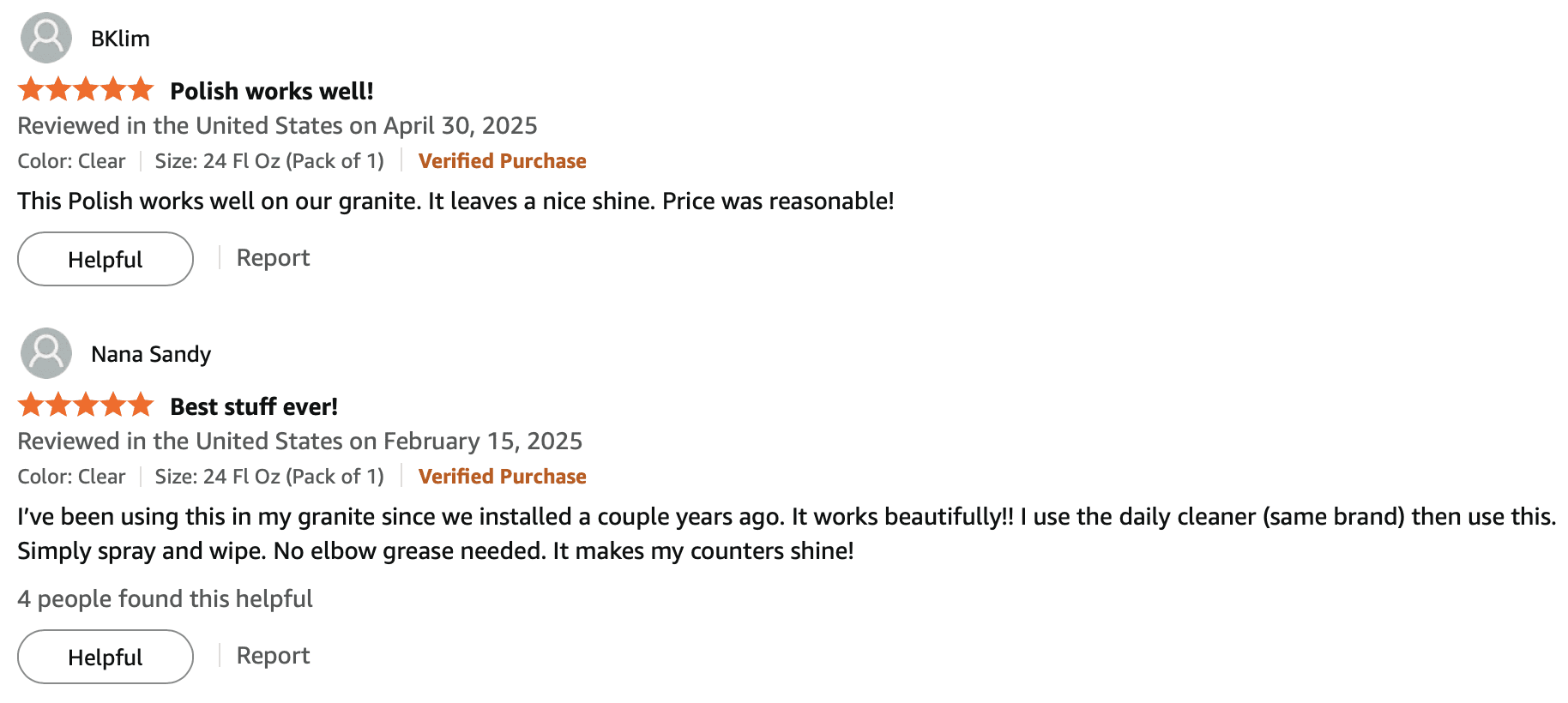
Example: Granite Gold Polish — compatible with both natural and engineered stone. It contains no waxes or acids, won’t damage the binding resin, and is suitable for regular use.
Source: amazon.com
Important to remember:
Engineered granite typically does not require sealing — unlike natural stone. But if you’re unsure, check with the manufacturer or installer. Some premium composites do have a more porous structure and may need added protection.
In the next section, I’ll go over the most common mistakes — even well-meaning homeowners make them. Because proper care also means knowing what not to do.
Mistakes That Are Easy to Avoid
Sometimes, even the most attentive homeowners make missteps — not because they don’t care about their kitchen, but simply because no one ever explained how to do things right. Engineered granite seems durable, but it has its weak spots. And more often than not, problems don’t come from poor materials — they come from small, everyday habits.
Here are the most common mistakes people make:
Cleaning immediately after heat exposure
For example, you move a pot off the stove and immediately start wiping the counter. The sudden temperature shift can cause microcracks — especially along the edges.
Using the same product for every surface
All-purpose sprays that work great on glass or tile aren’t necessarily good for composites. Many contain high-concentration alcohol or acid — which eats away at the surface.
Spraying cleaner directly onto the surface
It’s always better to spray onto a microfiber cloth first — this helps avoid over-wetting and prevents concentrated product from causing spots.
Using an abrasive sponge “just to be sure”
Even if the dirt seems tough, avoid the temptation to grab a rough sponge or steel wool. They leave microscopic scratches, and over time, the surface loses its shine.
Rarely or never drying the surface
Moisture is the biggest enemy of seams and joints. This is where swelling usually starts — especially on budget-friendly granite-look countertops.
The good news is — all of these mistakes are easy to correct. The key is knowing what to look out for.
Safety and Sustainability — Caring for Both Your Kitchen and the Planet
Over the past few years, interest in “green” cleaning has skyrocketed — you can see it in how quickly reusable bottles, eco-friendly products, and cloths made from recycled fabrics sell out. More and more clients tell me, “I want things clean, but without harm — not to my kids, not to the stone, and not to the planet.” And that’s absolutely possible.
But sustainability isn’t just about what’s in the bottle — it’s also about the packaging, your habits, and even how often you clean.
Simple sustainable solutions that actually work:
Use refillable containers — glass spray bottles can be reused again and again, reducing plastic waste
Buy concentrates — less packaging, fewer shipping emissions (brands like Puracy or Biokleen are great examples)
Look for products with real certifications, not just green-looking labels. Specifically:
EPA Safer Choice (safe ingredients for humans and the environment)
Green Seal (eco-conscious formulas, biodegradability)
Leaping Bunny (no animal testing)
Avoid aerosol-based products — many use propellant gases that are harmful to indoor air quality
A few genuinely eco-friendly brands popular in the U.S.:
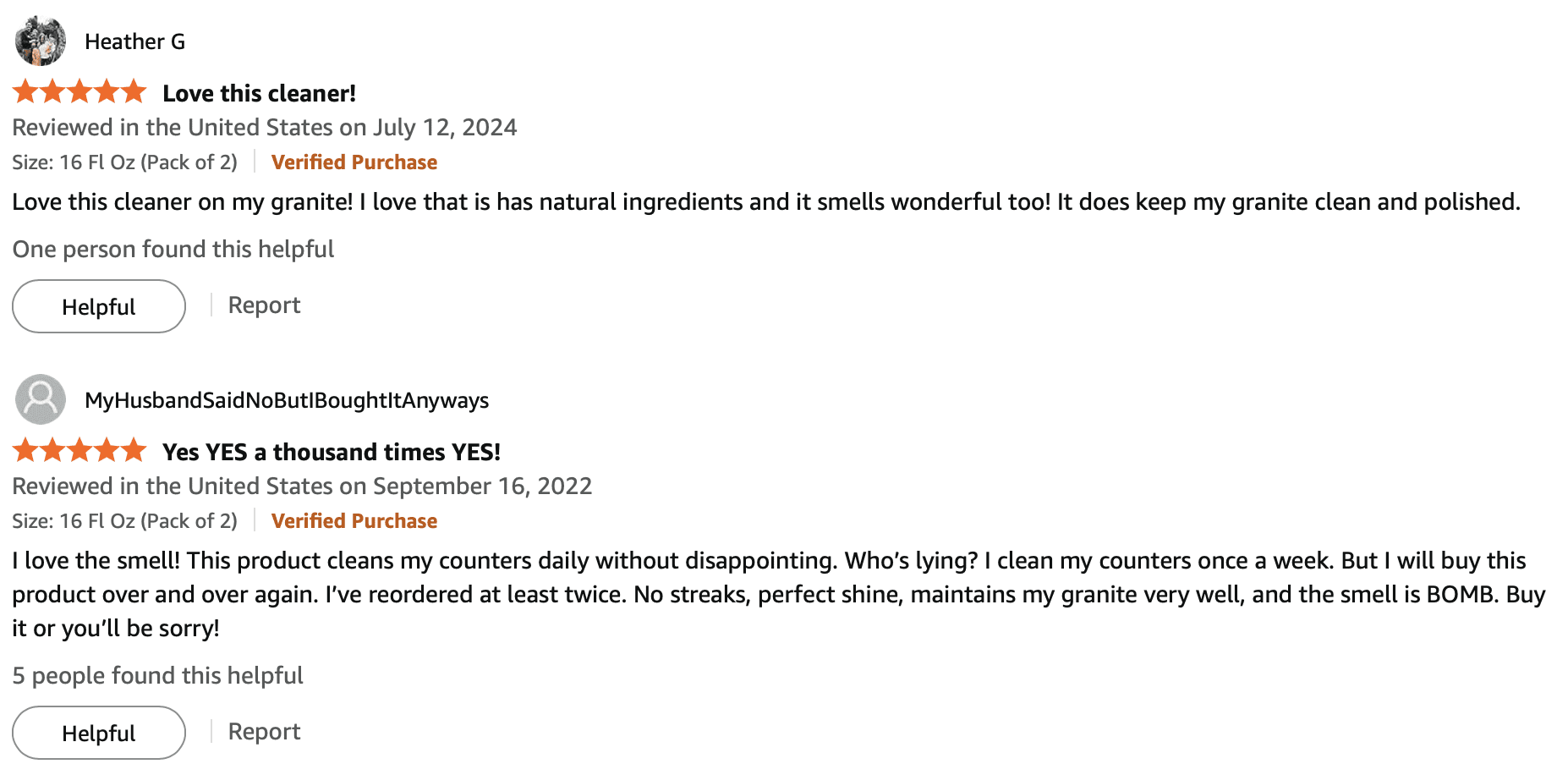
BETTER LIFE Granite Cleaner and Polish — biodegradable, unscented, and safe for engineered stone
Source: amazon.com
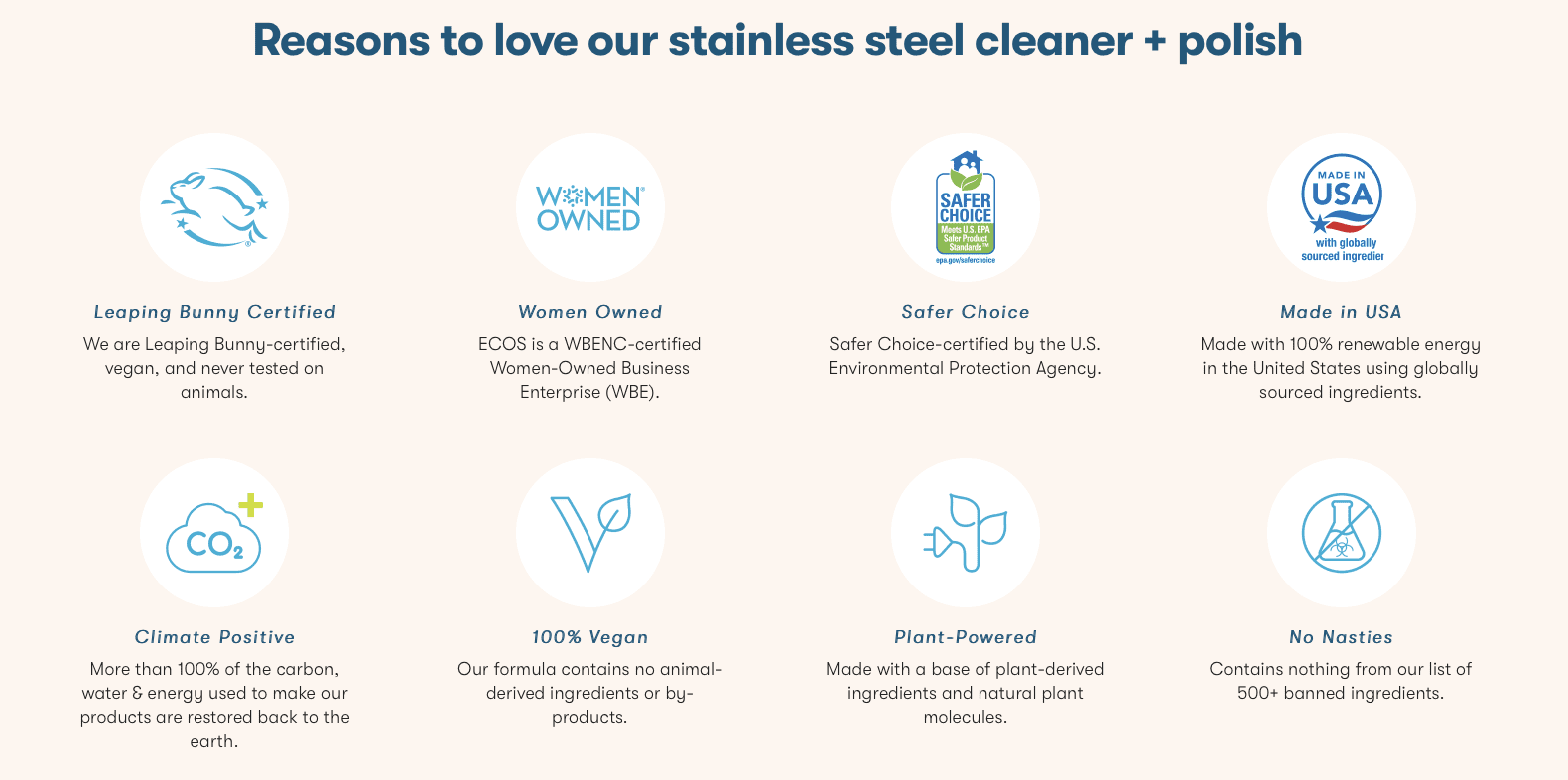
ECOS Stone & Stainless Steel Cleaner — made with coconut-derived surfactants, certified by the EPA
What to avoid — even if the label looks “natural”:
Disposable cleaning wipes — many are alcohol-heavy and leave residue
Products without clear ingredient lists — if the label only says things like “natural blend” or “fragrance,” that’s not a good sign
Overhyped claims like “kills 99.9% of bacteria!” — this often means the product contains strong antimicrobial agents that are not suitable for composites
The main thing? Don’t chase perfection. Real sustainability isn’t about being flawless — it’s about making conscious choices.
If you reduce household chemical use, switch to reusable packaging, and clean with a neutral-pH safe cleaner even once a week — that’s already progress.
Expert Conversation: The Stone Magazine — Dean Collins
The Stone Magazine (TSM): Dean, what most often damages engineered granite countertops?
Dean Collins (DC): Aggressive cleaning products. Acids, bleach, ammonia, and abrasives break down the polymer base of the composite.
TSM: Why are vinegar and lemon so dangerous?
DC: Because they’re acids with a pH below 6. Over time, they eat away at the binding resin, causing the surface to lose its shine and develop stains.
TSM: Many people use all-purpose sprays. What’s the risk there?
DC: The ingredients. These sprays often contain ammonia or high concentrations of alcohol. That’s critical for composite surfaces.
TSM: What about abrasives?
DC: They mechanically wear down the top layer. This becomes especially noticeable on inexpensive granite-look countertops.
TSM: Is there a difference in care between engineered granite and natural granite?
DC: Yes. Engineered granite isn’t sealed like natural stone, but it’s far more sensitive to chemicals.
Frequently Asked Questions (FAQ)
What’s the best cleaning material for the cheap fake granite countertops?
If your countertop is made of laminate, acrylic, or PVC with a granite-like finish, the main goal is not to damage the decorative outer layer. The best option: warm water, gentle soap, and a microfiber cloth. Avoid abrasives, vinegar, and high-concentration alcohol.
Can you clean engineered granite with vinegar?
No. Vinegar is an acid, and it damages the polymer bonding structure inside the composite. Even diluted vinegar can leave stains, dull spots, or faded areas. Stick with pH-neutral cleaners or mild DIY recipes without acids.
Is Alcohol Safe for Cleaning?
Yes, but only under certain conditions. Isopropyl alcohol up to 70% concentration can be safely used in homemade solutions — for example, combined with water and a drop of gentle soap. This type of granite cleaner with alcohol is excellent for cutting grease and disinfecting, but it should never be used straight from the bottle.
How do you make a DIY granite countertop cleaner?
Here’s a basic recipe I often recommend to clients:
1½ cups of warm (preferably distilled) water
½ cup of 70% isopropyl alcohol
¼ teaspoon of castile soap
(optional) 2 drops of essential oil for fragrance
Mix in a reusable spray bottle. Shake before use and always test on a hidden spot first.
Why do streaks appear even after using a gentle cleaner?
Streaks usually result from using too much product or the wrong kind of cloth. Use lint-free microfiber, apply the cleaner to the cloth (not the surface), and always dry the countertop completely. Even water can leave marks — especially around the sink and faucet.
The Stone Magazine Editorial Tip
The biggest mistake owners make with engineered granite countertops is expecting the material to behave like natural stone. Visual similarity is misleading, and common “home remedies” often turn out to be destructive.
Damage usually accumulates gradually. The surface doesn’t dull overnight, but after months of improper care. Inexpensive granite-look countertops are especially vulnerable because their decorative layer is thinner.
Warranties and real customer reviews also remain important reference points when choosing a contractor for installing and maintaining engineered granite countertops. They help reveal how a company operates in practice and how consistently it delivers results.
One useful benchmark is the CountertopsContractors ranking — an independent list of U.S. contractors based on installation quality, experience, and market reputation. This format makes it easier to compare providers and choose the right specialist for a specific project.
Conclusion
If you’ve made it this far — congratulations. You now have something most owners of engineered granite countertops don’t: a real understanding of how to care for them properly.
Engineered granite is practical and beautiful — but it demands respect. It doesn’t forgive harsh treatment, acids, or abrasives. And it definitely doesn’t like “one-spray-fits-all” cleaners. But it handles everyday kitchen life just fine — as long as you know what to clean it with, how to wipe it down, and what to avoid.
The Most Important Things to Remember:
Don’t take the label at face value — read the ingredient list.
Don’t be afraid to make your own cleaner — if it’s made of water, alcohol, and soap, and you know exactly why each ingredient is there, it’s a solid choice.
And don’t underestimate the power of microfiber — when used right, it does more than you think.
With experience, I can confidently say: gentle care doesn’t depend on the price of your countertop. It depends on the attention and habits of the person cleaning it.
I hope this article helps you keep your countertop looking radiant for years to come — without stains, streaks, or trial-and-error disasters.
And if you ever need help with a tough situation or choosing the right contractor — check out The First National Ranking of Stone Countertop Fabricators and Installers in the U.S. There you’ll find pros who know how to treat stone — and your home — with care and respect.
* The price is valid as of April, 2025, published for informational purposes and may differ on the day the article is read. Prices are based on average data from Home Depot, Houzz, HomeAdvisor, and other relevant sources in the U.S.
All images are sourced from Unsplash photo stock or publicly available contractor portfolios. If you believe any image is privately owned and used without proper credit, please contact us at contact@countertopcontractors.com.
Some authors may write under a pseudonym and choose not to disclose their identities for personal reasons. We respect their privacy and simply provide a platform for professional, educational use. We are not responsible for name coincidences with real individuals. All contributors are vetted for expertise, but we advocate for freedom of expression.