Introduction
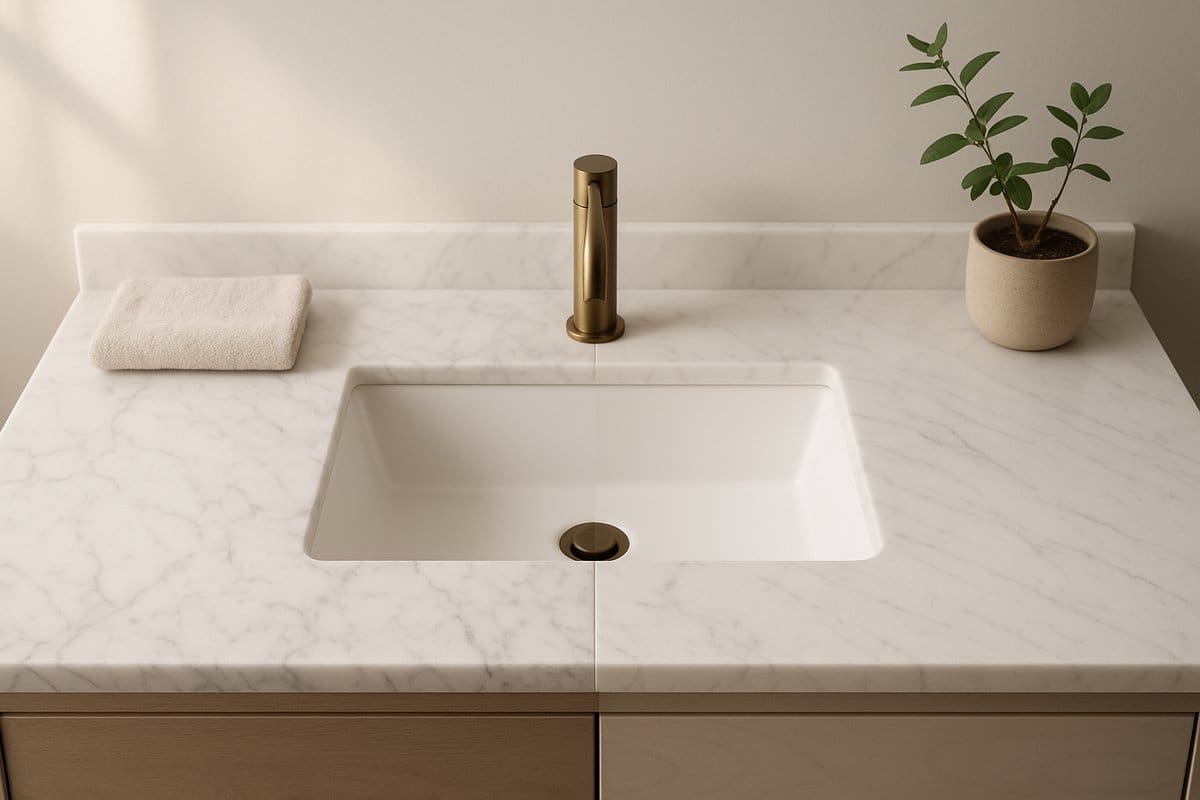
Marble in the bathroom is always beautiful. But when it comes time to choose a countertop, it turns out there are far more options than you might think at first glance. Natural stone is expensive and requires maintenance. But there are more affordable solutions too — for example, cultured marble, which looks almost indistinguishable from the real thing. But how practical is it? And will it still look just as stylish a couple of years down the line?
In this article, you’ll find out the real difference between marble and its imitations — and which option is best for your specific case. We’ll discuss appearance, durability, price, and real-life scenarios: when it’s worth paying extra for Carrara, when prefab is the smarter choice, and when it makes sense to order a custom option. If you’re planning a bathroom remodel or upgrade, this breakdown will save you dozens of hours choosing — and help you avoid costly mistakes.
What You Should Know If You’re New to Marble Bathroom Countertops
When people talk about marble bathroom countertops, they often mean different materials. Not every “marble” countertop is made from natural stone, and visual similarity can be misleading.
Natural marble is a natural stone with a unique pattern and texture. No two slabs are the same, and the veining is never repeated. These countertops have more depth and feel more “alive,” but they require care due to their porous structure.
Cultured marble is a manufactured material made from marble dust and polymer resin. Its surface is smooth, uniform, and predictable. Bathroom vanity countertops made from cultured marble are often sold as ready-made sets with an integrated sink and backsplash, which simplifies installation.
What Marble Looks Like in a Bathroom: Natural, Cultured, and Marble-Look
Marble bathroom countertops have long been considered a symbol of elegance. They bring a sense of sophistication to the interior, making the space look brighter and more refined. But it’s important to understand: not every marble countertop is made of real natural stone. There are both natural materials and various imitations on the market — some high-quality, some not so much — and there’s a big difference between them.
Natural Marble: Nature Without Repetition
This is stone created by nature — with a one-of-a-kind pattern, rich color depth, and natural texture. The most popular types used in bathrooms include:
- Carrara – a light marble with fine gray veining, a classic choice for minimalist interiors.
- Calacatta – a richer white background with bold veins, looks striking in contrast-focused bathrooms.
- Arabescato – white and gray marble with smooth, often swirling veining, giving a soft and “painterly” look.
The First National Ranking of Stone Countertop Fabricators and Installers in the U.S. conducts research in different cities across the country on the prices of countertops made from Calacatta Idilio or Carrara Morro quartz. You can check the prices of countertops from contractors in your city here.
This material is perfect for those who appreciate natural beauty and individuality. For example, a marble sink top made from Carrara always looks stylish and is a great fit for interiors that emphasize natural textures.
Cultured Marble: Smooth, Practical, Predictable
A cultured marble bathroom countertop is a more affordable and easy-to-maintain option. It’s made from a mixture of marble dust and polymer resin, topped with a durable glossy coating. This material has a smooth, clean look, and its pattern often repeats.
Cultured marble bathroom vanity countertops are often sold as ready-made sets — with an integrated sink, backsplash, and pre-drilled holes for the faucet. It’s an excellent choice for those who want to install everything quickly without overspending.
If you’re curious how to install a set like this yourself, check out my article on bathroom vanity installation — I walk through the process and common pitfalls.
Faux Marble: A Visual Stand-In for Now
Sometimes you’ll find materials for sale that look like marble but aren’t actually stone. These can include plastic, laminated wood, or ceramic tile with printed veining. Faux marble bathroom countertops work well for temporary setups, budget projects, or rental properties.
It’s important to understand that in terms of durability and appearance, they don’t match up to natural or cultured marble — but visually, they can still create the desired effect, especially when styled well in your space.
Natural Marble: Pros, Cons, and When It’s the Right Fit
If you’ve ever seen a well-designed bathroom with a natural marble countertop, you know it’s more than just a beautiful surface — it sets the tone for the entire space. Marble has its own energy, depth, and life in the veining. It looks upscale, feels luxurious to the touch, and gives the bathroom a cohesive, high-end feel. But like any natural material, it demands a certain level of respect.
What are the advantages?
- One-of-a-kind pattern. Its veining formed over thousands of years — each slab is truly unique.
- Tactile honesty. Marble isn’t plastic or laminate. It’s cool, smooth, and unmistakably real. No imitation, no artificial shine — the moment you touch it, you know it’s natural stone.
- Adds value to the home. A marble bathroom counter always leaves an impression — especially if you’re planning to sell or rent out the space as part of a premium listing.
What about the downsides?
- It’s porous. Marble absorbs liquids — especially acidic ones like lemon juice or vinegar.
Solution: apply a sealer regularly (once or twice a year) to protect against stains.
- Sensitive to cosmetics. Foundation or hair dye can leave marks.
Solution: use trays and organizers, and wipe the surface after use.
- Needs gentle care. Marble reacts poorly to harsh chemicals or abrasive sponges.
Solution: clean with soft cloths and mild cleaners — that’s all you need for daily maintenance.
If you’re worried about how complicated maintenance might be, I recommend reading our guide on how to care for a marble countertop — it explains which products to use, how to protect the surface, and what to do if stains appear.
When is marble truly the right choice?
- You’re renovating for yourself and are ready to invest in quality.
- Your interior already features natural accents — wood, brass, stone.
- You care about tactile sensations and genuine aesthetics.
A marble vanity countertop isn’t just about beauty — it has character. It’s for those who appreciate materials with history and are willing to give them a little care in return.
Cultured Marble: What It Is and When It’s the Better Option
If natural marble is all about aesthetics and uniqueness, a cultured marble countertop is more about affordability and everyday practicality. This material is often chosen for bathrooms where saving money matters, but you don’t want to sacrifice appearance.
What exactly is it?
Cultured marble is made from marble dust mixed with polyester resin. The surface is coated with a durable gel that creates its signature glossy finish. Visually, it can resemble natural stone — especially if you choose a light shade with veining.
You can easily find cultured marble bathroom vanity countertops for sale — these are single-piece units with an integrated sink and backsplash. They install quickly and don’t require any on-site fitting.
What are the advantages?
- Affordable price. The average cost starts at $35* per square foot — 2 to 3 times cheaper than natural marble.
- Seamless design. The countertop and sink can be cast as a single piece — with no joints for water to seep into.
- Easy upkeep. The surface is smooth and nonporous — just wipe it with a soft cloth.
- Quick installation. Many models can be installed by yourself.
And what about the downsides?
- Repeating pattern. Unlike real stone, the veining in cultured marble is uniform and may look a bit artificial.
Solution: go for minimalist styles or soft veining — they tend to look more natural.
- Prone to chipping. Especially along the edges if something heavy is dropped.
Solution: avoid impacts, and consider silicone edge protectors in high-traffic areas.
- Sensitive to abrasives. The glossy coating can scratch if cleaned too roughly.
Solution: use non-abrasive cleaners and soft cloths only.
For families with kids, where the bathroom is used actively every day, cultured marble can be an especially good choice. It’s resistant to moisture, easy to clean, and doesn’t require constant checking for every little stain.
Reddit users often mention that cultured marble is a great option in these situations too:
“We put a marble bathroom countertop with sink in the guest bathroom - no problems, easy to clean, looks fresh even after 4 years.” — @JerryLane87 (Reddit)
Caring for Marble: How to Keep It Beautiful for Years
Whether you’ve chosen a marble bathroom countertop or a cultured marble bathroom vanity, it’s important to understand one thing: no surface will keep its fresh look for long without proper care. The good news is that caring for marble isn’t difficult — as long as you know the specific needs of your material.
Natural Marble: Care with Character
- Sealing. Natural marble is porous and absorbs liquids, so it needs to be sealed — usually every 6–12 months. This protects it from stains, especially around the sink area.
Recommended products:
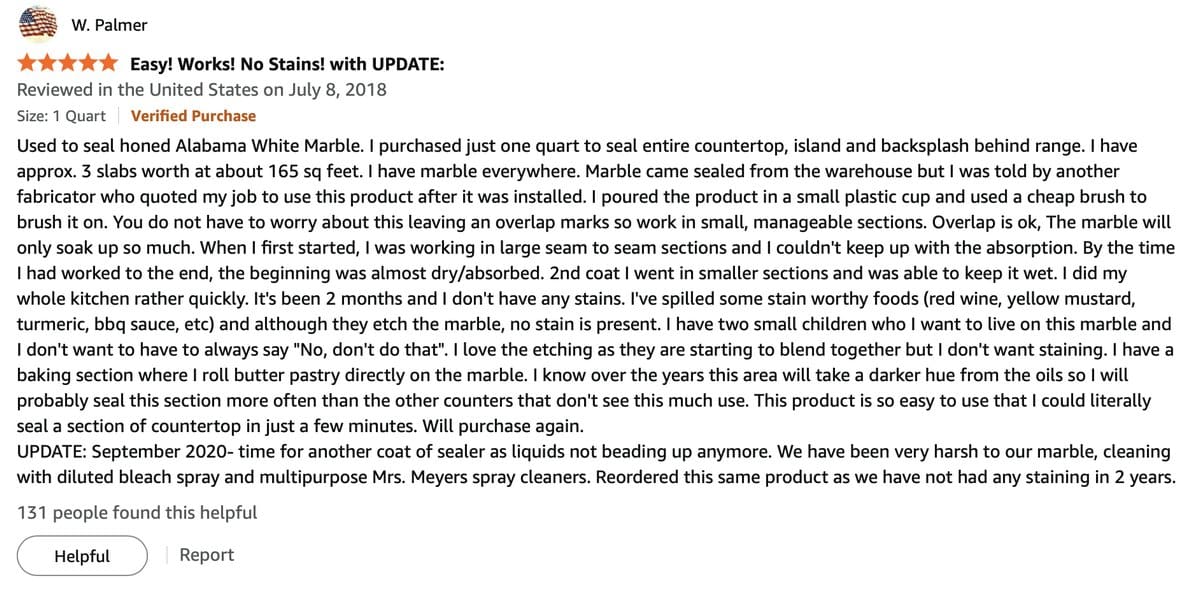
- STONETECH BulletProof Sealer — a deep-penetrating sealer for long-lasting protection against stains.
Source: amazon.com
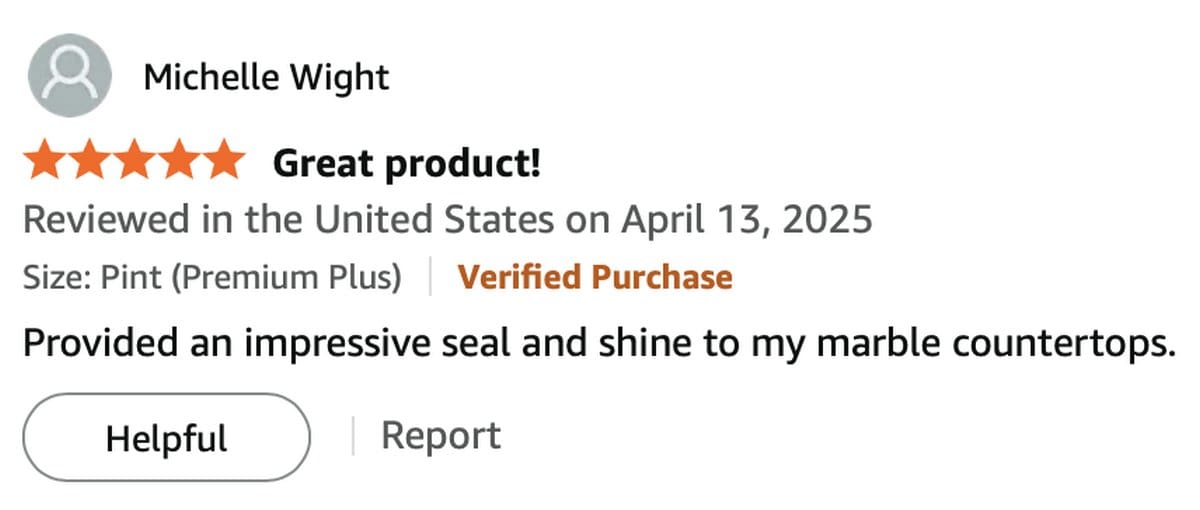
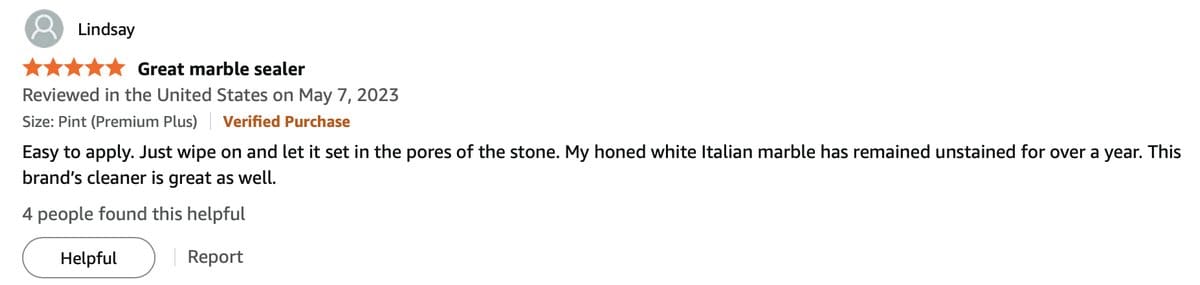
- MORE Premium Plus Stone Sealer — water-repellent and safe for marble and other natural stones.
Source: amazon.com
- Gentle cleaning. Use only neutral products — no acids or ammonia. Stone-safe cleaning sprays or warm water with mild soap will work.
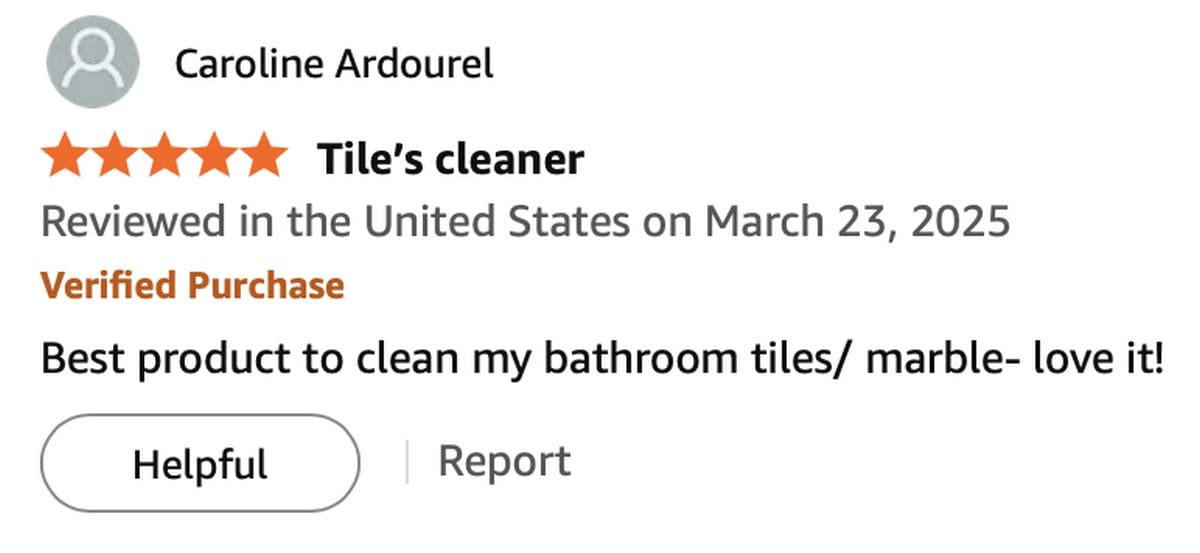
Recommended cleaners:
- Marblelife InterCare Marble and Travertine Cleaner — safe for daily use on marble.
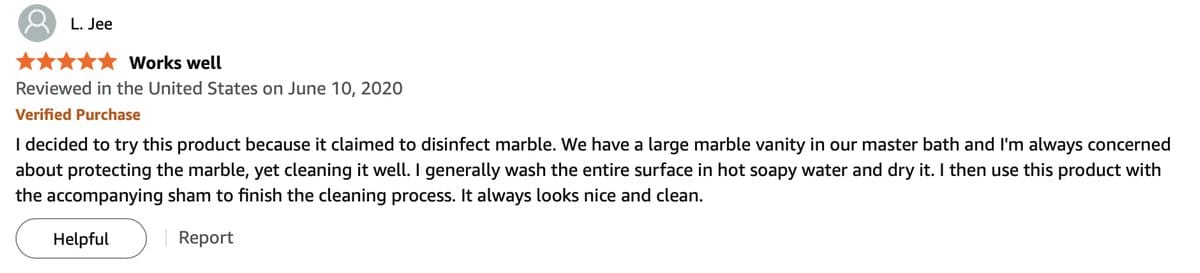
Source: amazon.com
- Easy Oxy Marble & Granite Cleaner — hydrogen-peroxide-based, safe and effective for marble.
Source: amazon.com
- Minimal aggression. No abrasive sponges, no bleach — they’ll damage the surface.
- Storage organization. Keep cosmetics, perfumes, and hair products on trays or in containers to avoid stains and spills.
Cultured Marble: Easier, But Still Needs Care
- No sealing needed. The surface is nonporous, so liquids can’t seep in.
- Wipe regularly.Daily cleaning with a damp cloth and mild soap is more than enough.
Recommended products:
- Gel-Gloss Kitchen and Bath Polish and Protector — cleans, polishes, and leaves a protective layer.
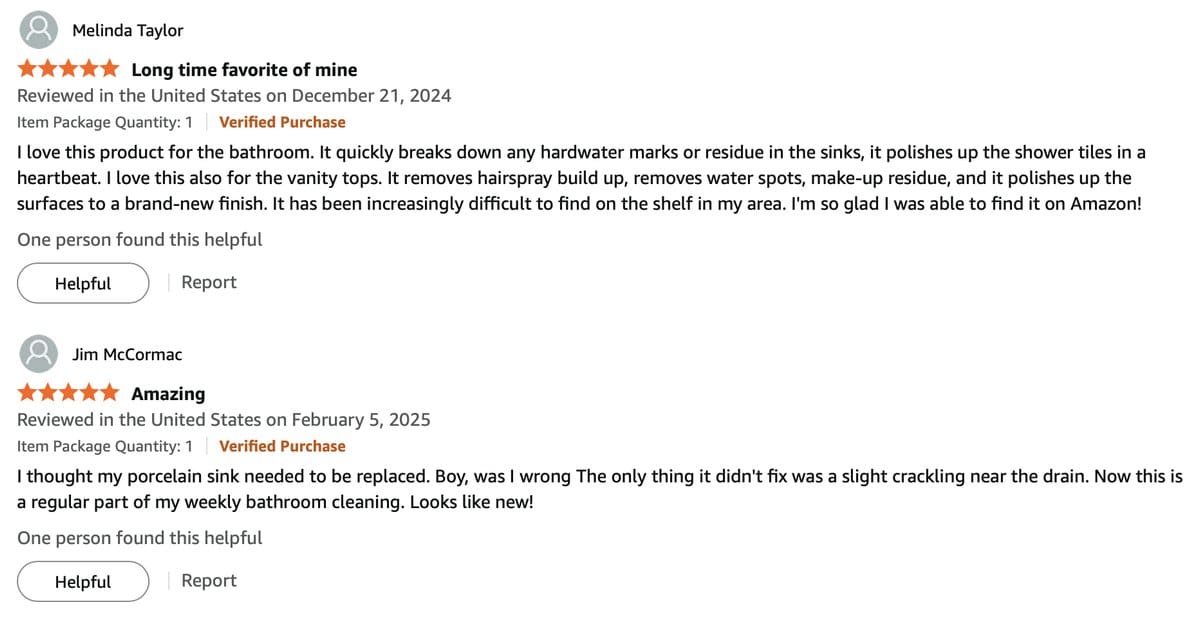
Source: amazon.com
- Rejuvenate Soap Scum Remover — safe for acrylic and cultured surfaces.
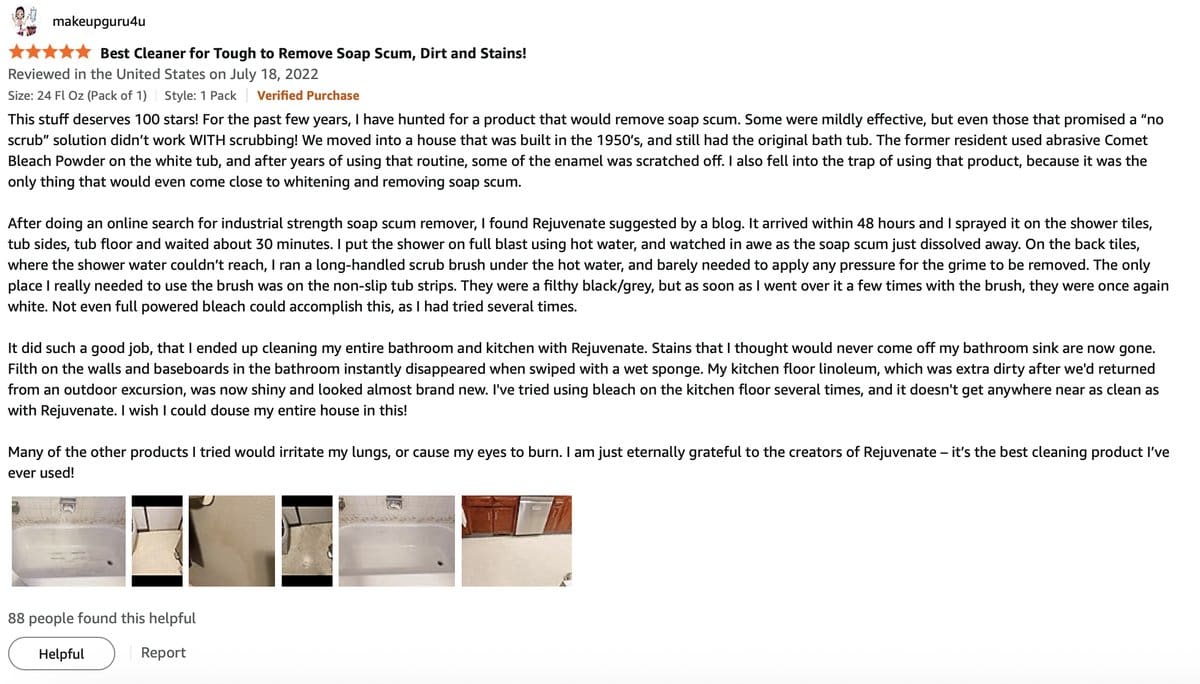
Source: amazon.com
- Avoid abrasives. The glossy coating scratches easily — it’s best to use a microfiber cloth.
- Mind the heat. Don’t place hot tools (like hair dryers or curling irons) directly on the countertop — it can leave marks.
"We have had our faux marble countertop for 6 years now and it still looks like new. It washes in a minute, no stains. The main thing is not to clean it with powders.” — @Tedtedted (Reddit)
Price Comparison — From Prefab to Custom
Once you’ve decided on the material, the next step is to figure out how much it will cost. Marble bathroom vanity countertops come in two main types: ready-made (prefab) and custom-made. And here’s where the nuances begin: two countertops that look almost identical can end up costing twice as much — simply because one is standard and the other is custom-built specifically for your project.
Prefab Options: Convenient and Affordable
Prefab marble vanity tops are like a “construction kit” from the store: you pick the size and color, take it home, and install it. They’re convenient for anyone who wants to update their bathroom quickly, without complications or a long renovation process. These countertops often come with an integrated sink, backsplash, and pre-drilled faucet holes.
Advantages of prefab countertops:
- Quick installation (many people install them on their own — especially models up to 36 inches);
- Fixed cost — everything is clear upfront, with no surprises;
- A good choice for standard-sized bathrooms and budget remodels.
Drawbacks:
- Limited format and color options;
- Won’t fit non-standard furniture
Example prices:
- A cultured marble bathroom vanity costs from $180 to $600*, depending on width (24–60 inches), color, and included features.
- A white marble vanity top starts at around $350* for a 49-inch model with an integrated sink.
Custom Pieces: Exact Fit, More and Design Freedom
Custom cultured marble vanity tops or natural stone slabs are a great choice when you’re looking to do more than just swap out an old countertop — you want to create something unique. They’re perfect for projects with non-standard layouts, double sinks, hidden drains, or a specific style.
Advantages of custom countertops:
- Perfect size tailored to your vanity and walls;
- You can choose the color, edge shape, and veining style;
- No limitations — everything is selected to match your exact needs.
Drawbacks:
- Higher price;
- Longer lead times (up to a month);
- It’s recommended to involve a professional at every stage (from measuring to installation).
Example prices:
- Custom cultured marble countertops range from $50 to $90* per square foot.
- Natural marble costs between $80 and $150* per square foot (not including cutting, edging, or installation).
- Installation averages $250* or more, depending on the configuration.
Comparison Table: Prefab or Custom?
To make it easier for you to understand the costs and installation options, I’ve put together a quick table outlining the main countertop formats. It’s especially helpful if you’re deciding between a standard solution and a custom project.
|
Type
|
Example
|
Cost
|
Installation
|
|
prefab
|
Cultured marble countertop
|
$180–$600*
|
DIY or with a contractor
|
|
prefab
|
White marble vanity top (49", with sink)
|
from $350*
|
Usually requires a pro
|
|
custom
|
Custom cultured marble countertop
|
$50–$90* per sq. ft.
|
from $250*
|
|
custom
|
Natural marble countertop
|
$80–$150* per sq. ft.
|
from $300* and up
|
If you have a standard vanity and want to update your bathroom quickly and without extra costs, prefab can be a great choice. But if you’re looking for an exact size, a double sink, or a more striking design, a custom countertop will give you much more freedom.
Next, we’ll break down how to choose the right option: the questions to ask yourself, what to look at first, and what will help you avoid mistakes.
How to Choose: Key Criteria, Advice, and Examples
By now, you already know how marble bathroom counters differ — in terms of material, care, and price. The final step is the most important: figuring out what will work best for you. Below is a simple four-step system to help you make your choice without unnecessary stress or doubt.
1. Assess how the bathroom will be used
- Guest bathroom? A cultured marble countertop is an excellent choice — it’s easy to maintain, budget-friendly, and still looks respectable.
- Family bathroom with kids? It’s better to choose cultured marble or other durable options that are easy to clean and resistant to moisture.
- Main bathroom for yourself and long-term use? Feel free to consider natural marble — it will transform the interior if you’re ready to care for it.
2. Count the Real Costs
Sometimes it seems like the difference between prefab and custom isn’t that big. But when you factor in edge profiles, sink cutouts, delivery, and installation, the final total can be $300–500 more. For a basic project, prefab is a good fit. But if you need something like a marble double vanity top, you’ll have to go with a custom order.
3. Think About Style
- In modern bathrooms, a white marble bathroom countertop always looks stunning — especially when paired with black or gold fixtures.
- For warmer interiors, faux marble bathroom countertops work well. They can mimic beige or greige tones while keeping a natural stone texture.
- A minimalist space pairs beautifully with slim Carrara slabs or cultured marble bathroom vanity tops with sink— integrated and clean-lined.
On Pinterest, you’ll find great inspiration for pairing a marble sink vanity top with wood cabinetry — especially if you want a light, natural atmosphere.
4. Consider maintenance needs
If you’re not ready for marble upkeep or worry about stains, go with a custom cultured marble vanity top. It’s moisture-resistant and much easier to keep clean.
But if you love the idea of a “living” natural texture and don’t mind sealing it regularly, a marble bathroom sink countertop will absolutely meet your expectations.
No matter your budget, the most important thing is to choose what fits your bathroom, your lifestyle, and your pace. After that, all that’s left is to enjoy the result.
Expert Conversation: The Stone Magazine — Dave Milligan
The Stone Magazine (TSM):
Dave, what surprises people most when they start choosing a marble countertop for their bathroom?
Dave Milligan (DM):
The fact that the word “marble” can refer to very different materials. They may look similar, but they behave differently. Natural marble offers a unique pattern and strong character. Cultured marble delivers a more predictable result and is easier to live with day to day.
TSM:
What’s the main difference natural marble brings to a bathroom interior?
DM:
It defines the character of the space. Every marble vanity countertop is unique because the pattern is created by nature. The stone feels cool to the touch, without an artificial shine, and that creates a sense of depth and a truly “living” surface.
TSM:
But natural marble has its limitations, right?
DM:
Yes. Natural marble is porous. It can absorb liquids and react to cosmetics or harsh cleaning products. That’s why it needs regular sealing and more careful maintenance. It’s not a flaw, but a material characteristic you need to understand upfront.
TSM:
When does it make more sense to consider cultured marble?
DM:
Cultured marble countertops are chosen when ease of care and visual consistency matter most. The surface is non-porous and smooth. Very often, cultured marble bathroom vanity countertops are sold as prefab units with an integrated sink, which makes installation faster and simpler.
TSM:
You also mention prefab and custom formats. For someone new to this, what’s the difference?
DM:
Prefab means ready-made marble or cultured marble countertops in standard sizes. They’re often sold with a built-in sink, backsplash, and faucet holes. This option works well when you want to refresh a bathroom quickly without a complex project.
Custom means countertops made to order. They’re produced to fit specific dimensions, layouts, and design requirements. This format is used when the vanity is non-standard, a double sink is needed, or the countertop shape is unique.
TSM:
Would you say cultured marble is more practical overall?
DM:
For everyday use, yes. Especially in family and guest bathrooms. It doesn’t require sealing, handles moisture well, and keeps a clean appearance with minimal effort.
FAQ — Frequently Asked Questions About Marble Bathroom Countertops
What’s better for a bathroom — natural marble or cultured marble?
It depends on your priorities. Natural marble is for those who value uniqueness, the beauty of natural patterns, and don’t mind putting in some care. Cultured marble is for those who want to save money, simplify maintenance, and achieve a neat, modern look. We compared both options in detail in Sections 2 and 3.
How much does a marble bathroom countertop cost?
Ready-to-install cultured marble prefab countertops start at $180*, while natural marble starts at around $350*. Custom orders cost more: natural marble runs from $80–150* per sq. ft., and cultured marble starts at $50* per sq. ft., plus installation.
How durable are cultured marble bathroom vanity countertops?
With proper care, they can last 10–15 years or more. The key is to avoid using abrasives and to be careful not to drop heavy items. The surface is moisture-resistant and easy to clean — especially if you use recommended cleaners (see Section 4).
Can I install a marble sink top by myself?
If it’s a prefab countertop with standard dimensions — yes, installation is definitely possible on your own. The main thing is taking precise measurements and securing it properly. But a custom marble countertop really requires a professional — both for measuring and for Are white marble bathroom countertops good for everyday use?
Yes, especially if you take proper care of them. White marble is a classic that always looks fresh and stylish. Just remember to reseal the surface regularly and use trays for cosmetics to prevent stains.
If you’re still unsure which option to choose — natural stone, cultured marble, or a visual alternative — go back to the previous section. It has tips to help you decide based on budget, style, and upkeep.
And if you’re ready to take action but don’t know who to contact, check out The First National Ranking of Stone Countertop Fabricators and Installers in the U.S.. It’s an independent ranking that features vetted contractors from all over the country.
How-To: How to Choose a Marble Countertop for Your Bathroom
Step 1. Decide How the Bathroom Will Be Used
For a guest bathroom, a cultured marble countertop is often the best choice. It’s easy to maintain and doesn’t require constant attention. In family bathrooms with frequent use, moisture resistance and easy cleaning are key.
For a primary bathroom, where aesthetics and tactile experience matter more, natural marble is often preferred.
Prefab countertops work well for standard vanities and allow for a fast, budget-friendly update. Custom options are better when you need exact dimensions, a double sink, or a personalized design.
Step 3. Evaluate the Look and Interior Style
White marble bathroom countertops fit naturally into many modern interiors. Integrated sinks and smooth cultured marble surfaces feel clean and minimalist.
Step 4. Consider Maintenance in Advance
Natural marble requires regular sealing and careful use. Cultured marble doesn’t need sealing and handles daily wear more easily.
The Stone Magazine Editorial Tip
When choosing a marble bathroom countertop, most mistakes come not from the material itself, but from expectations. In photos, natural and cultured marble can look almost identical. In real-life use, the difference becomes noticeable fairly quickly.
One key factor is the format. Prefab countertops seem like a quick and simple solution, but they’re designed for standard sizes and scenarios. Custom pieces offer more freedom but require precise planning, more time, and a higher budget. This choice directly affects both cost and how the bathroom feels day to day.
The second factor is maintenance. Natural marble requires regular sealing and careful handling of cosmetics and cleaning products. For some people, that’s part of the pleasure of owning stone. For others, it becomes a source of frustration. Cultured marble is more forgiving in that sense, but it doesn’t offer the same depth and uniqueness that natural stone provides.
Warranties and real customer reviews are also important when choosing a contractor for marble or composite countertops. They help you understand how consistently a company delivers quality work.
One useful reference point is the CountertopsContractors ranking — an independent list of contractors across the U.S., based on installation quality, experience, and market reputation. This format makes it easier to compare professionals and choose the right specialist for your project.
Conclusion
Choosing a bathroom countertop isn’t just about materials, numbers, or maintenance. It’s about your lifestyle, your habits, and how you want to feel in that space.
For some, it’s the main bathroom — where both style and comfort matter. For others, it’s a small room they simply want to refresh neatly. Some are ready to care for natural stone, while for others it’s more important that the surface doesn’t require any special attention.
We’ve covered all the options: from natural marble with its depth and character to cultured marble, which offers comfort and ease of care. Which one feels right — that’s for you to decide.
Choose what suits you best. Only then will your countertop bring joy to both your eyes and your heart every single day.
Also read:
- DIY: How to install bathroom vanity Quickly and Correctly
- Do specialty products protect marble and granite countertops from dirt or not?
*Prices are valid as of June 2025, provided for informational purposes only, and may vary at the time of reading. Estimates are based on average data from Home Depot, Houzz, HomeAdvisor, and other relevant sources in the U.S.
All images are sourced from Unsplash photo stock or publicly available contractor portfolios. If you believe any image is privately owned and used without proper credit, please contact us at contact@countertopcontractors.com.
Some authors may write under a pseudonym and choose not to disclose their identities for personal reasons. We respect their privacy and simply provide a platform for professional, educational use. We are not responsible for name coincidences with real individuals. All contributors are vetted for expertise, but we advocate for freedom of expression.