


A Cambodian Stone Countertop May Become More Popular Than Marble in the Future
Only time will tell — for now, we admire its natural beauty
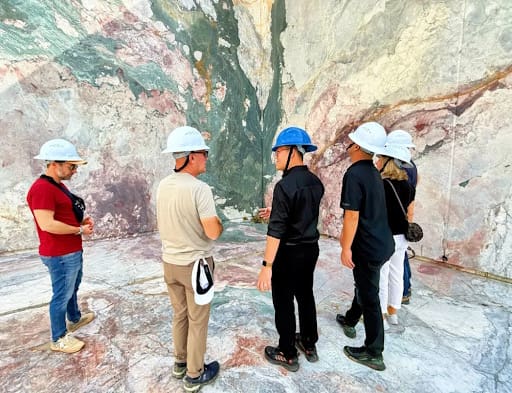
Source: https://stoneupdate.com/a-cambodian-stone-ready-to-shake-up-the-global-stone-market/
Xiaotian Mining presented a Cambodian stone distinguished by its high density and near-zero water absorption, making it an ideal solution for kitchen countertops, facade cladding, and other structural and decorative architectural applications.
The material attracts attention not only for its technical durability but also for its natural aesthetics: it features a bold, organic pattern that makes every slab unique. Thanks to these characteristics, the stone is suitable for both commercial projects and high-end residential interiors, where practicality and visual impact are equally important.

Source: https://stoneupdate.com/a-cambodian-stone-ready-to-shake-up-the-global-stone-market/
The new material is expected to shift the balance in global natural stone supply, drawing attention from architects as well as stone fabricators worldwide.
Technology and Training. AI in Stone Fabrication: A New Level of Efficiency
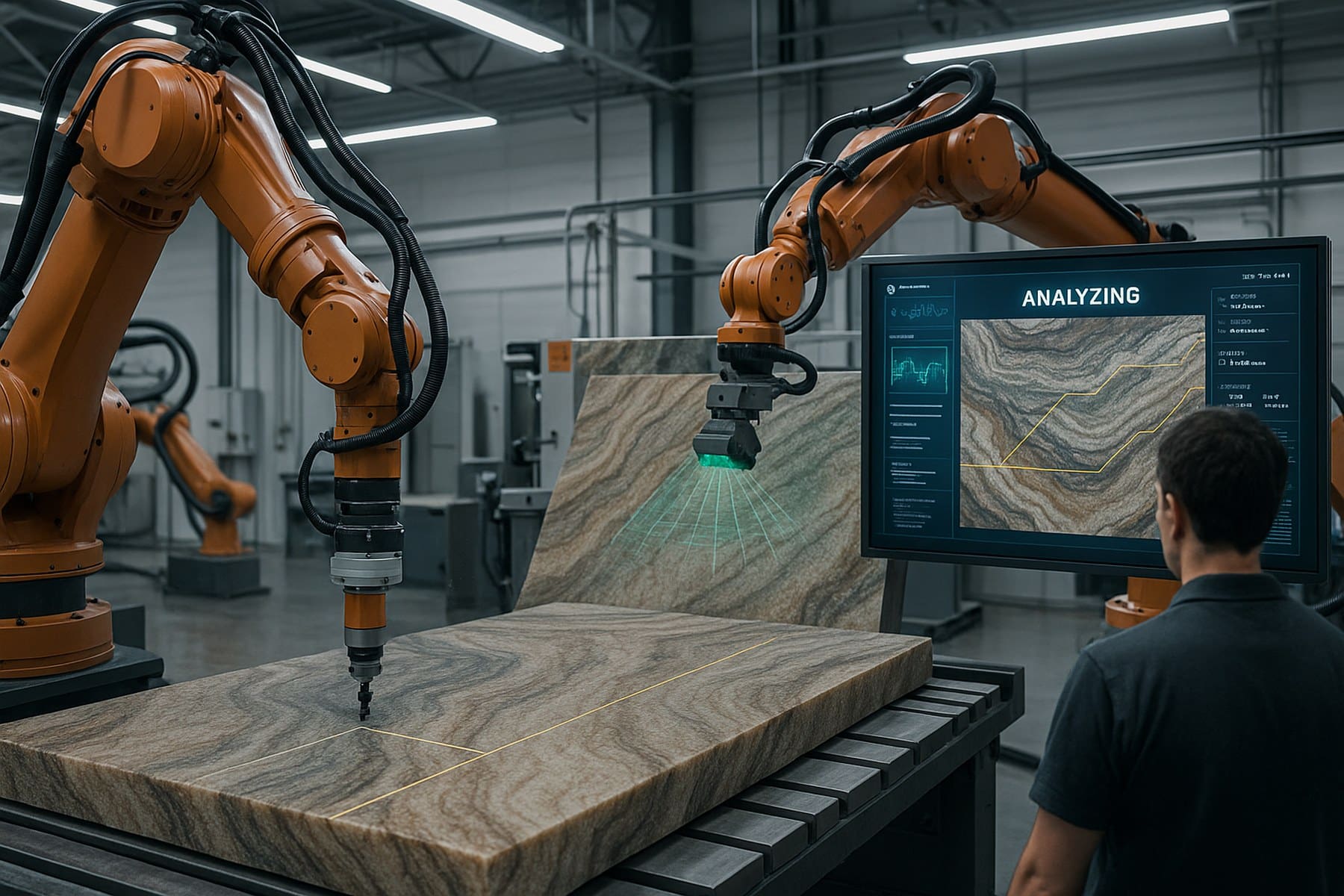
Artificial intelligence is being integrated into stone fabrication processes, significantly increasing precision and productivity. Modern AI-powered systems optimize slab cutting based on the stone’s natural structure, minimizing waste and improving the final appearance of the products.
In addition, AI technologies help detect defects at early stages, reducing the rejection rate. Machines adapt to different types of material, decreasing the need for manual adjustments and accelerating operator training.
The result is consistent quality, lower costs, and a noticeable boost in production efficiency.
Design Trends
The Return of Matte Granite
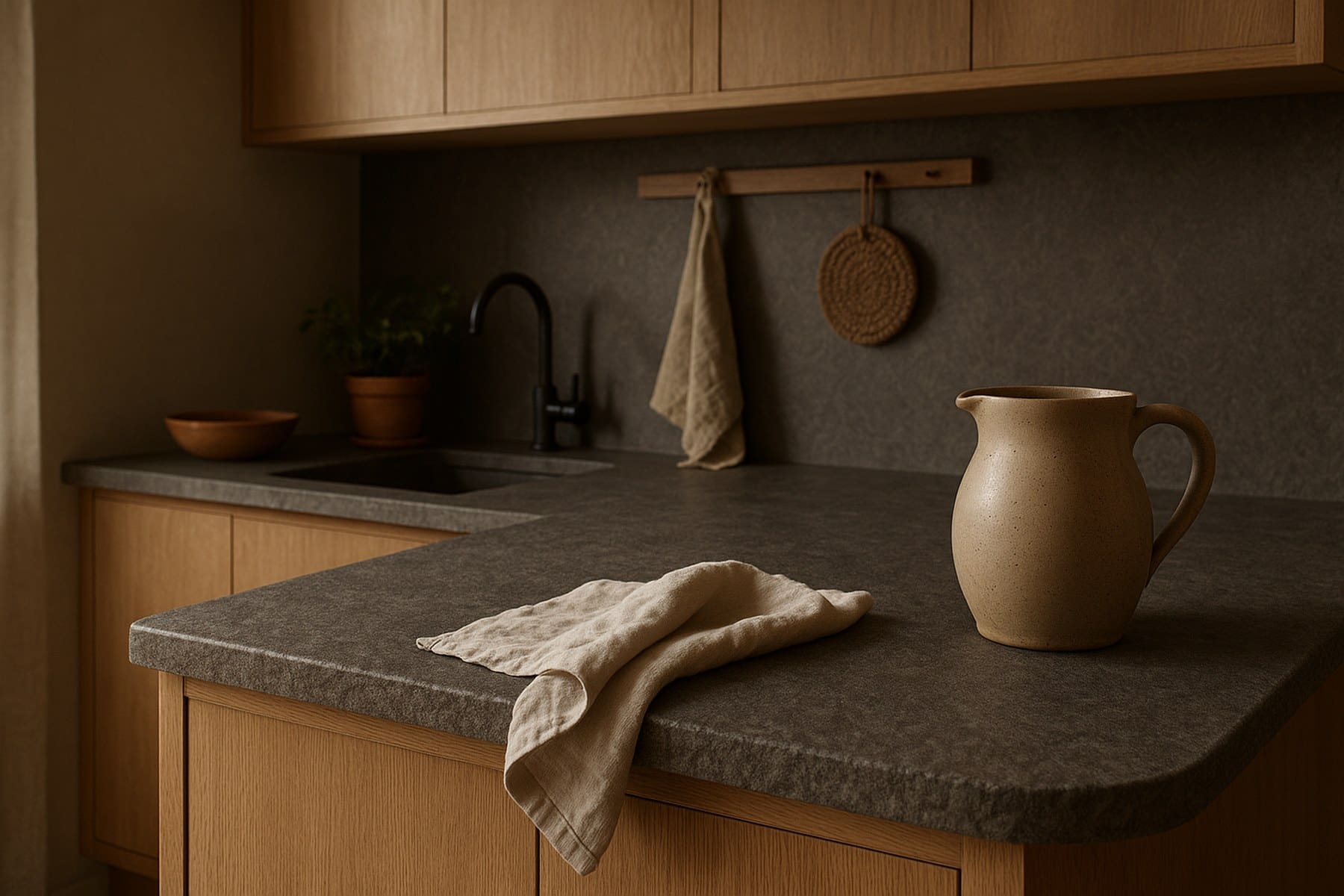
In 2025, granite is once again becoming a popular material for kitchen countertops, especially in matte finishes such as honed and leathered. These finishes give the surface a soft, natural look, highlighting the stone’s inherent beauty without the shine typical of the glossy surfaces of the past.
Honed quartzite is characterized by a velvety matte texture with no glare but plenty of depth. It emphasizes the authenticity of the stone without visually overwhelming the interior. Leathered granite, in turn, gains a subtle sheen and tactile texture, as if the stone had been hand-polished according to traditional craftsmanship standards.
The new texture-driven trend focuses not only on aesthetics. These finishes are practical for everyday use: they help conceal minor imperfections, resist fingerprints, and provide better grip when in contact with wet dishes. Textured surfaces pair especially well with warm, muted palettes and natural materials — wood, linen, terracotta.
This trend is not just about finish — it reflects a return to authenticity and tactile experience in the era of digital design.
Glass Chips with a Big Future: How Recycled Glass Is Winning Over Kitchens
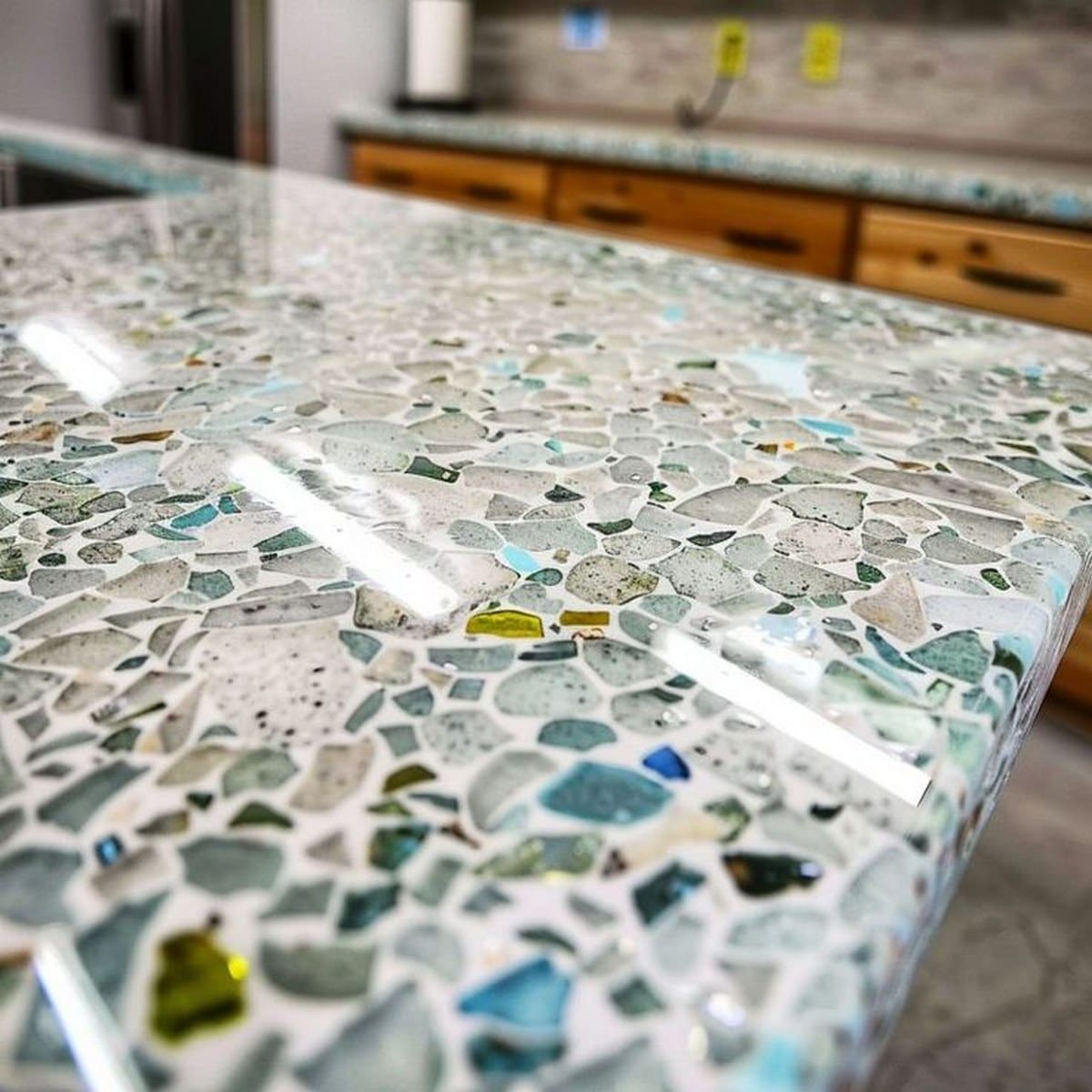
Recycled glass countertop. Source: @tkburnham (Pinterest)
The sustainability trend is driving growing interest in glass composites — such countertops consist of 85% recycled materials. In the era of sustainable design, one of the most prominent trends is the use of recycled glass in kitchen countertop production. These surfaces are not only visually striking — with mosaic-like shimmer and deep texture — but also serve as a vivid example of responsible consumption. Made up of 85% recycled materials, from glass bottles to reclaimed windows, they match traditional stone counterparts in durability.
Modern technologies allow manufacturers to precisely control the composition and color palette of these countertops, achieving strong decorative expression and high resistance to mechanical and thermal stress. The materials require minimal maintenance, do not need sealing, and are suitable for active use in kitchen environments.
Designers are particularly drawn to the ability to integrate glass composites into warm, neutral, or eco-oriented palettes — from beige-sand tones to deep greens and gray-blues. Visually, these surfaces resemble modern terrazzo, but with a genuine recycling story behind them.
Workforce Crisis in the Industry
In May, media outlets raised the issue of a severe labor shortage in the U.S. mining and construction industries. The deficit of equipment operators and mechanics is especially acute. Experts note that traditional recruitment methods are becoming increasingly ineffective, and the industry must adapt to new labor market realities.
One of the key causes of the workforce crisis is the declining interest among young people in careers in mining and construction. Many young professionals prefer other industries, perceiving work in quarries and on construction sites as less attractive. In addition, high employee turnover exacerbates the situation: according to open data, the average tenure of young employees within a company is about 2.7 years, after which they often leave the industry.
The following measures are proposed as solutions:
- Increasing wages and improving working conditions: reviewing compensation packages to make positions more attractive to applicants.
- Internal training and mentorship programs: companies invest in training new employees to help them adapt more quickly to job specifics and improve their qualifications.
- Loyalty and career growth programs: developing clear career paths and incentive systems to help retain employees.
However, the situation is complicated by current U.S. immigration policy. Stricter measures against undocumented immigrants are reducing the number of workers, particularly in construction, where about 13% of workers are undocumented. Mass deportations and ICE raids are causing concern among employers, as many of these workers hold key positions on job sites.
In response to criticism, President Trump acknowledged that strict immigration policy negatively affects several industries, including construction, and hinted at possible changes in the approach to labor migration. Options under discussion include temporary work permits for experienced migrants with clean records, as well as expansion of programs similar to H-2B to meet labor market needs.
Thus, overcoming the workforce crisis in the mining and construction industries requires a comprehensive approach that includes both internal measures to attract and retain personnel and a revision of immigration policy toward more flexible and adaptive solutions.
Source: Pit & Quarry, May 2025