
With recent updates to the National Electrical Code (NEC), the rules around where outlets can be installed in kitchens, especially on islands and peninsulas, have changed. Traditionally, outlets were placed on the sides of cabinets. While that approach was compliant at the time, it created several real safety concerns:
- Kids could pull on appliance cords hanging over the edge
- Small appliances could be yanked down and cause injuries
- Exposed cords created tripping hazards for both adults and children
To improve safety and convenience, updated code requirements now favor outlets installed in or on top of the countertop surface, rather than low on the cabinet wall. As a result, modern kitchens often include solutions such as:
- Pop-up countertop outlets
- Sleek, recessed power modules
- Integrated USB ports and wireless charging ports
Because these outlets must be wired correctly to meet current safety standards, a licensed electrician is strongly recommended for the countertop upgrade.
Why Not DIY Electrical Work?
While some homeowners may feel confident tackling electrical work themselves, it’s important to understand the risk:
- Insurance companies typically require licensed electrical work. Liability becomes a major issue if something goes wrong
- Electrical faults are a leading cause of house fires
- Many states allow DIY electrical work only if the homeowner continues to live there for a set period of time before selling
If an inspection finds unlicensed wiring, repairs or replacement may be required before closing on a home sale
The question isn’t if you’ll need an electrician. It’s whether you want your home protected and compliant from day one.
What a Licensed Electrician Provides
A qualified electrician ensures:
- Electrical circuits meet current code requirements
- GFCI protection is properly installed near water sources
- Wiring and connections pass inspection
- Your new outlets are safely and cleanly integrated into the countertop
Bottom line: Bringing in a licensed electrician helps protect your home, your family, and your investment, while ensuring your beautiful new countertops meet today’s safety standards.
When Countertop Design Triggers Electrical Requirements
Not long ago, countertops were usually the final step in a kitchen project. Cabinets were installed, electrical work was completed, and the countertop installer simply templated, fabricated, and installed the surface. Electrical rarely entered the conversation.
That’s no longer the case.
Today, many countertop designs directly trigger electrical requirements, especially in kitchens with islands and peninsulas. Once outlets are installed in the countertop, electrical planning must occur earlier in the process. In many homes, that means addressing:
- New or modified electrical circuits to support added outlets
- Relocating existing outlets that are no longer code-compliant
- Installing proper GFCI and, in some cases, AFCI protection
We see it every week.
A homeowner chooses a new island layout or a thicker slab, and suddenly, the existing electrical plan no longer works. An outlet that was once acceptable on the cabinet side now has to be moved. A circuit that was fine before may need to be extended or upgraded. If those decisions are made after the stone is cut, options become limited and expensive.
That’s why electrical planning now needs to happen before fabrication, not after. Once a countertop is templated and cut, changing outlet locations or sizes can mean rework, delays, or compromised design choices. When electrical requirements are considered early, countertop installers, electricians, and homeowners all have more flexibility and far fewer surprises.
In modern kitchens, countertop design and electrical design are no longer separate steps. They’re part of the same conversation. Getting them aligned early makes the entire project smoother and safer.
How Electricians and Countertop Installers Work Best Together
The cleanest countertop projects happen when electricians and countertop installers are brought into the conversation early. Before templates are finalized and before anything is cut. Once power is routed to the countertop surface, coordination between trades is required.
- The first step is planning outlet locations before fabrication. That means confirming where power is required, how many outlets are needed, and which style will be used. Pop-up outlets, recessed modules, and flush-mounted power units all have different space and clearance requirements. Knowing that upfront allows the countertop installer to plan cutouts correctly and avoid compromises later.
- Just as important is confirming cutout dimensions and tolerances. Countertop-mounted outlets leave very little room for error. Even minor discrepancies in size, depth, or placement prevent a unit from fitting properly or seating cleanly once installed. When electricians and fabricators confirm specs together, those issues are avoided.
- Projects often go wrong during last-minute field modifications. Trying to adjust wiring or outlet placement after a countertop is installed puts both trades in a challenging position. It increases the risk of damage to the finished surface and often results in solutions that appear forced or fail to meet code requirements.
- Timing also matters. Coordinating schedules ensures wiring is complete before installation and that countertop work isn’t delayed due to electrical changes. When each trade knows when the other is coming in, the project moves forward without gaps, rushed decisions, or rework.
From our experience, the best results come from treating electrical work and countertop installation as parts of the same system. When electricians and installers work together, homeowners get safer installations, cleaner finishes, and a project that goes right the first time.
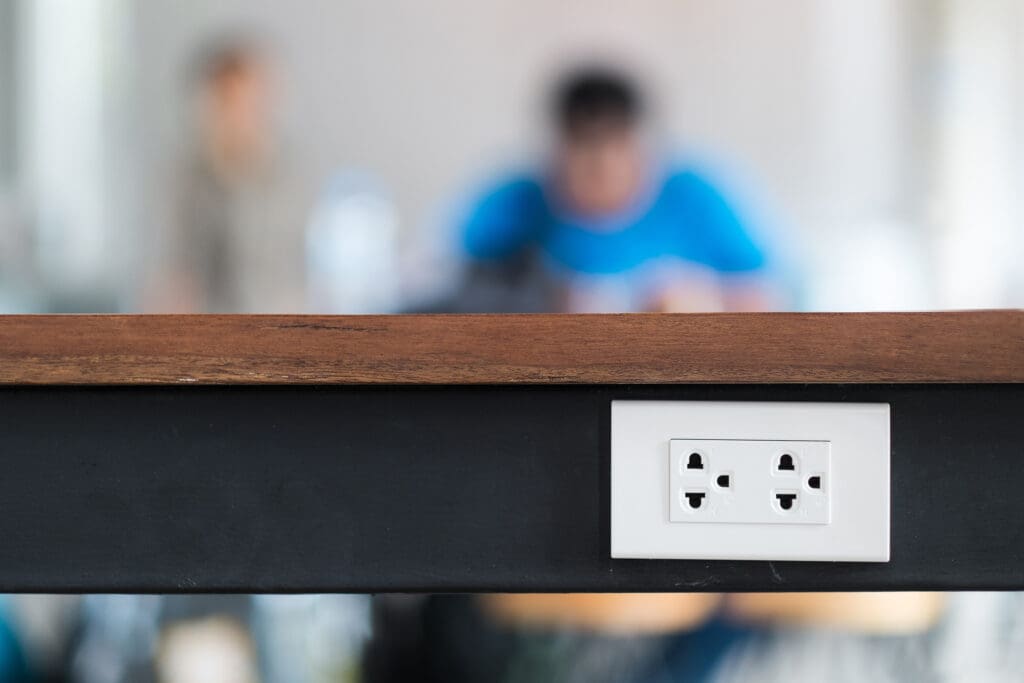
A Western Washington Perspective: Why Local Code Knowledge Matters
The National Electrical Code is a national standard, but how it’s enforced is very much local. In Western Washington, local enforcement matters, especially in kitchens, where inspectors tend to look closely at electrical work tied to countertops, islands, and sinks.
- One reason is moisture. Our climate requires greater emphasis on proper grounding, GFCI protection, and weather-resistant components, even inside the home.
- GFCI requirements near sinks, islands, and food prep areas are another common focus. Countertop-mounted outlets fall into this category, and inspectors routinely check that they’re installed correctly and protected as required. Spacing, accessibility, and proper labeling are the difference between passing on the first inspection and being sent back for corrections.
- Permitting. In most Western Washington jurisdictions, electrical permits can be pulled quickly, often the same day. Skipping that step rarely saves meaningful time or money, and it creates bigger problems later if an inspection is triggered during a remodel or home sale.
Local code knowledge is about understanding how national standards are applied in your area and ensuring that kitchen and countertop upgrades comply the first time.
Qualifications Matter More Than Most Homeowners Realize
One of the challenges homeowners face today is determining who is qualified to perform work in their home. That confusion doesn’t stop with countertops. It extends across electrical, HVAC, and other systems that often overlap during kitchen and home upgrades.
In Washington State, the barrier to entry for starting a contracting business is relatively low. In simple terms, someone can legally call themselves a contractor with little more than a business license and a van. While that makes it easy for companies to enter the market, it also creates risk for homeowners who assume all contractors operate at the same level of training and oversight.
Electrical work, in particular, requires licensing, continuing education, and a working knowledge of evolving codes. Without that, even well-intentioned installations can fall short of safety and compliance standards.
This is why licensing and training matter across all home systems, not just countertops. When projects cross trade lines, such as electrical work tied to countertop installations, experience and qualifications make a measurable difference.
At Product Air Heating, Cooling, and Electrical, we’ve built our approach around exceeding minimum requirements rather than simply meeting them. We’re proud to be recognized by the U.S. Department of Energy for heat pump installation, not as a marketing point, but as a reflection of our commitment to proper training, safety, and performance.
For homeowners, the takeaway is simple:
- Not all contractors are licensed to perform electrical work
- Training requirements vary widely depending on the task
- Code-compliant work depends on both experience and education
- Verifying qualifications protects your home and your investment
Choosing qualified professionals isn’t about paying more. It’s about avoiding preventable problems and ensuring the work is done right the first time.
What “Qualified” Really Means on Jobs That Cross Trades
Home improvement projects rarely fit neatly into one category. A kitchen upgrade can involve cabinetry, countertops, electrical, plumbing, and HVAC systems. When that happens, it’s important to understand where licensing lines are drawn and why they exist.
In Washington State, some HVAC-related tasks don’t require a specific electrical license. Removing or setting equipment, for example, may fall within a contractor’s general scope. But the moment a job involves disconnecting or installing electrical wiring, state electrical licensing is required.
Countertop-related electrical work always falls on the licensed side of that line. Installing outlets in or on a countertop, extending circuits to an island, or adding GFCI protection requires, grounding, and safety protections that must comply with the current electrical code.
This distinction matters because it’s where many problems begin. When one trade tries to “handle a little electrical” to keep a project moving, shortcuts are often taken, sometimes without realizing it. Those shortcuts may not be visible once the countertop is installed, but they can surface later during inspections, insurance claims, or home sales.
What “qualified” really means in these situations is simple:
- Knowing which tasks legally require electrical licensing
- Understanding how the electrical code applies to finished surfaces like countertops
- Having the training to coordinate safely with other trades
- Recognizing when a shortcut today becomes a costly correction later
When trades overlap, shortcuts become expensive mistakes. Clear boundaries, proper licensing, and early coordination are what keep projects safe, compliant, and built to last.
What We Invest In So Projects Go Right the First Time
Working in finished homes leaves very little room for error. Countertops, cabinets, and surrounding surfaces are already in place, so the work must be done carefully, correctly, and with a clear understanding of current code.
To maintain professional work, we are constantly investing in people and training, including:
- Licensed electricians for all wiring and electrical upgrades
- EPA-certified technicians when refrigerant handling is involved
- Manufacturer training on modern equipment and systems
- Continued education to stay current with changing safety and code requirements
This is what it takes to work safely in finished homes and deliver results that don’t need revisiting later.
Final Takeaway: Plan Electrical Like You Plan Stone
Once you install countertops, changing what’s underneath or what runs through them is rarely simple or inexpensive. That’s why electrical planning deserves the same level of attention as the material, layout, and finish of the stone itself.
Electrical mistakes are often hidden. They don’t always show up right away, but when they do, they tend to be costly. Failed inspections, required corrections, or problems uncovered during a home sale.
Planning electrical work early helps protect everyone involved:
- Homeowners avoid safety risks and unexpected expenses
- Installers avoid rework, delays, and compromised designs
- The finished countertop looks clean, functions properly, and meets current standards
When electrical planning is treated as part of the countertop design, not an afterthought, everyone wins.