


When Standing Water Changes the Septic Pumping Decision
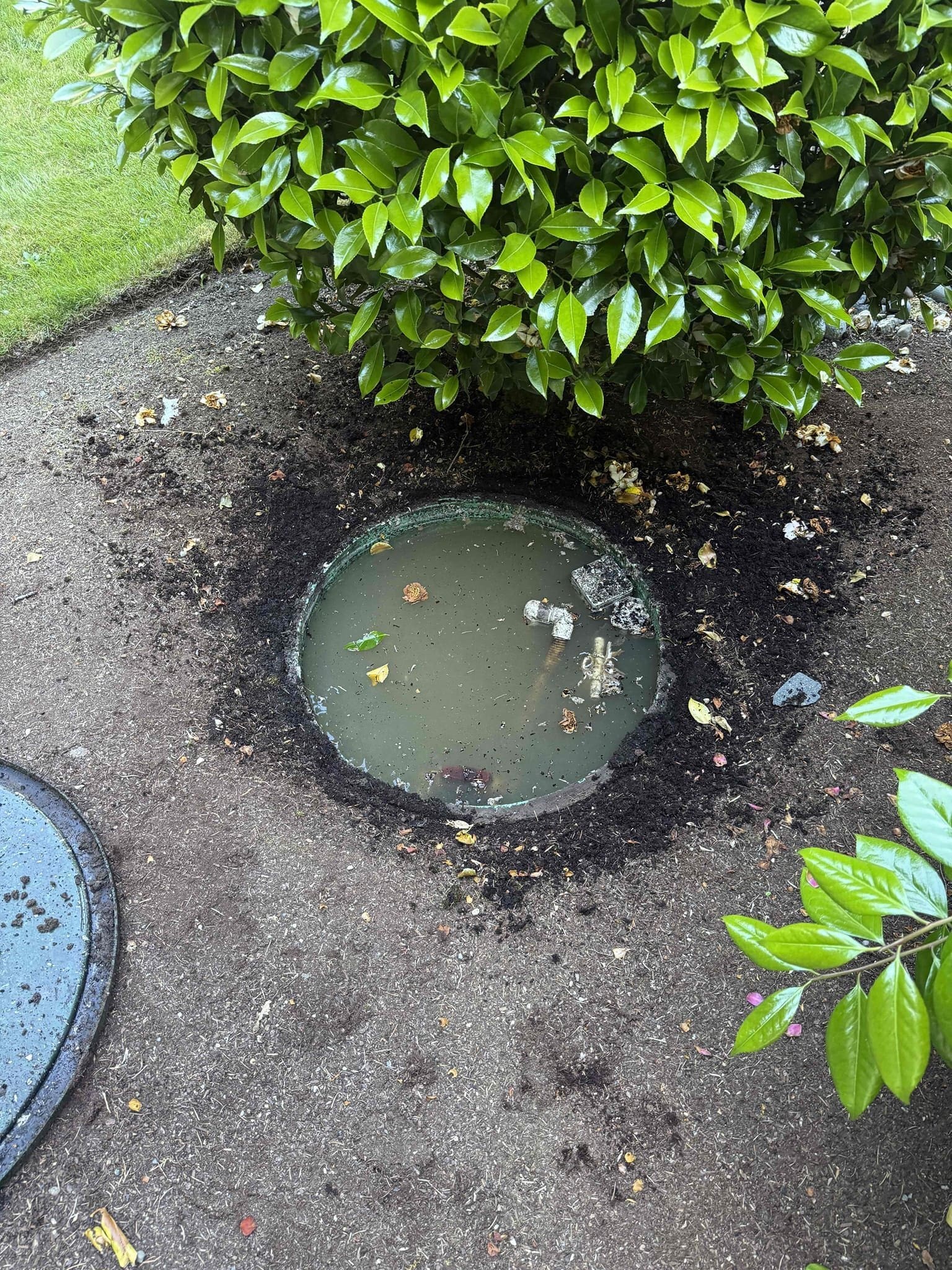
A dry house and a working toilet do not establish that a flooded drainfield is ready for use. Here is how to approach pumping and recovery without adding damage.
You can have a dry living room and a flooded septic system. On a low-lying property, stormwater may collect over the tank or drainfield while the house itself remains above the water. If you recently bought the home, you may not yet know which part of the yard contains the system.
When a homeowner calls about this, I want to understand where the water is before discussing a pump-out. Emptying the tank can sound like the quickest way to keep the household running. But the decision depends on what is happening outside the tank, and removing its contents under the wrong conditions can cause damage.
Locate the problem on the property first
Start with the as-built drawing, which records how the system was installed. It helps distinguish water near the driveway from water over the drainfield. Your inspection and maintenance reports can also identify unresolved concerns worth mentioning when you call.
Use records you already have. Do not open a submerged lid or dig in saturated ground to find out where the tank is. From a safe, dry location, note where water is collecting, whether it is rising or falling, and whether alarms or drainage problems have appeared.
A wet lawn alone does not establish that the septic system has flooded. Standing water over known components is a different concern. Explain the location and symptoms together so the service provider can plan an appropriate response.
Why removing liquid may not restore service
A septic tank normally holds liquid. It retains settled solids and floating material while liquid, called effluent, moves onward through the system. A tank containing liquid is not automatically overdue for pumping.
During flooding, outside water may enter through leaking components. Separately, saturated soil can prevent the drainfield from accepting and treating wastewater properly. Both conditions can occur on the same property, but they require different investigation.
In some systems, water can flow back toward the tank from farther downstream. I have seen water continue coming back from a drainfield while a tank was being pumped. Removing liquid did not remove the conditions supplying it.
That observation is a reason to ask what the work will accomplish. A tank that refills while the household uses very little water needs an explanation. Repeating a pump-out without understanding the source of the water may leave the underlying problem unchanged.
An empty tank can move in high groundwater
Water surrounding a buried tank creates an upward force. The tank's weight, its contents, and its installation help resist that force. Pumping removes some of the weight that was helping keep it in place.
Under unfavorable conditions, the tank can shift or float. It does not have to rise visibly out of the ground to damage a pipe connection. Depending on its construction and the surrounding pressures, deformation can also be a concern.
The EPA guidance on septic systems after flooding warns against pumping during flooded or saturated drainfield conditions. A heavy concrete tank is not automatically exempt. The installation, condition, and groundwater level still matter.
Nor does a disappearing puddle establish that the buried system is ready. The surface can look better before groundwater around the tank and field has dropped enough. Ask how the contractor has assessed those conditions rather than relying on the appearance of the lawn.
Some emergency guidance warns against removing more than half a tank's contents because of flotation risk. That should not be read as a promise that removing half is safe on every property.
A general advisory cannot account for the condition and installation of your particular tank. It also does not establish the current water level outside it. Let a qualified professional assess the site and explain the proposed work instead of choosing a volume from a general rule.
As a homeowner, you should understand why a pump-out is being recommended, what makes the conditions suitable, and what problem it is expected to address.
Make a plan for the household
If the septic system is flooded, stop using it and contact a professional. A toilet that still flushes does not prove the drainfield is treating the wastewater. You also cannot judge whether standing water contains sewage by its clarity or smell.
Arrange alternatives that do not discharge to the affected system. That may mean using a laundromat, finding a suitable temporary toilet, or staying elsewhere if the household cannot manage without the plumbing.
Do not send water from a flooded basement or yard into a toilet, sink, or other drain connected to the system. Keep children and pets away from sewage and potentially contaminated water. Observe from a safe location and report backups, surfacing sewage, or alarms promptly.
When you call, explain that the family is still occupying the home. A useful response needs to address what the household can do while service is interrupted, as well as when a technician might be able to reach the property.
A pump truck takes material away from the property. The septic system's own pump usually transfers wastewater to another component, often the drainfield. Running that pump manually does not remove the surrounding groundwater.
Do not change timers or floats to make room in a chamber. Sending additional effluent to an already flooded field can add to the problem.
Electrical equipment needs separate attention. Do not enter water to reach a control panel or breaker. Any necessary shutdown should be addressed from a safe, dry location with appropriate professional guidance. Equipment affected by flooding needs checking before power is restored, even after its exterior looks dry.
Know what recovery work is intended to fix
There is no universal waiting period that makes pumping safe. A professional needs to consider the system's design, the flood history, current groundwater and soil conditions, and whether outside water is still entering.
Once conditions allow safe access and work, pumping may be needed to remove silt or debris that entered the tank. An assessment may also show accumulated solids requiring routine removal. Those are specific reasons for service, rather than an assumption that every wet yard requires a pump-out.
Pumps, filters, and other affected components need evaluation within the appropriate scope. Emptying the main tank does not establish that the rest of the system is operating correctly. A heavy truck must also be kept from damaging a saturated drainfield while reaching the job.
If the cause remains uncertain, septic system troubleshooting should connect the proposed work to the observations. Ask what was found, what remains unverified, and what must happen before normal use can resume.
After the necessary checks and clearance to resume use, avoid catching up on all the laundry at once. Do not test the system by running a faucet or repeatedly flushing toilets. If symptoms return, stop adding unnecessary flow and contact the provider.
Save the dates when water appeared and receded, photographs taken safely, plumbing symptoms, and the service report. That history can help distinguish an isolated event from a recurring wet-season problem.
For urgent concerns such as sewage backing up or surfacing, describe the flooding when requesting emergency septic help. The next step must fit the conditions on your property. Pumping may belong in the recovery plan, but only when it can be performed safely and has a clear purpose.
More information about our septic maintenance, inspection, and troubleshooting work is available at Septic Solutions.
Art Nikolin Explains When Flooding Makes Septic Pumping Unsafe
The Stone Magazine (TSM): Can a septic tank be full and still be operating normally?
Art Nikolin (AN): Yes. A conventional septic tank normally contains liquid near its operating level. That alone doesn't tell us whether the system needs pumping or whether the drainfield can accept wastewater.
TSM: Why can pumping during flooding damage the tank?
AN: High groundwater creates upward pressure around a buried tank. Removing its contents reduces the weight helping resist that pressure. Under unfavorable conditions, the tank can move and damage its connections.
TSM: Have you encountered a tank refilling while it was being pumped?
AN: I've seen water continue coming back from a drainfield during pumping. That shows why we need to understand where the water is coming from instead of assuming another pump-out will solve the problem.
TSM: Is pumping half the tank a safer compromise?
AN: Not as a universal rule. We need to consider the tank, installation, surrounding groundwater, and current conditions before deciding whether any pumping is appropriate.
TSM: What should a homeowner do while the septic system is flooded?
AN: Stop using the affected system, avoid opening submerged access points, and contact a qualified professional. The household may need temporary arrangements that do not discharge wastewater into the flooded system.