


What Is a Grease Trap? How It Works and When You Need One
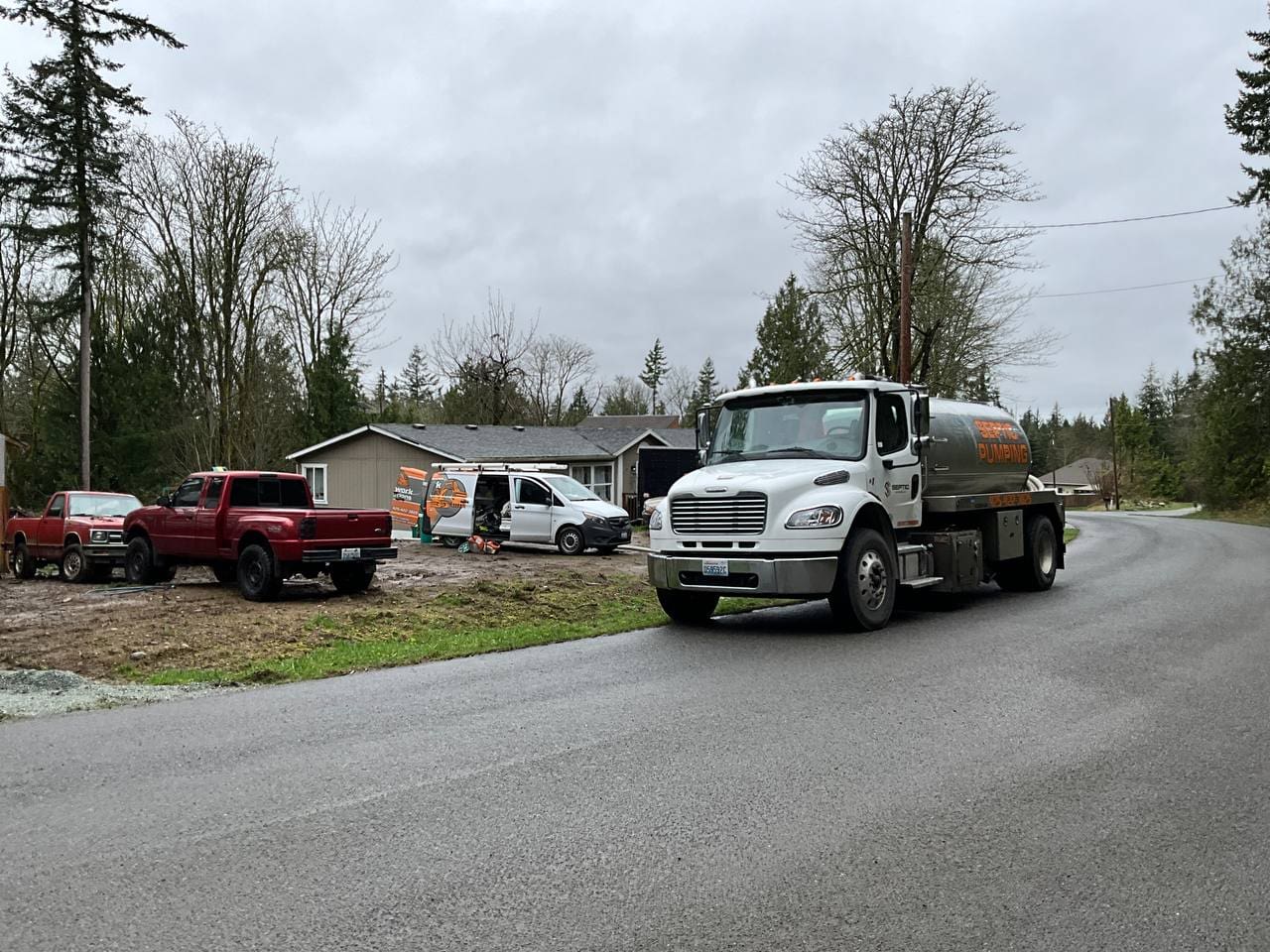
Hi, I'm Mark Nikolin, Field Specialist at Septic Solutions. Most of my field work involves septic systems, but grease causes similar problems when it builds up in plumbing or reaches the sewer.
We service grease interceptors for restaurants, commercial kitchens, and other properties across Snohomish, King, Skagit, Island, and Whatcom counties. When it comes to grease traps, there are several things to consider, so I'll explain what I look at and who actually needs one.
Quick Takeaways:
- A grease interceptor keeps fats, oils, grease, and food solids from moving farther into the sewer or septic system
- Commercial kitchens often need grease interception, but the exact requirement depends on where the business is located
- Cleaning frequency is not the same for every kitchen. It depends on the type of interceptor, how quickly it fills, and the local rules
What a Grease Trap Actually Is
A grease interceptor is a plumbing pretreatment device that captures fats, oils, grease, and food solids before they travel farther downstream. Depending on the system, one interceptor may serve a single fixture or several kitchen fixtures.
You'll still hear the term “grease trap,” especially for smaller units installed inside a kitchen. Modern systems are usually hydromechanical or gravity grease interceptors, with different capacity and maintenance requirements. Size is part of the equation, but it isn't the only thing that separates one type from another.
How a Grease Trap Works
When grease-laden wastewater enters the interceptor, the flow slows and the contents have time to separate. Fats, oils, and grease, which are generally less dense than water, rise toward the surface while heavier food solids settle toward the bottom. Internal baffles and the outlet arrangement help retain those materials while wastewater continues downstream. That separation only works while the interceptor has enough usable capacity. As grease and solids accumulate, they take up more of the chamber. If the interceptor is not cleaned before excessive buildup occurs, its separation efficiency drops and more FOG can move into the downstream piping.
Types of Grease Traps
Not every kitchen needs the same kind of grease interceptor. A small indoor unit may work for one setup, while a busy commercial kitchen may need a much larger system. Local requirements also affect what can be installed:
- Hydromechanical grease interceptors (HGIs). These are often what people mean when they say “grease trap.” They are commonly installed indoors and are rated for specific flow conditions. Their internal configuration and flow-control design help separate FOG from wastewater.
- Gravity grease interceptors (GGIs). These are larger tank-style systems that use volume and detention time to separate grease and solids. They are commonly installed outside commercial food-service facilities.
- Automatic grease removal devices. These systems separate FOG and mechanically move collected grease into a separate container. The grease is removed automatically, but the system still needs regular service and inspection.
Who Actually Needs a Grease Trap
Most ordinary single-family kitchens are not required to have a grease interceptor. That does not mean household cooking grease is safe to pour down a drain. FOG can still accumulate in household plumbing, sewer lines, and septic systems, so fats, oils, and grease should be kept out of the drain.
Commercial kitchens are different. Washington currently uses the 2021 Uniform Plumbing Code as adopted under Chapter 51-56 WAC, but the actual grease-interceptor requirements can also change from one local jurisdiction to another.
That's why I don't tell every customer that one Washington-wide rule applies to every commercial kitchen. Seattle, Everett, Redmond, Arlington, Bellingham, and the other communities we serve may have different local requirements for when an interceptor is required, what type is acceptable, and how it must be maintained.
For example, Seattle requires businesses with commercial kitchen plumbing fixtures and a King County Food Business Permit to install a grease interceptor. Everett also requires grease-removal systems for many commercial kitchens. If you're opening or remodeling a food-service operation, confirm the requirement before choosing the interceptor type or size.
Grease Trap Cleaning and Maintenance
How often a grease interceptor needs cleaning is one of those questions where I don't like giving people a number without seeing the unit. Two restaurants can have very different buildup even if their kitchens look similar from the outside.
Local requirements matter too. As of August 2026, Everett and Seattle use different rules for deciding when a grease interceptor needs to be cleaned:
|
Location / System |
Cleaning Requirement |
|
Everett, trap-style grease removal system |
At least once a week unless the City approves a longer interval. It also needs cleaning when grease and settled solids reach 25% of the liquid depth. |
|
Everett, interceptor-style system |
At least once every 90 days unless the City approves another schedule. The same 25% rule applies. |
|
Seattle |
Follow the manufacturer's cleaning specifications. If those are not available, food and FOG buildup should not exceed 25% of the interceptor. |
|
Other cities we serve |
Check the local sewer or plumbing requirements rather than assuming the Seattle or Everett schedule applies. |
When we service a grease interceptor, I look at what is actually inside it. If a kitchen is reaching that limit early, waiting for the date on the calendar does not make much sense.
Signs Your Grease Trap Needs Attention
Grease interceptor problems usually build up over time. These are the signs I would pay attention to:
- Greasy wastewater comes back through a sink or floor drain
- A sink or floor drain starts draining more slowly
- A greasy smell keeps coming back after cleaning
I check both the interceptor and downstream line when I see buildup or damage, especially after a backup.
If you already have a grease interceptor and are not sure when it was last serviced, start with an inspection and cleaning. Our grease trap pumping service includes cleaning the unit and checking its accessible components so you know what condition it is actually in.
A Marysville Call With Similar Warning Signs
We recently worked on a 1977 septic system in Marysville after the homeowner noticed gurgling and a persistent foul odor. Once we opened the system, we found that wastewater had backed up far enough to reach the distribution box and saturate the soil beneath the porch.
This was not a grease trap problem, but it is a good example of why a smell or slow drain isn't enough to diagnose the cause. Those symptoms tell us something is wrong. We still have to inspect the system and find out what is actually causing it.
Read the full Marysville case study.
Get Your Grease Trap Inspected
If you're unsure whether your interceptor is performing properly or whether your current cleaning schedule still makes sense, contact us. We can inspect the condition and accumulation we can access, clean the unit, and explain what we find.
When the question involves interceptor sizing, plumbing design, or code approval, the final requirement should be confirmed with the appropriate plumbing professional and local authority having jurisdiction.
FAQ
Do I need a grease trap for my home kitchen?
Most ordinary residential kitchens do not require a grease interceptor. A food business operating from a residential property may be different depending on its plumbing fixtures, wastewater discharge, permits, and local requirements. Either way, household fats, oils, and grease should be kept out of the drain.
What's the difference between a grease trap and a grease interceptor?
“Grease trap” is a common term often used for smaller indoor units, many of which are technically hydromechanical grease interceptors. Gravity grease interceptors are larger tank-style systems. The distinction involves design, rated flow, operating method, and maintenance requirements, not simply physical size.
How often should a restaurant clean its grease trap?
There is no single Washington-wide cleaning interval for every restaurant. Frequency depends on the interceptor type, manufacturer requirements, actual FOG and solids accumulation, and local rules. For example, as of August 2026, Everett requires interceptor-style systems to be cleaned at least every 90 days and hydromechanical trap-style systems at least weekly unless an alternate frequency is approved.
What happens if I skip grease trap cleaning?
As FOG and solids accumulate, they reduce the interceptor's usable capacity and separation efficiency. Excessive buildup can allow more grease to move downstream, contributing to slow drains, backups, odors, sewer restrictions, and local compliance problems.
Can I clean a grease trap myself?
It depends on the type of interceptor and the local jurisdiction. Some businesses are allowed to maintain certain hydromechanical grease interceptors themselves, while larger interceptor-style systems commonly require pumping service. Whatever method applies, the business still has to follow its local rules for cleaning and disposal. If maintenance records are required, those need to be kept as well.