


The Airflow Mistake That Makes New Kitchens Uncomfortable
I’ve walked into a lot of homes with brand-new kitchens.
Beautiful countertops. Clean cabinetry. High-end appliances.
And then the homeowner says, “Ever since we remodeled, this room feels off.”
Maybe it’s drafty in winter. Maybe the AC runs constantly in summer. Maybe the bedrooms don’t feel the same anymore.
Most of the time, it’s not the equipment.
It’s airflow.
What Airflow Actually Does
Your heating and cooling system doesn’t just create hot or cold air. It moves it.
Air has to circulate through supply and return paths in balance. If that balance changes, comfort changes.
When you remodel a kitchen, you often change the way air moves through the house without realizing it.
I tell people this all the time: when layouts change, airflow changes.
Remove a wall. Add a large island. Install a powerful vent hood. Expand into an open concept.
All of that affects how air circulates. If the HVAC system isn’t evaluated at the same time, problems show up later.
Where Kitchen Upgrades Go Wrong
Islands and Layout Changes
An island might look simple, but it can interrupt air movement patterns, especially in open-concept designs. If supply vents and return paths were designed for the original layout, the balance can shift.
Suddenly one side of the house feels warmer. Another feels cooler.
The equipment didn’t fail. The airflow changed.
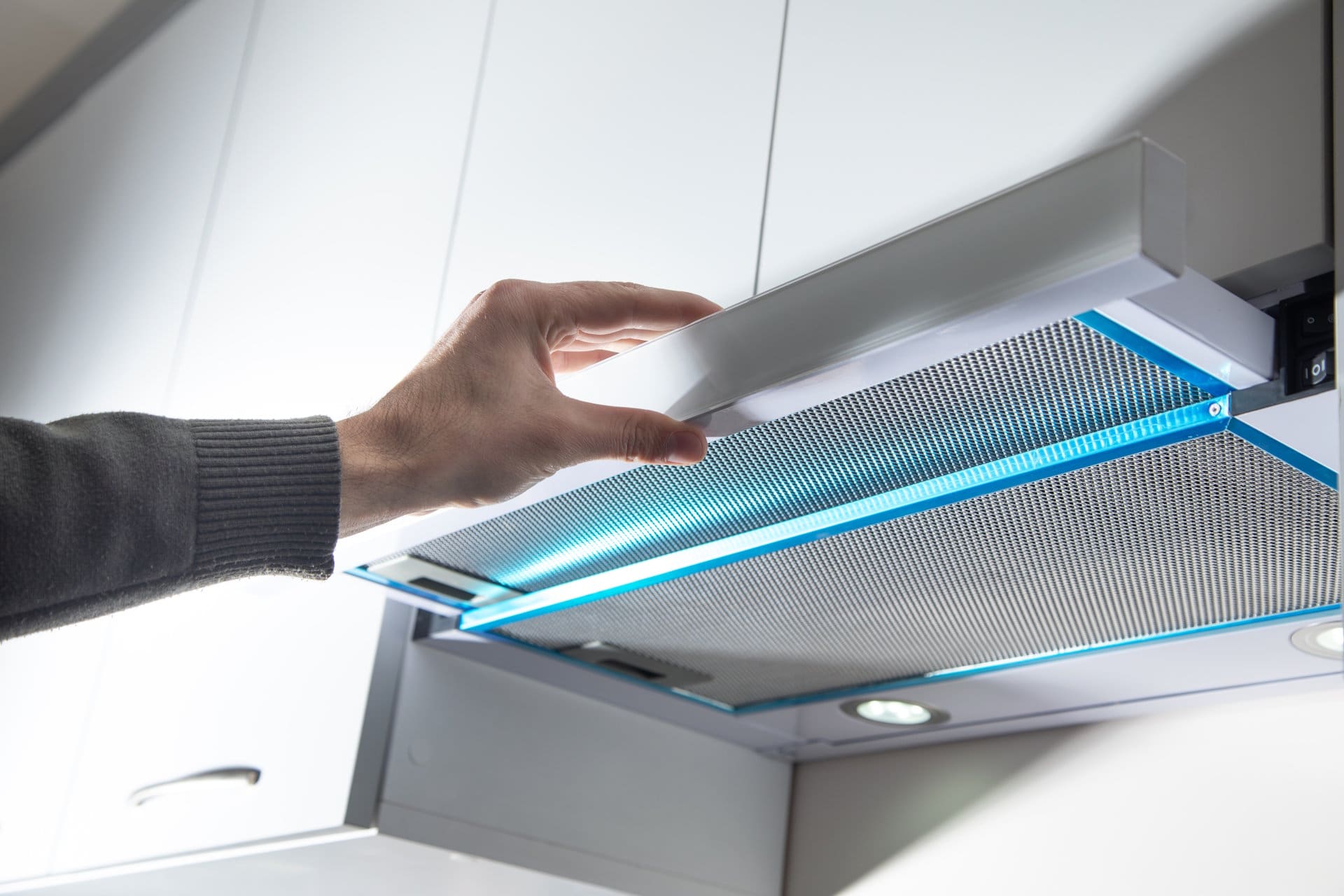
High-CFM Vent Hoods Without Makeup Air
This is one of the most common issues I see.
Modern kitchens often install powerful vent hoods. That’s fine. However, if you don’t provide makeup air, that hood pulls air from wherever it can.
In winter, that means cold outdoor air gets pulled in through small gaps around windows, doors, or framing. The house becomes slightly depressurized.
The heating system now works harder just to maintain temperature.
Most homeowners don’t realize that’s what’s happening. They just notice higher bills or cold drafts.
Open Concepts Increase Volume
When walls come down, cubic footage increases.
The HVAC system was originally sized based on the old layout. Now it’s conditioning a larger, more open space. That affects run time, temperature stability, and humidity control.
If nobody recalculates load or reviews airflow, the system may short cycle or run longer than it should.
Either way, comfort suffers.
What Happens When Airflow Is Ignored
When airflow isn’t addressed during a kitchen upgrade, the symptoms usually show up like this:
- Uneven temperatures between rooms
- Higher humidity in summer
- Frequent cycling
- Longer run times
- Higher utility bills
Short cycling is especially common with oversized equipment. The system turns on, hits the thermostat quickly, then shuts off. The air changes temperature, but the structure hasn’t stabilized.
Startup is the most stressful moment for HVAC equipment. More cycling means more wear.
Over time, that shortens lifespan.
And when airflow is restricted or imbalanced, even a properly sized system won’t perform the way it was designed to.
Airflow Has to Be Addressed During the Plan
If you’re upgrading a kitchen, airflow should be discussed at the same time as cabinets and appliances.
That doesn’t mean overcomplicating the project. It means asking the right questions:
- Do supply and return locations still make sense?
- Will a high-powered hood require makeup air?
- Has the home’s load changed due to layout adjustments?
- Is ductwork sized correctly for the new configuration?
When I size equipment, I don’t guess. I perform a load calculation based on insulation, windows, orientation, air leakage, and layout.
Square footage alone isn’t enough.
Airflow is part of that calculation.
If a contractor can’t explain how airflow was considered, that’s a concern.
When It’s Time to Look at Equipment
Sometimes airflow issues can be corrected with duct adjustments or balancing.
Other times, especially in large open kitchens, the system itself needs to be evaluated.
If the existing air conditioner or heat pump is already struggling, a remodel can expose those weaknesses.
That’s usually when we step back and look at the entire system: duct design, airflow balance, and proper load calculation. If replacement makes sense, it needs to be done based on real measurements, not square footage estimates. That’s why professional AC installation and replacement in Western Washington should always include load calculations and airflow review, especially after a layout change.
Correcting it during replacement is almost always less expensive than trying to fix comfort problems later.
Comfort Comes Down to Airflow and Balance
People focus on finishes because that’s what they see.
Comfort depends on airflow, balance, and execution.
A kitchen can look perfect and still feel wrong.
When airflow is ignored, the system compensates. And that shows up as higher bills, uneven temperatures, and premature wear.
If walls are open and layouts are changing, that’s the time to evaluate airflow. Doing it later usually means tearing things back apart.
A good kitchen upgrade should improve comfort, not create new airflow problems.
Because if the air moves correctly, everything else works the way it’s supposed to.