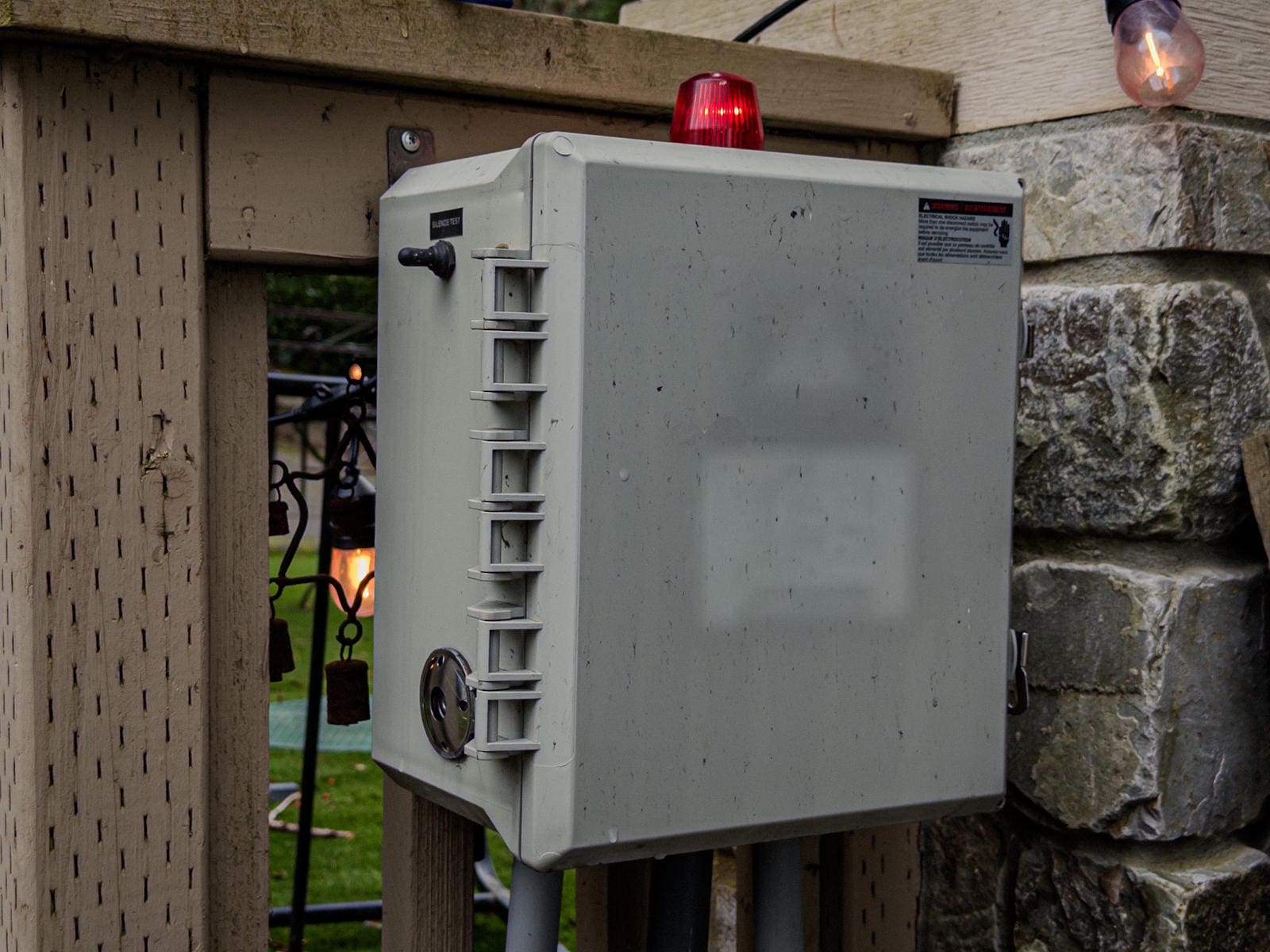
There are two types of homeowners when a septic alarm starts beeping.
The first type panics.
The second walks over, presses the silence button, and goes back to whatever they were doing.
Neither reaction is completely correct.
A septic alarm is not random. It is not “just acting up.” And it is not something that should be ignored repeatedly.
It is your system telling you something.
The key is understanding what and responding properly.
If your septic alarm begins beeping, follow this order:
- Silence the alarm (do not unplug or disable the panel).
- Immediately reduce water usage.
- Do not run laundry or the dishwasher.
- Avoid long showers.
- Call a licensed septic professional and schedule service within 24 hours if possible.
I explain it this way:
“If the system has been properly installed and maintained, and nobody’s gone in and tweaked things around, the system should have enough reserve capacity to last a day or two. Silence the alarm, conserve water, and make sure someone gets out there.”
That “properly installed and maintained” part matters.
Because not every system meets that standard.
Why Septic Alarms Exist in the First Place
In most modern systems with pumps, the alarm indicates one primary condition:
The water level inside the pump chamber is higher than it should be.
That usually means one of the following:
- The pump is not keeping up
- The pump is not running
- Too much water is entering the system
- Something is interfering with discharge
The alarm is an early warning device.
It exists to prevent overflow, not to annoy you.
Two Common Types of Alarm Reactions
1. The First-Time Alarm Homeowner
This homeowner assumes the house will flood immediately.
In most properly installed systems, that’s not the case. There is typically enough reserve capacity to allow 24–48 hours of reduced usage before a backup becomes critical.
The right response is controlled, not chaotic.
Conserve water. Call for service. Avoid overreacting.
2. The Complacent Alarm Homeowner
This is often the riskier situation.
They’ve heard it before.
They silence it.
They assume it will “sort itself out.”
It won’t.
Repeated alarms usually indicate:
- Excess water usage
- A leaking toilet
- A compromised component
- A float issue
- Groundwater intrusion
When ignored long enough, the system eventually forces attention, often at a much higher cost.
The Most Common Reasons Septic Alarms Go Off
There isn’t one single cause. But there are patterns.
1. Excessive Water Use
Hosting guests.
Back-to-back laundry loads.
Long showers.
Dishwasher cycles stacked together.
When inflow exceeds discharge capacity, the water level rises and the alarm activates.
2. Hidden Leaks (Especially Toilets)
Leaking toilets are among the most underestimated causes of septic alarms.
A continuously running toilet can introduce thousands of gallons per day into your system.
You may not notice it.
Your septic system will.
Unchecked leaks:
- Overload the system
- Shorten drain field life
- Raise water bills
3. Groundwater or Stormwater Infiltration
Western Washington’s rainfall makes this a real concern.
If lids, risers, or access ports are compromised, rainwater can enter the system. When stormwater fills the tank or pump chamber, the alarm triggers, even if household usage is normal.
4. Pump Failure
The pump may have:
- Burned out
- Lost power
- Experienced electrical failure
- Reached end of life
When the pump doesn’t run, water accumulates.
5. Float Malfunction
This is more common than most homeowners realize.
“You’ll see floats installed with electrical tape, zip ties, and wire. It can look like a rat’s nest. Sewer gases make materials brittle over time. Floats get dislodged, tangled, or stuck.”
Common float issues include:
- Float stuck in “on” position
- Float stuck in “off” position
- Dislodged mounting
- Short circuits
Poor installation practices create long-term reliability problems.
6. Control Panel or Wiring Problems
Electrical failures can occur in:
- The control panel
- Field wiring
- Corroded connections
Sewer gases are harsh on materials not rated for that environment. Over time, deterioration leads to alarm triggers or failure to operate properly.
Why Installation and Maintenance Matter
Some systems have been modified by previous owners.
Sometimes alarm floats were raised to stop nuisance beeping. Sometimes wiring was altered. Sometimes components were moved improperly.
In those situations, the built-in 24-hour safety buffer may not exist.
This is why ignoring alarms is risky.
The system may not be operating at the levels it was originally designed for.
What Makes the Situation Worse
There are two responses that consistently create bigger problems.
1. Trying to Fix It Yourself
This is the worst option.
Homeowners sometimes:
- Bypass floats
- Force the pump to run
- Rewire components
- Override safety mechanisms
“We show up and nothing’s working the way it’s supposed to. On top of that, they’ve pushed too much water into the drain field and caused the bubble to burst.”
DIY attempts can cause:
- Pump damage
- Electrical hazards
- Drain field overload
- Expensive repairs
A septic control panel is not the place to experiment.
2. Ignoring Repeated Alarms
Repeated alarms mean ongoing stress.
If the root cause is a leaking toilet, you may be:
- Overloading your system daily
- Increasing repair risk
- Shortening lifespan significantly
Ignoring alarms doesn’t eliminate the problem. It accelerates it.
Is It an Emergency?
It is a septic emergency, but not always a drop-everything situation.
If properly installed and maintained:
- Silence the alarm
- Conserve water
- Call a licensed professional
- Schedule service promptly
If you require immediate help, especially outside normal hours, professional evaluation through 24-hour emergency septic services is the safest route.
Maintenance customers often receive priority scheduling, but regardless of your plan, prompt attention is critical.
Why the Alarm Protects You Long-Term
A septic system in Western Washington can cost $20,000–$30,000 or more to replace.
Drain fields fail primarily due to overload:
- Too much water
- Excess wastewater strength
- Insufficient oxygen
Unchecked alarms directly contribute to overload.
The alarm is protection.
It is not noise.
Final Takeaway for Homeowners
When your septic alarm starts beeping:
- Silence it. Don’t disable it
- Reduce water usage immediately
- Avoid laundry and heavy use
- Call a licensed septic professional
- Do not rewire or bypass components
- Do not ignore repeated warnings
Handled properly, a septic alarm prevents damage.
Ignored or “fixed” incorrectly, it can turn a manageable issue into a major repair.
And in septic systems, early attention is almost always far less expensive than delayed response.