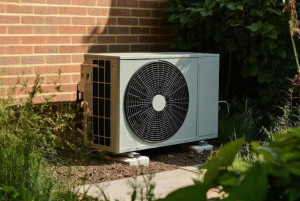
Meghan's home in Stanwood was less than a year old when we found the problem. Her Mitsubishi multi-zone heat pump had never seen a full winter, but a routine maintenance visit turned up an unsecured wall bracket, refrigerant lines left uninsulated across three of four indoor zones, and a condensate line draining straight into a wall cavity. None of it showed up because the equipment was bad. All of it was there because of how the system had been put in.
Homeowners planning a renovation tend to think in visible terms: new countertops, refinished cabinets, a kitchen that finally works the way it should. The mechanical systems running behind the walls rarely get the same scrutiny, and yet a heat pump installed the same year as the home itself can already be carrying defects that no amount of new stone or cabinetry will ever reveal.
Most of those problems don't show up as a dramatic failure on day one. They show up first as a system that runs less efficiently than it used to, a room that stays too warm or too cold no matter what the thermostat says, or a repair call that becomes the second one this year instead of the first in five. That pattern, rising repair frequency and inconsistent comfort, is usually what sends a homeowner searching for an AC repair service in Western Washington long before anyone starts pricing out a full replacement. Knowing how long a heat pump is actually supposed to last, and what shortens that number, is worth understanding before a renovation budget gets set, not after.
What's the Average Heat Pump Lifespan in Washington State?
The realistic range is 15 to 20 years, and that number holds up across our own installation history in Seattle, Marysville, and Issaquah, but only when a system was installed correctly to begin with and maintained along the way. Two things can shorten it dramatically regardless of how good the equipment is: an installation defect present from the first day, and maintenance that never happens, letting small issues compound into early failures. A heat pump can be mechanically capable of running two decades and still fail at year five if the underlying installation was never right.
Real Lifespan Numbers From Our Own Installations, Not Industry Averages
|
Homeowner
|
System Age at Failure/Replacement
|
Reason
|
|
Anish, Seattle
|
17 years
|
Compressor shorted to ground, out of warranty
|
|
Richard, Marysville
|
17 years
|
Complete system failure
|
|
Craig, Issaquah
|
20 years
|
Furnace non-functional, upper boundary of the range
|
|
Michael, Seattle
|
16 years
|
Proactive replacement, system still running
|
|
Carla, Marysville
|
~5 years
|
Refrigerant leak from a misplaced TXV sensing bulb, an installation defect
|
|
Meghan, Stanwood
|
Less than 1 year
|
Unsecured bracket, uninsulated lines, mold risk from original install
|
Four of these six numbers land almost exactly inside the 15-to-20-year window. The other two don't belong in that range at all, and that's the point: they're not exceptions, they're evidence that "how long does a heat pump last" and "how long does a correctly installed heat pump last" are two different questions.
When a Heat Pump Fails Years Before It Should
Carla's system was only about five years old when a refrigerant leak turned up in her attic air handler. The cause wasn't age. A TXV sensing bulb had been mounted in the wrong position from the original install, putting uneven stress on the refrigerant cycle from the day the system went in. Once inspected, the equipment itself was fine. The installation underneath it wasn't. Meghan's case was the same problem in a newer home: a well-regarded Mitsubishi unit, functioning correctly on its own terms, sitting on top of a mounting and connection job that had never been done right. A system installed correctly can run 15 to 20 years without drama. One installed poorly can develop serious problems in its first year, no matter how good the brand name on the unit is.
Does Western Washington's Wet Climate Shorten a Heat Pump's Lifespan?
Two climate effects pull in different directions here. Mild winters mean less mechanical stress on the compressor. Seattle rarely drops into the range where a heat pump has to run intensive defrost cycles or lean on auxiliary heat strips the way systems in the Midwest or Northeast regularly do, and that's a genuine regional advantage, not a marketing claim. Persistent humidity is the counterweight. Meghan's uninsulated lines allowed condensation to form and drain directly into a wall cavity, and a separate crawl space project in Sammamish documented the same underlying pattern independently. Mild winters extend a compressor's working life; the region's moisture makes correct line insulation and condensate drainage a genuinely critical factor in how long a system lasts, well before natural end of life ever enters the picture.
Why This Matters When You're Planning a Larger Home Renovation
A kitchen remodel and an HVAC replacement rarely land on the same calendar by accident, but they should. A heat pump already past 15 years, or one showing rising repair frequency and inconsistent comfort, is a cost that's coming whether or not it's on this year's renovation list. Homeowners who fold it into a broader project timeline, rather than treating it as a separate emergency later, tend to make better decisions about both. A countertop installed around ductwork that's about to be replaced is a countertop installed twice.
Signs It's Time to Replace, Not Just Repair
A few signs are worth watching for on their own: the system approaching or past 15 to 20 years, repair calls becoming more frequent, a warranty that's already expired, inconsistent heating or cooling between visits, and utility bills climbing without an obvious cause. None of these alone means replacement is mandatory, but together, especially on a system already past 15 years, they're the pattern that showed up right before Anish's system failed at 17 and Craig's at 20.
— Serge Nikolin, Co-Founder, Product Air Heating, Cooling and Electric
Marysville · Issaquah · Seattle · Western Washington