And Why Most Kitchens Fail Not Because of Materials But Because of Air
On the web, there’s no shortage of advice about humidity and kitchens.
You can find dozens of articles warning that moisture warps cabinet doors, swells MDF, cracks seams, and stains countertops. Most of them give you the same shallow tips:
“Use a dehumidifier.”
“Wipe spills.”
“Open a window.”
But very few explain why these problems happen or why they keep happening even in expensive, newly built homes.
Over the past few years, we’ve received dozens of questions from homeowners dealing with the same frustrating pattern:
- New kitchen installed
- High-quality cabinets and stone selected
- A few seasons pass
- Cabinet doors stop lining up
- Stone edges darken
- Seams crack
- Musty smells appear
So instead of guessing, we decided to go straight to the source of the problem and speak with two people who see these failures every day from completely different angles.
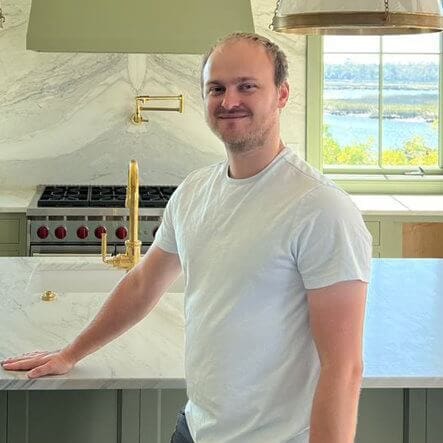
First, we talked to Iurii Pirogov, a CEO at https://ps-countertops.com/ and a stone specialist who works with natural countertops and sees how humidity literally changes materials.
Then we spoke with Sergey Nikolin, co-founder of Product Air Heating, Cooling, and Electric, LLC, the expert who controls the air that determines whether those materials survive or slowly decay.
What Most Homeowners Don’t Know About Stone Countertops
When people think of stone, they think of something solid. Permanent. Immune to damage.
That’s not how stone actually behaves inside a home.
According to Iurii Pirogov, the most problematic countertop materials when it comes to humidity are:
These stones are highly porous. They absorb moisture from the air just like a sponge.
“People don’t realize that stone can actually change color from humidity,” Iurii explains. “Light marbles and travertines can soak up moisture so deeply that dark stains appear. And if that moisture stays inside, you can even get mold growing in the stone. That’s not just a cosmetic problem. That’s a health issue.”
Even more surprising: color matters.
“The lighter the stone, the more it absorbs. Dark granites and quartzites are much more resistant. But white marble? Light travertine? Those will pull moisture right out of the air.”
And once moisture gets inside a porous stone, it’s extremely difficult to remove.
The 82-Degree Vacation That Destroyed a Kitchen
Iurii shared a real case that perfectly illustrates how indoor climate damages kitchens.
A homeowner went on vacation. To save money, they turned their AC up to 82°F.
When they returned, the entire edge of their kitchen countertops had turned dark. Not a spill. Not a leak. Humidity.
“Stone absorbs moisture slowly,” Iurii says. “It starts at the edges. Over days and weeks, it pulls in more and more. And once that happens, drying it is extremely difficult.”
To fix it, his team had to:
- Use industrial chemical treatments
- Wear protective gear
- Install fans for days
- Slowly dry the stone before resealing it
For most homeowners, this kind of restoration costs thousands of dollars.
All because the air was allowed to get too warm and too humid.
Why Kitchen Cabinets Are Even More Vulnerable Than Stone
If humidity can damage stone, it’s devastating for cabinets.
Iurii explains that cabinet materials fall into two broad categories:
- Natural wood
- Engineered materials like MDF and particle board
Natural wood can move slightly with humidity. It might expand, contract, or develop tiny cracks but it usually survives.
MDF is different.
“MDF absorbs moisture and swells. Once that happens, the structure is destroyed. It loses strength. Mold can grow. And it never goes back to its original shape.”
Now add a heavy stone countertop on top of that weakened cabinet box and things get worse.
“When the cabinet loses strength, it can sag. That puts pressure on the stone. And then the seams start cracking. So humidity in the air can end up breaking both your cabinets and your countertops.”
This is why many kitchens look fine for a few years… and then slowly start to fall apart.
The Early Warning Signs Most People Miss
According to Iurii, the first signs of humidity damage are subtle:
- Dark water-like spots on stone
- Slight swelling at cabinet edges
- Doors no longer lining up
- Yellowing seams
- A faint musty smell
“These aren’t cosmetic issues,” he says. “They’re warnings that moisture is inside the materials.”
The Real Problem Isn’t the Kitchen. It’s the Air
At this point, one thing becomes clear:
Stone and wood don’t fail on their own.
They fail when the air around them is wrong.
That’s where Sergey Nikolin comes in.
Why Heating Alone Can’t Protect Your Kitchen
Sergey explains something most homeowners never learn:
“To get rid of humidity, you have to remove it from the air. That’s what air conditioning does.”
Heating makes the air warm but it does not remove moisture.
Air conditioning and heat pumps do.
Sergey points out that proper heat pump installation is often the difference between cooling a home and actually controlling humidity.
In a climate like Washington’s, where moisture is always present, active dehumidification is not optional if you want your kitchen to last.
Why Heat Pumps Create the Safest Environment for Cabinets and Stone
Sergey strongly recommends heat pumps because they:
- Heat and cool
- Maintain consistent temperatures
- Remove moisture year-round
“Consistency is everything,” he explains. “Wood and stone don’t like big swings. Heat pumps keep the environment stable.”
That stability prevents:
- MDF swelling
- Stone absorbing moisture
- Seams cracking
- Mold growth
How Smart Thermostats Prevent the ‘Vacation Disaster’
Sergey also emphasizes the role of modern smart thermostats.
“They study your home,” he says. “They learn how fast it heats and cools. They monitor humidity. And they react faster than traditional systems.”
This means when outdoor conditions change or when you leave for vacation your home doesn’t drift into the danger zone that destroyed Iurii’s client’s kitchen.
The Simplest Rule That Saves the Most Kitchens
Sergey shares this:
“The difference between a system that lasts 10 years and one that lasts 25 years is maintenance, especially air filters.”
Clogged filters restrict airflow.
Restricted airflow reduces dehumidification.
And humidity destroys kitchens.
Your Kitchen Is a Greenhouse
Think of your home like a greenhouse.
Your cabinets and countertops are living materials.
Your HVAC system is the climate control.
If airflow stops, things rot.
If humidity rises, things swell.
If maintenance is ignored, things decay.
No amount of expensive cabinetry can survive the wrong environment.
How to Make Your Kitchen Last for Decades
From Iurii and Sergey together:
- Keep humidity between 50–60%
- Never turn off AC in summer
- Use bathroom exhaust fans
- Reseal natural stone regularly
- Replace air filters
- Maintain HVAC once a year
Your kitchen doesn’t live in a vacuum.
It lives in your air.
And the quality of that air decides whether your cabinets and facades last five years…
or thirty.