Wooden countertops have a character that stone and composite materials don’t. They warm up a space, develop patina over time, and give kitchens a lived-in feel that many homeowners want. But they’re also less forgiving. In some homes, wooden countertops hold up beautifully for decades. In other cases, cracks, gaps, and warping appear much sooner than expected.
What surprises many homeowners is that this difference isn’t always about the wood itself or how well it’s maintained. Two kitchens can use the same species, the same finish, and even the same installer and still age very differently.
One of the most overlooked factors is the home’s indoor environment.
Wood responds constantly to temperature and humidity. When those conditions stay relatively stable, wood can expand and contract gradually without damage. When they swing back and forth, stress builds up in the material, and that’s when problems begin to appear.
From our experience working in homes across Western Washington, we’ve seen how indoor climate control plays a major role in how wooden countertops perform over time. Heating and cooling systems have an impact on the longevity of natural materials throughout the home. And in many cases, the type of system a home uses makes a noticeable difference.
Wood Reacts to Homes, Not Just Kitchens. Why Indoor Conditions Matter More Than Maintenance Alone
Wood has always moved. Long before modern kitchens and climate-controlled homes, wood expanded and contracted with the seasons. That movement, by itself, isn’t a problem. It’s part of what makes wood a living material.
Many homeowners don’t realize that wooden countertops respond to the home's overall conditions, not just what happens in the kitchen. A countertop doesn’t know whether the thermostat was adjusted in the living room or a bedroom window was left open overnight. It only reacts to the surrounding air.
Maintenance helps, but it can’t counteract an unstable indoor environment. The real damage occurs when wood is pushed back and forth too quickly, drying out and absorbing moisture repeatedly.
You can picture it this way:
- Gradual, seasonal changes allow wood to adjust naturally
- Sharp temperature drops and rapid reheating stress the material
- Big swings in humidity force wood to swell and shrink repeatedly
Over time, that constant back-and-forth shows up as cracks, gaps at seams, or subtle warping. It’s not usually the result of a single extreme event, but rather the accumulation of everyday changes within the home.
The Real Problem: Temperature and Humidity Swings
Most of the conditions that stress wooden countertops don’t come from extreme situations. They come from normal, well-intentioned habits that make sense from a comfort or energy-saving standpoint.
Homeowners adjust thermostats. Systems cycle on and off. Seasons change. None of that feels unusual. And most of the time, it isn’t. The unintended consequence is how often indoor conditions are allowed to fluctuate.
Common patterns we see in homes include:
- Thermostats are turned down at night and raised again in the morning
- Long transitions between heating and cooling seasons
- Humidity levels vary widely between winter and summer
Each of these changes on its own may seem minor. But for wood, the frequency matters. Repeated swings force the material to expand and contract faster than it naturally wants to, and that constant movement adds up over time.
The key point is that this isn’t about doing something “wrong.” It’s about understanding how everyday household habits can gradually degrade natural materials like wooden countertops, even when everything else looks perfectly normal.
Why Consistency Protects Wooden Countertops
Stability beats perfection.
Wood doesn’t need perfect conditions. It doesn’t require a specific temperature or a specific humidity level to perform well. What it needs is consistency.
When indoor conditions stay predictable, wood has time to adjust. Expansion and contraction still occur, but they are gradual and consistent. That slow movement reduces stress on joints, seams, and finishes, which is precisely where damage tends to show up first.
Problems begin when conditions change too often or too quickly. Wood is forced to respond before it can fully settle, and that constant adjustment weakens it over time.
- A stable indoor environment helps wooden countertops by:
- Reducing sudden expansion and shrinkage
- Protecting glued joints and seams from separation
- Allowing finishes to wear evenly instead of cracking or lifting
This is why consistency matters more than chasing ideal settings. A home that holds steady, even if it’s not “perfect”, creates an environment where wood can age naturally instead of fighting against constant change.
How Heat Pumps Create a More Stable Indoor Environment: Without Homeowners Even Thinking About It
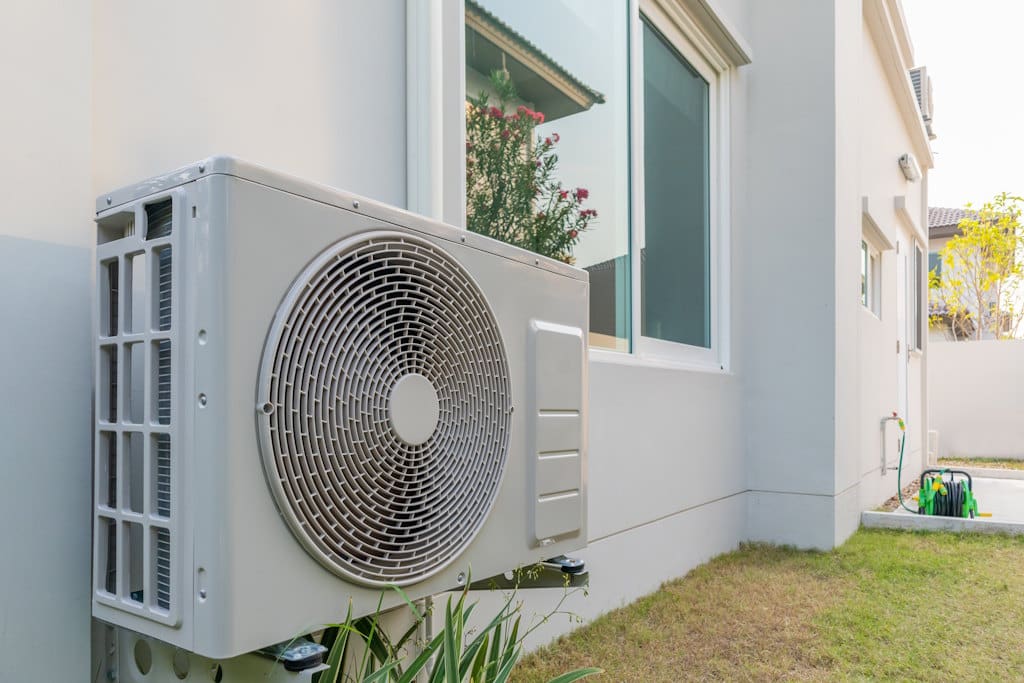
One reason heat pumps are so effective in homes with natural wood features is how they operate day-to-day. Rather than turning on hard, shutting off completely, and repeating that cycle, heat pumps are designed to make smaller, more frequent adjustments.
That approach creates a steadier indoor environment, often without homeowners noticing any difference. The home feels more consistent from room to room and hour to hour.
From a wood-protection standpoint, that consistency shows up in a few key ways:
- Gradual operation that avoids sudden temperature changes
- Fewer sharp swings between heating and cooling
- Better balance between temperature control and moisture removal
The result is an indoor environment that stays closer to equilibrium. Instead of pushing wood to constantly react, the system helps maintain conditions where wooden countertops can settle in and remain stable over time.
Heat Pumps vs Traditional Heating Systems (From a Wood Perspective)
From the standpoint of wooden countertops, the biggest difference between heating systems isn’t the equipment itself. It’s how the home’s temperature is managed throughout the day.
Traditional heating systems tend to be reactive. They wait for the indoor temperature to drop far enough from the set point, then turn on to make up the difference. That often means noticeable cycles of cooling off and warming back up.
Heat pumps behave differently. Instead of waiting for big changes, they make smaller, more frequent adjustments to maintain the temperature. The goal is to keep conditions steady rather than constantly correcting them.
For natural materials like wood, that difference matters. Large temperature swings force wood to react quickly, while smaller adjustments give it time to respond gradually. Over time, that gentler approach helps reduce stress on wooden countertops and other wood surfaces throughout the home.
Humidity, the Other Half of the Equation: Why Temperature Control Alone Isn’t Enough
Temperature gets most of the attention, but humidity also affects how wooden countertops hold up over time. Wood doesn’t just respond to heat. It absorbs and releases moisture from the surrounding air.
In winter, heated indoor air tends to be dry. As humidity drops, wood loses moisture and begins to shrink. That’s when small gaps, cracks, or separations can start to appear. In summer, the opposite happens. Higher humidity causes wood to absorb moisture and expand, sometimes closing gaps that appeared months earlier.
The problem isn’t either condition on its own. It’s the constant back-and-forth.
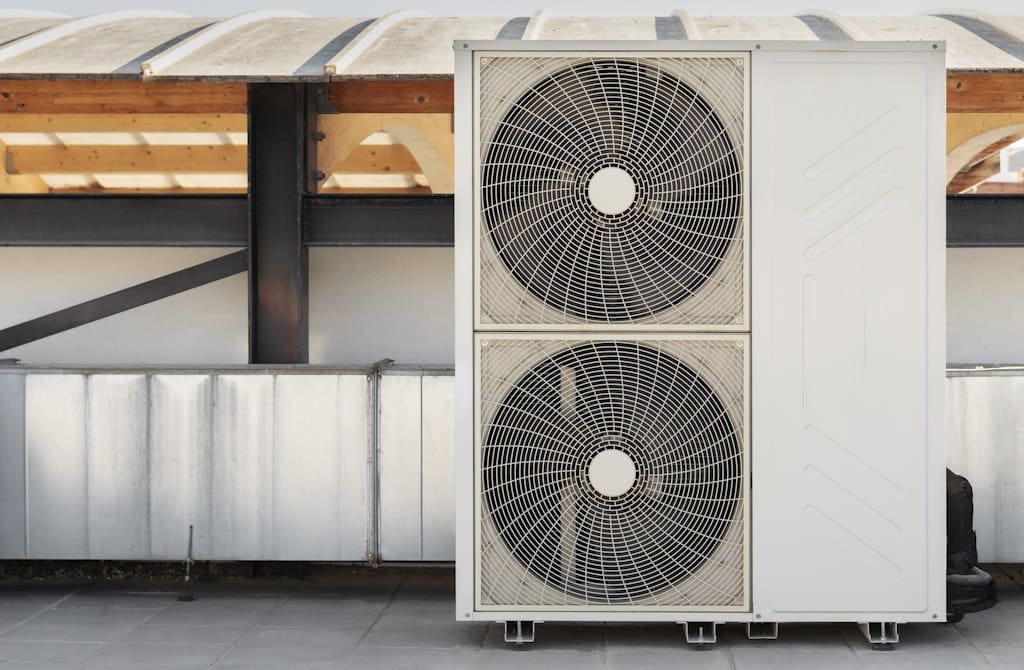
Heat pumps help manage this naturally by maintaining more consistent indoor conditions. During cooling seasons, they remove excess moisture as part of normal operation. During heating seasons, their steady output helps avoid the extreme dryness that can come from systems that cycle aggressively.
By controlling humidity swings, heat pumps reduce one of the most significant sources of stress on wooden countertops, helping them stay more stable from season to season.
A Western Washington Perspective and Why This Matters Even More Locally
In Western Washington, indoor climate stability matters more than many homeowners realize. Our region sees relatively high outdoor humidity, long heating seasons, and fewer extreme temperature spikes than other parts of the country. On paper, that sounds mild. However, inside the home, it creates its own challenges.
Homes here are often sealed tightly for energy efficiency. That’s a good thing, but it also means indoor air quality changes more slowly and lingers longer. When heating systems dry the air in winter, that dryness can persist. When humidity rises during the shoulder seasons, moisture can build up inside the home rather than clearing quickly.
Long heating seasons add another layer. Systems may run for months at a time, and how they manage temperature and moisture during that period has a noticeable effect on natural materials. We see this play out in real homes: wooden countertops, floors, and cabinetry responding not to extreme weather events, but to months of subtle, repeated indoor changes.
In this region, protecting wood isn’t about reacting to dramatic conditions. It’s about maintaining steady, controlled environments day after day, season after season.
What This Means for Homeowners Investing in Wood Countertops, Floors, and Built-Ins
When homeowners choose wooden countertops, they’re usually thinking about appearance, craftsmanship, and how the space will age over time. What is often overlooked is how much the home’s heating and cooling system influences the outcome.
HVAC choices affect more than comfort. They shape the environment in which wood lives every day. Over the years, that environment plays a major role in whether wood surfaces hold together, wear evenly, or begin to show avoidable damage.
A more stable indoor climate helps protect wood by:
- Reducing stress on joints, seams, and glued surfaces
- Allowing finishes to age evenly instead of cracking or lifting
- Minimizing the slow, repeated movement that leads to warping or gaps
For homeowners investing in natural wood, small daily stability adds up. The more consistent the indoor conditions, the better chance wooden countertops have to age gracefully alongside the rest of the home.
Final Takeaway: Protect Wood by Stabilizing the Home
Wooden countertops reflect how a home is lived in. They respond to daily habits, seasonal changes, and the overall indoor environment. When that environment is stable, wood can settle, adapt, and age naturally.
Heat pumps don’t protect wooden countertops by working harder or drawing attention to themselves. They do it quietly by reducing temperature and humidity swings that stress natural materials over time. That steady approach helps wood experience fewer extremes and fewer forced adjustments.
In the long run, a countertop’s lifespan isn’t determined by constant tweaking or chasing perfect settings. It comes from consistent conditions that allow wood to perform at its best.
When a home’s climate is stable, wood has a chance to age gracefully.