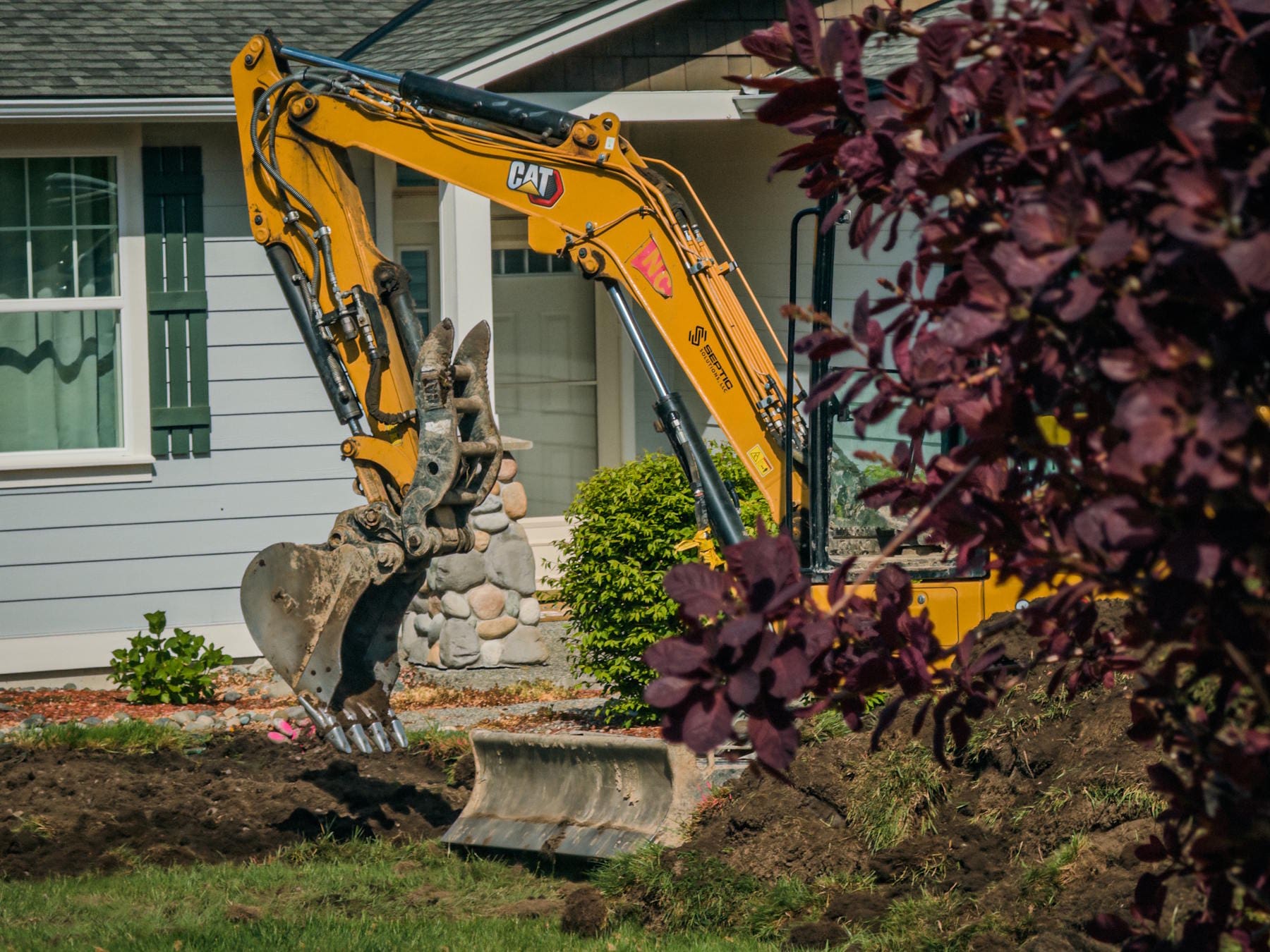
Spring and summer tend to bring the same kind of projects.
Homeowners expand garden beds. Add retaining walls. Plant trees. Redesign outdoor spaces they’ve been thinking about for months.
And somewhere in the middle of that process, one important detail often gets overlooked:
What’s happening underground.
For homes with septic systems, landscaping decisions can quietly create long-term damage, especially around the drain field.
The question comes up constantly:
Can you plant a garden over a septic system?
The safest answer is simple:
Grass is usually fine. Most other landscaping choices carry risk.
And in some cases, those risks can turn into repairs that cost tens of thousands of dollars.
The Most Common Landscaping Mistake
When homeowners ask what causes the most avoidable septic damage, the answer comes quickly:
“Planting anything besides grass over your septic system.”
Technically, there are lists of plants considered “safer” for septic areas. But real-world experience tends to point in a simpler direction.
My rule of thumb from what I’ve seen over the years is that the best thing to put over the top of your septic system is grass.
There’s a reason for that.
Grass:
- has shallow roots
- doesn’t aggressively search for water
- allows oxygen to move through the soil
And oxygen matters more than most homeowners realize.
A drain field isn’t an empty space underground. It’s an engineered filtration system that depends on proper soil conditions to treat wastewater effectively.
Grass supports that process. Larger plants often interfere with it.
Roots Don’t Stay Where You Plant Them
One of the biggest misconceptions homeowners have is distance.
People often assume a tree planted far enough away can’t affect the septic system.
But roots don’t work that way.
Roots are always searching for water. If they can find it, they will.
And septic systems provide exactly what roots are looking for: moisture.
Over time, roots from trees, shrubs, and even older landscaping can slowly work their way toward pipes and drain field components.
Sometimes the damage isn’t obvious until the system stops absorbing water properly.
One severe case involved roots completely filling long drain field laterals underground. There were no dramatic signs at the surface until the system began failing.
At that point, replacement became unavoidable.
Septic Failures Usually Start With Absorption Problems
Most homeowners imagine roots physically breaking pipes apart.
That can happen eventually, but it’s often not the first issue.
The more common problem is restricted absorption.
When roots interfere with parts of the drain field:
- wastewater can’t disperse properly
- the soil becomes overloaded
- backups begin developing
And because household water usage happens in concentrated bursts (showers, laundry, dishwashers), the system has to absorb large amounts quickly.
If portions of the drain field are blocked or stressed, the system starts losing that ability.
That’s when problems begin moving back toward the home.
Why Landscaping Mistakes Become Expensive
A garden bed or tree might seem harmless at the moment.
But septic systems are long-term infrastructure.
When root intrusion damages a drain field, repairs are rarely small.
Replacement costs can easily reach:
- $20,000 or more
depending on:
- soil conditions
- permitting requirements
- layout of the property
- system design
And many of those issues begin with landscaping decisions made years earlier.
What Homeowners Should Check Before Digging
Before planting anything beyond lawn grass or adding patios, retaining walls, or additional soil, it’s important to understand where the septic system actually sits.
Start With As-Built Drawings
These records show:
- tank location
- drain field layout
- distribution components
- approximate system depth
Without those drawings, landscaping becomes guesswork.
Why Experience Matters
Not every contractor approaches septic systems from the installation side.
And that difference matters when landscaping changes affect:
- drainage patterns
- soil load
- oxygen transfer
- water movement across the property
Not every septic contractor specializes in installation and system design, and that experience becomes especially important when landscaping changes affect drainage or soil conditions.
Sometimes the issue isn’t the plant itself. It’s extra soil weight, altered grading, or reduced airflow around the system.
Those details are easy to overlook until problems develop later.
Homeowners planning outdoor projects should consider having the septic system evaluated before landscaping work begins. For properties needing inspections, design input, or septic services in Lynnwood, WA, identifying drain field locations early can help prevent costly mistakes later.
Patios and Driveways Create Bigger Problems
This is where landscaping crosses into serious risk.
Drain fields rely on oxygen exchange through the soil. That airflow supports the bacteria responsible for wastewater treatment.
When homeowners install:
- patios
- driveways
- concrete slabs
- heavy hardscaping
over a drain field, oxygen movement becomes restricted.
Over time:
- soil conditions change
- biomat develops faster
- absorption slows down
- failure accelerates
And if those installations violate septic requirements, corrective action may eventually be required.
That can mean:
- removing the structure
- restoring the area
- replacing damaged components
At that point, the project becomes far more expensive than planned.
Yes, Structures End Up Over Septic Systems
It happens more often than people realize.
Driveways get poured over drain fields. Foundations get built over septic tanks.
The problem is that septic components aren’t designed to support structural loads long-term.
And over time, deterioration inside the tank itself can weaken materials further.
If collapse happens underneath a structure, the consequences go far beyond landscaping.
The Simplest Rule of Thumb
For most homeowners, the safest guideline is still the simplest one:
- Grass over the drain field
- No trees
- No aggressive shrubs
- No raised garden beds
- No retaining walls
- No driveways or patios
And before making significant landscaping changes, consult someone familiar with septic system installation and design.
Having somebody well-versed in septic systems take a look beforehand is always beneficial.
Final Thought
Landscaping can always be adjusted later.
A failed septic system is much harder and much more expensive to undo.
Gardens can move. Patios can be redesigned. Plants can be replaced.
But once a drain field loses its ability to function properly, homeowners are no longer dealing with aesthetics.
They’re dealing with infrastructure.
And when it comes to septic systems, prevention almost always costs less than repair.