

Crushed Glass Countertops: A Bold Choice with a True Wow Factor
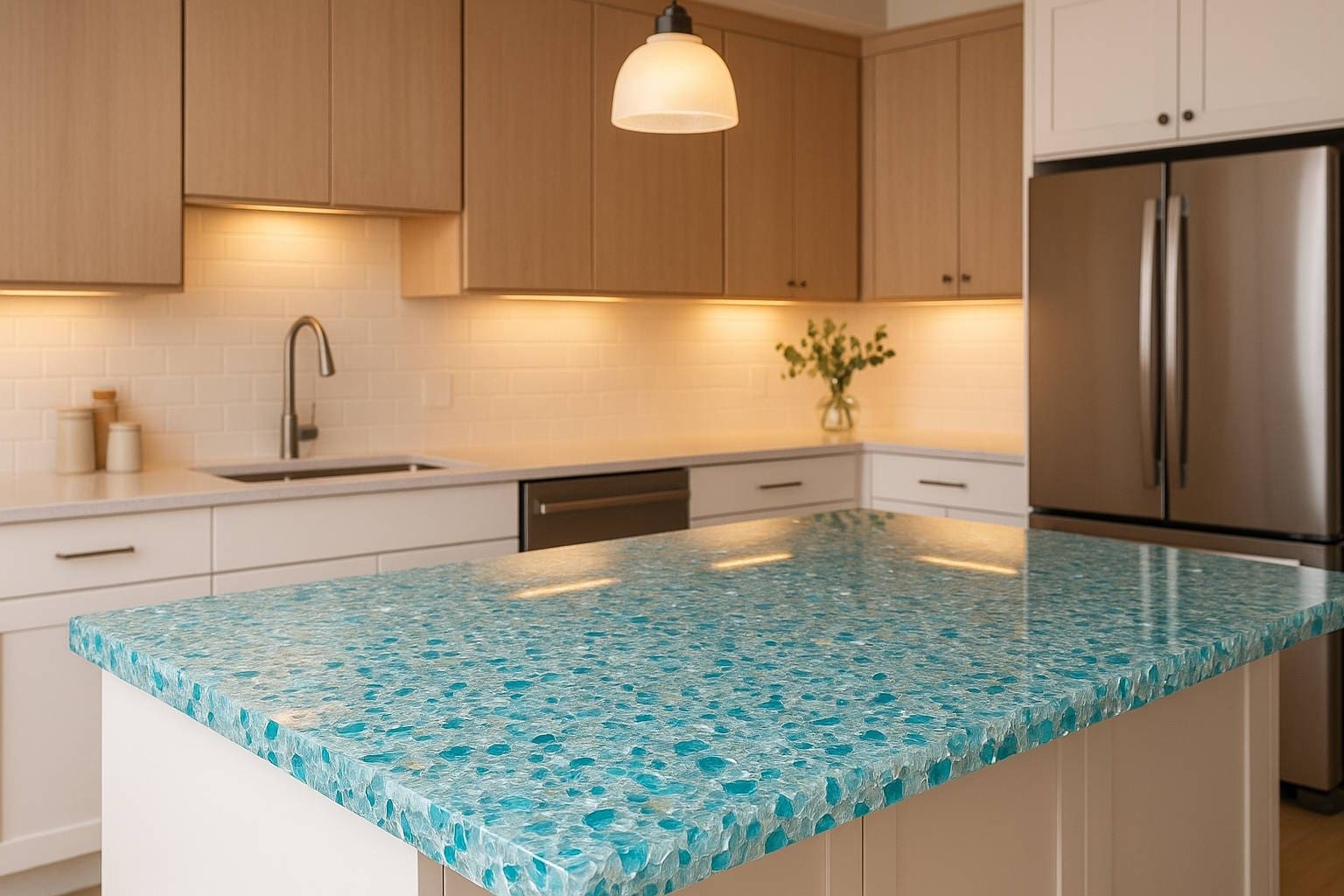
Sometimes you want your kitchen to do more than just function well. You want it to surprise. To walk in and think, “wow.” You want a countertop that sparkles, plays with light, and feels more like an art piece than just a work surface. That’s exactly the reaction crushed glass countertops tend to create. They feel made for people who love striking details. But behind all that beauty is a specific technology, and it’s important to understand how it works before choosing this type of countertop.
How Crushed Glass Countertops Are Made
At the core is always glass aggregate — small glass fragments. Clear, frosted, colored, mirrored, sometimes with a pearlescent sheen. These pieces are embedded into a base made of acrylic, concrete, or epoxy resin.
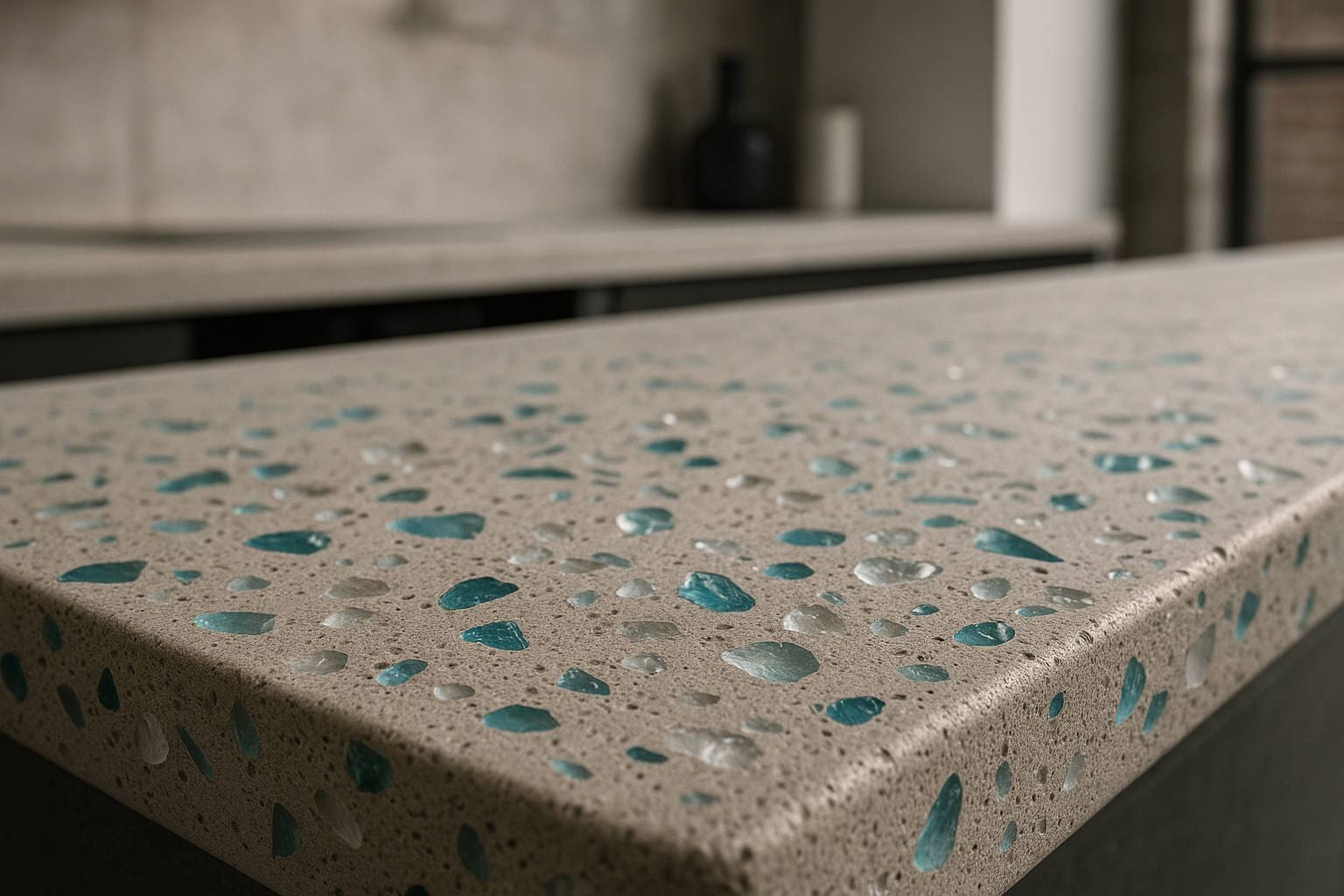
Concrete creates a rougher, more industrial texture. The surface is porous and typically matte. It’s a great fit for loft-style or eco-inspired interiors.
Acrylic is the complete opposite. It creates a smooth, high-gloss, almost glass-like surface. The glass fragments appear to be suspended inside.
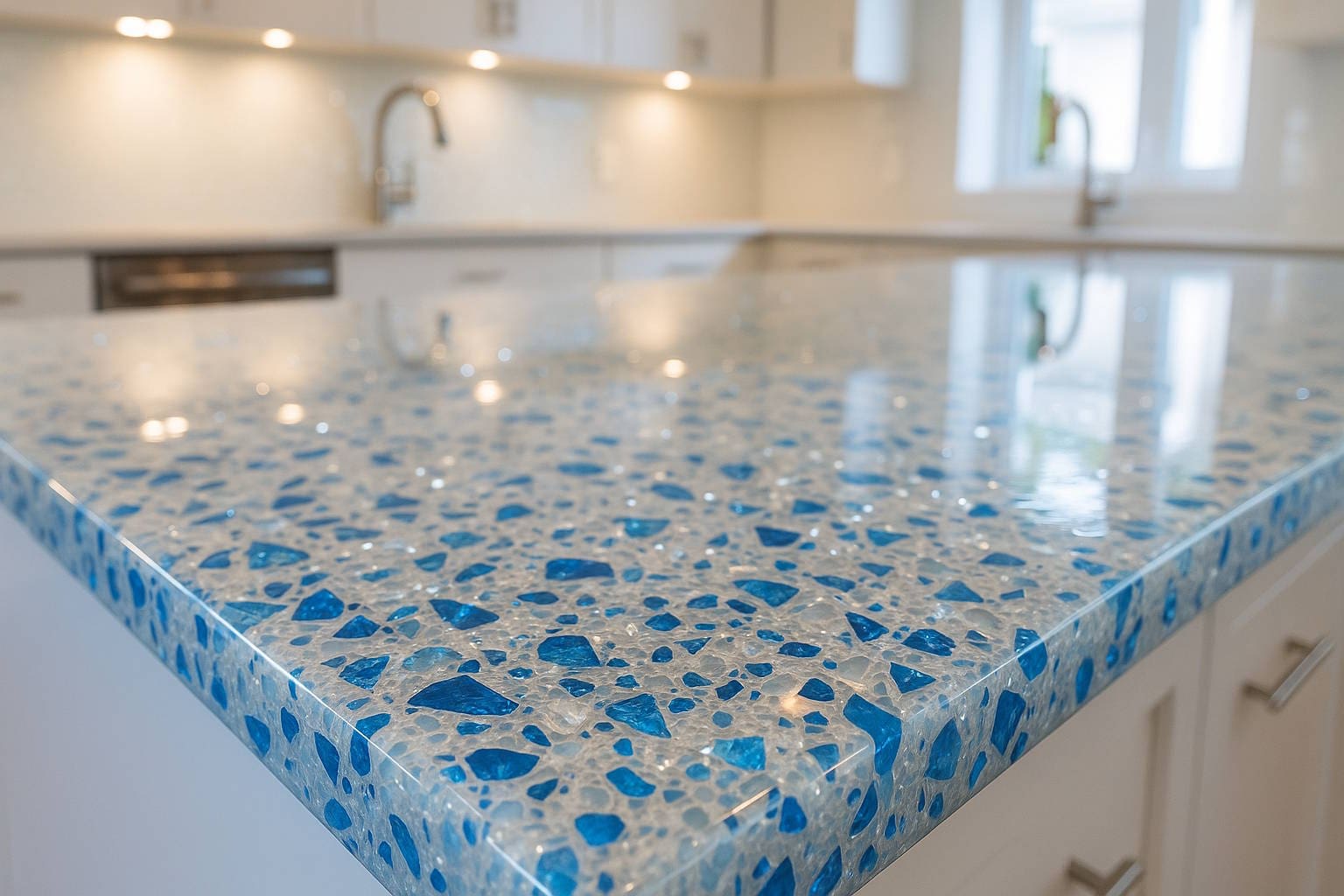
Epoxy is a middle ground. It can be glossy, but it’s more durable than acrylic. It handles impacts and hot cookware better.
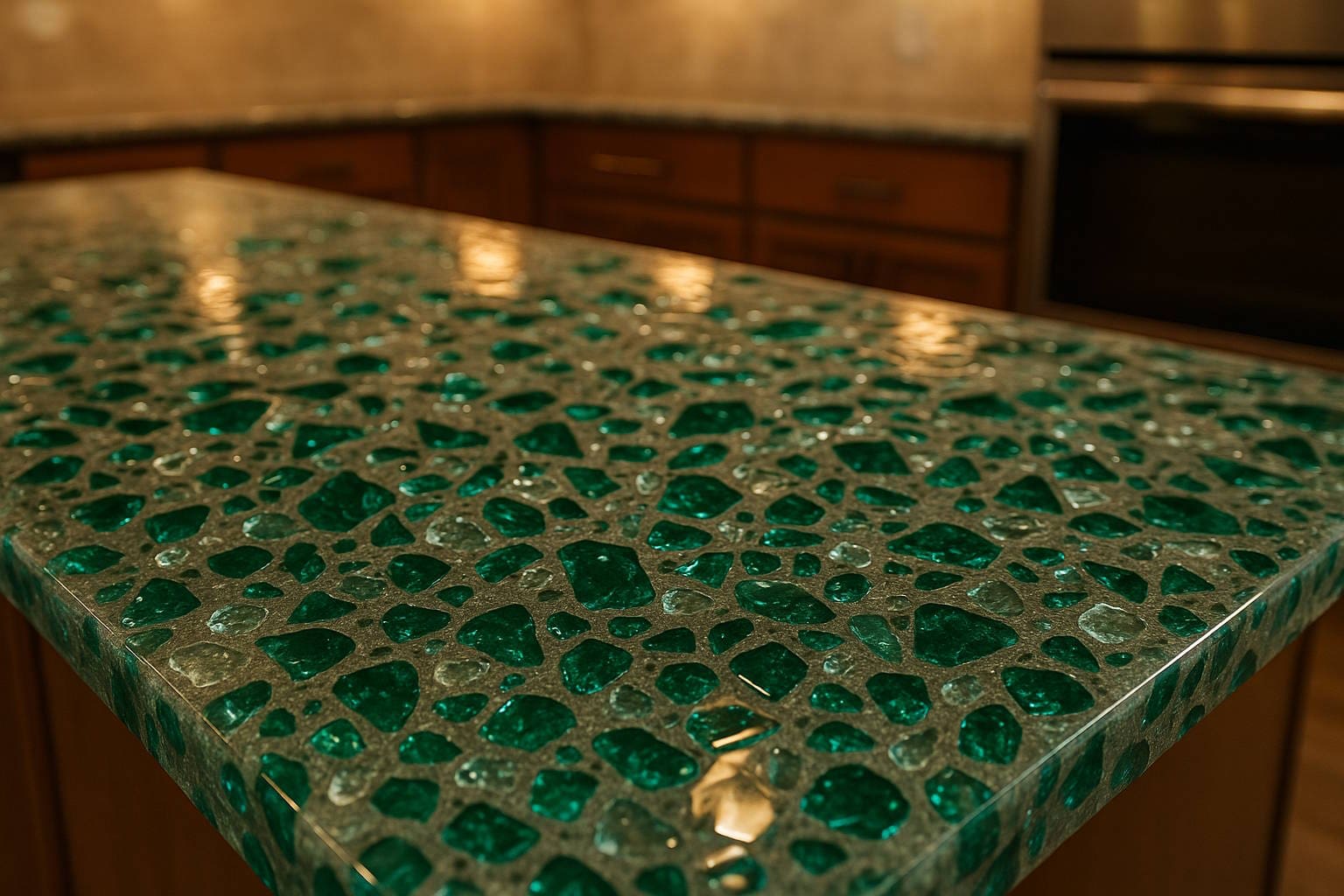
The final look depends on the formula. Sometimes the glass is mixed evenly, creating a mosaic-like pattern. Other times, the fragments are larger and more scattered, as if gemstones were dropped into concrete. One important detail: the larger the fragments and the deeper the layer, the stronger the sense of depth and dimension.
Durability, Maintenance, and Honest Reviews
Is it fragile? Not necessarily. The most durable options are those with epoxy or concrete bases. They can handle cutting, heat, and even minor impacts. Acrylic is softer, which means it’s easier to scratch.
What about maintenance?
If the base is porous, such as unsealed concrete, moisture and oils can seep in. Regular sealing is required.
Acrylic and epoxy surfaces are low-maintenance. They clean like quartz but do not tolerate abrasive cleaners.
"Our kitchen is now like an art gallery. The backlighting makes the crumbles glow, especially in the evening." — @PammyBoo94 (Reddit)
"We took for a bar counter - bright, dressy, but we had to buy special sealants. Without them, the concrete turned dark." — @Mark19061987 (Reddit)
Where They Look Best
Countertops made from recycled glass made from recycled glass work especially well in modern interiors. Spaces with plenty of light, smooth surfaces, and a desire for a bold accent. They pair beautifully with stainless steel appliances, black fixtures, and cool-toned cabinetry.
They are less common in classic or country-style interiors, but they can still work if you choose softer pastel colors, beige tones, or muted blush fragments. Another option is to use crushed glass only on part of the countertop, such as a bar area.
On a kitchen island, these countertops are real eye-catchers — especially with LED lighting underneath.
Another key point: the crushed glass can be selected to match the interior. For example, green pieces for pairing with dark wood, white and mirrored chips for a minimalist look, or bright blue for a bathroom. The main thing is not to overdo it with color.
Glass isn’t for everyone. Some people prefer the uniform appearance of quartz. Others lean toward the natural texture of granite. But if you’re looking for a countertop that you’ll want to admire again and again, crushed glass countertops are worth a look. They add a bit of magic to your home — without sacrificing practicality.