

Black Glass Countertops: Minimalism, Style, and Bold Solutions
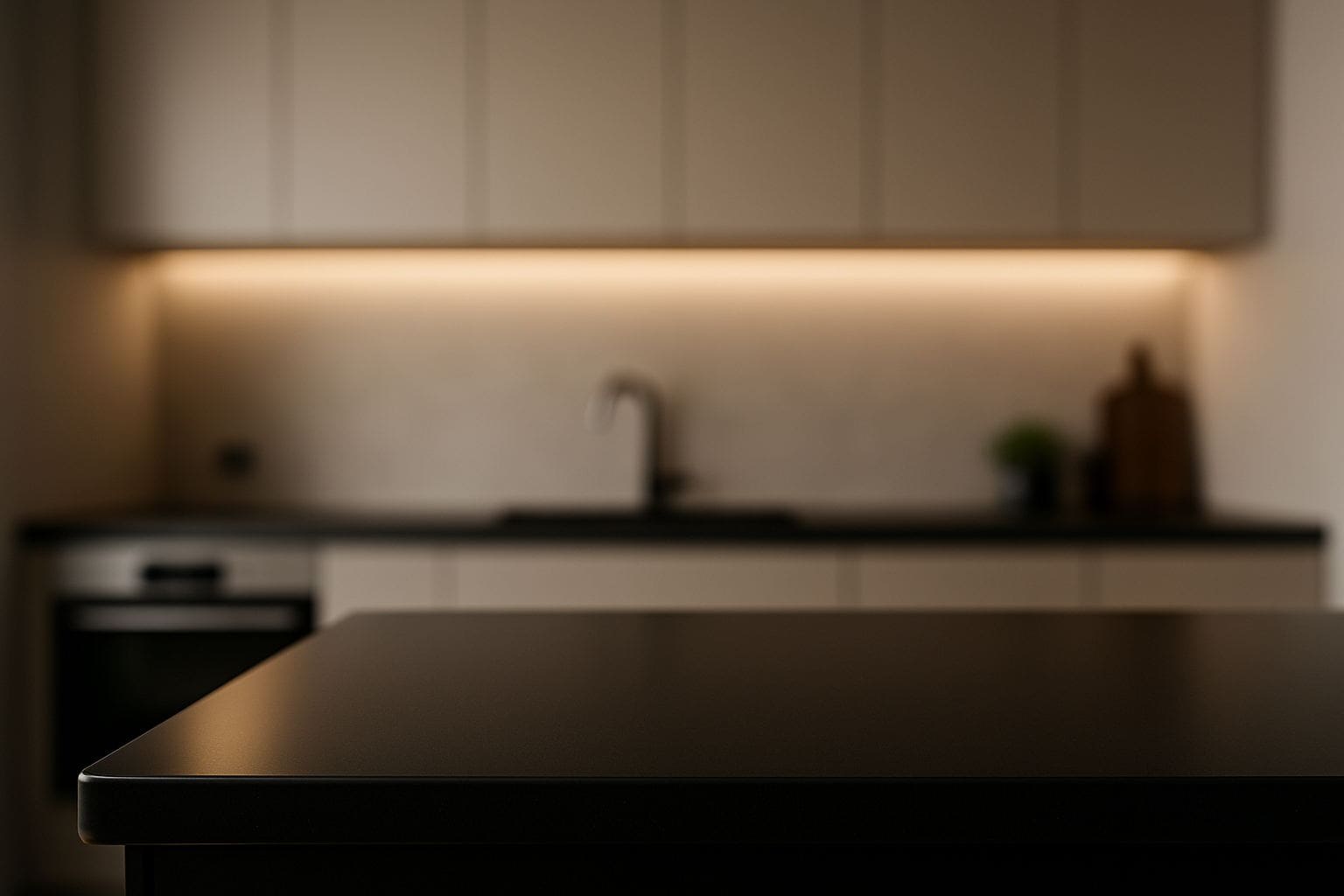
Interiors are changing. All-white kitchens are moving into the background, replaced by deeper, more expressive colors. More and more designers are choosing black glass countertops because they’re sleek, striking, and anything but boring. But that also raises questions: how do they pair with the rest of the kitchen? How high-maintenance are they? Should you worry about smudges, scratches, and fingerprints? Let’s go step by step.
Glossy, Satin, or Matte? How to Choose the Right Glass Finish
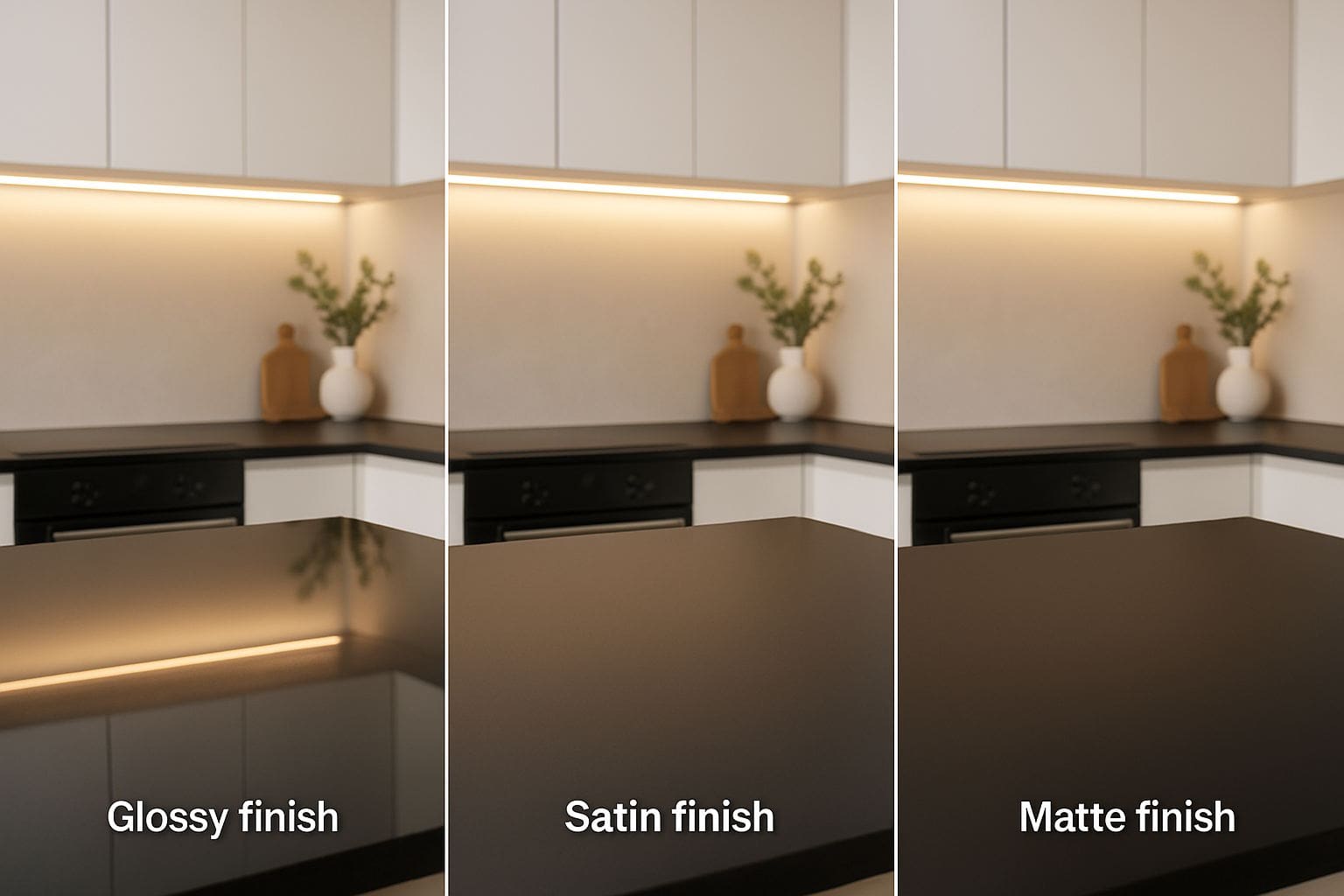
Black glass can look completely different depending on the finish. And this isn’t just about aesthetics. It directly affects everyday usability.
Glossy black glass countertops are the most eye-catching. The surface literally reflects light and can make even a dark kitchen feel visually lighter. But there’s a nuance: fingerprints and water spots are most noticeable on glossy finishes. Wiping them off isn’t a problem, but it does need to be done regularly.
Satin finishes sit somewhere in between. They retain a soft sheen without the mirror-like reflection. More practical, yet still visually expressive.
Matte black glass countertops are a favorite among minimalists. They don’t reflect light or pull too much attention, but they pair beautifully with natural textures like wood, stone, and concrete. And most importantly, marks and smudges are barely noticeable.
What to Pair Them With: Cabinets, Appliances, and Backsplashes
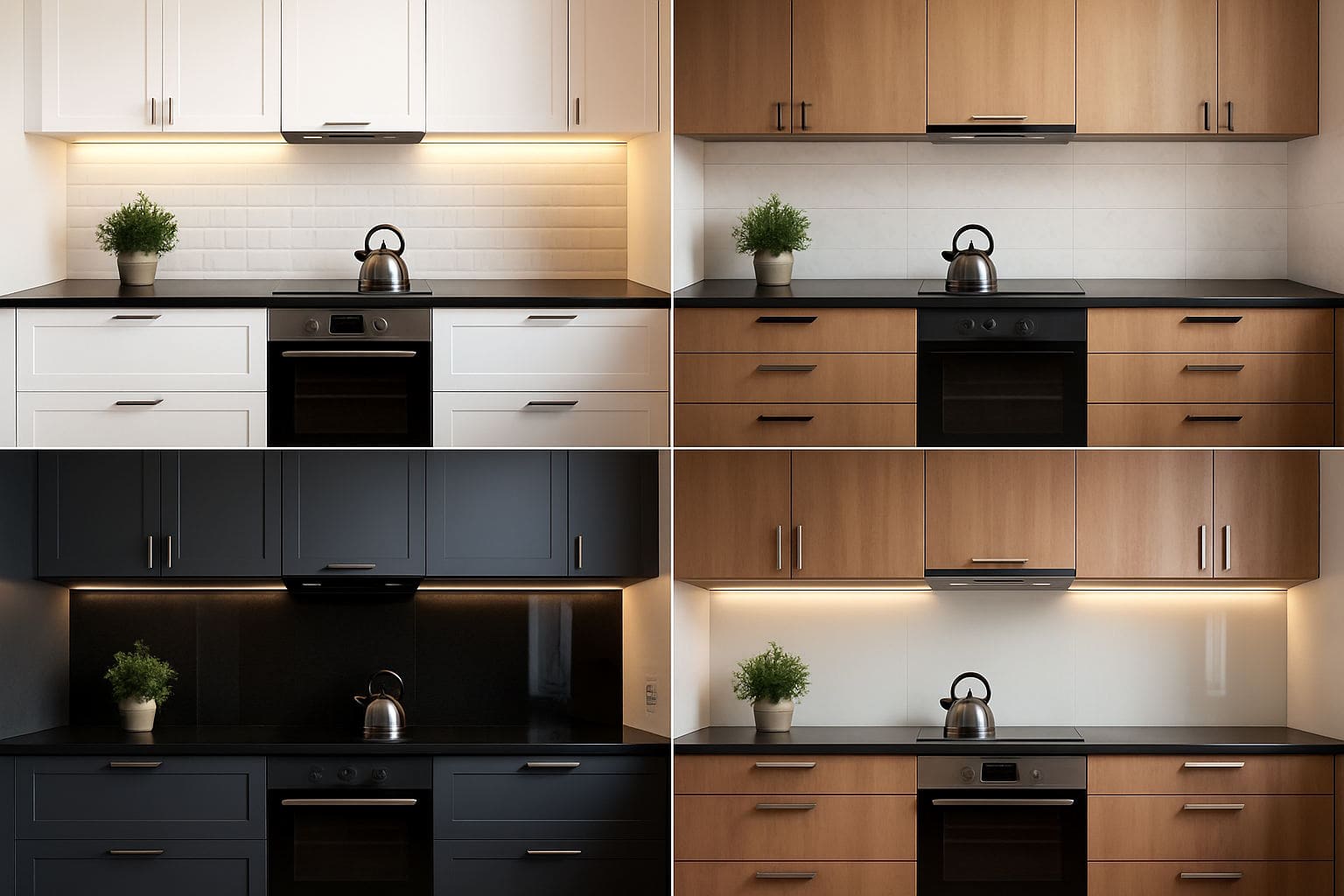
For black glass countertops to truly shine, the details around them matter. The wrong combination can make a kitchen feel gloomy, but there are foolproof options.
Cabinetry: White cabinets paired with black glass are a classic combination. This contrast makes the space look cleaner. Warm wood tones such as oak, walnut, or teak add warmth and help break up monotony. If you’re going for a modern look, gray or graphite cabinets with a matte finish work flawlessly.
Hardware and fixtures: Support the countertop with metal accents. Chrome is a safe, universal choice. Brass or black nickel works for those who want something more distinctive. The key is making sure the hardware complements the glass finish rather than competing with it.
Backsplashes: Clear glass or black gloss backsplashes work well in high-tech or modern kitchens. Marble tile or white brick softens the look for more relaxed interiors. Don’t be afraid to mix textures if the countertop is the main focal point.
Lighting: Warm light softens black and adds warmth. Cool light emphasizes structure and clean lines. Accent lighting along the backsplash or under upper cabinets isn’t just practical — it visually lifts the countertop away from the wall and makes it feel lighter.
Practical Considerations: Maintenance, Durability, and Scratches
Black glass looks impressive, but how does it perform in everyday use?
Fingerprints and stains: Yes, they can be noticeable, especially on glossy surfaces. But a microfiber cloth and a small amount of glass cleaner quickly restore a flawless look. The key is not letting water droplets dry on the surface.
Scratches: Surprisingly, tempered glass is quite durable. Of course, cutting directly on it isn’t recommended, and a cutting board is essential. But with normal use, glass countertops don’t develop the fine scratch patterns often seen on plastic or soft laminate surfaces.
Heat resistance: You don’t need to worry about placing a hot pot on the surface — tempered glass can withstand temperatures up to 500°F. Still, it’s better to use a trivet, especially if the glass is installed without additional backing.
Cleaning: No seams. No pores. No absorbent surface like stone or wood. Just wipe it down and you’re done. This is especially convenient for those who love cooking but don’t love cleaning.
Are Black Glass Countertops Worth It?
If you’re looking for something stylish, bold, and easy to maintain, the answer is yes. Black glass countertops aren’t about fickle fashion — they’re about a confident accent in the interior. The key is understanding what to pair them with and choosing the right texture. Do that, and minimalism won’t feel cold — it will feel expressive. And your kitchen won’t just be modern, it will truly feel like yours.