


Bioglass Countertops: An Eco-Friendly Alternative to Stone
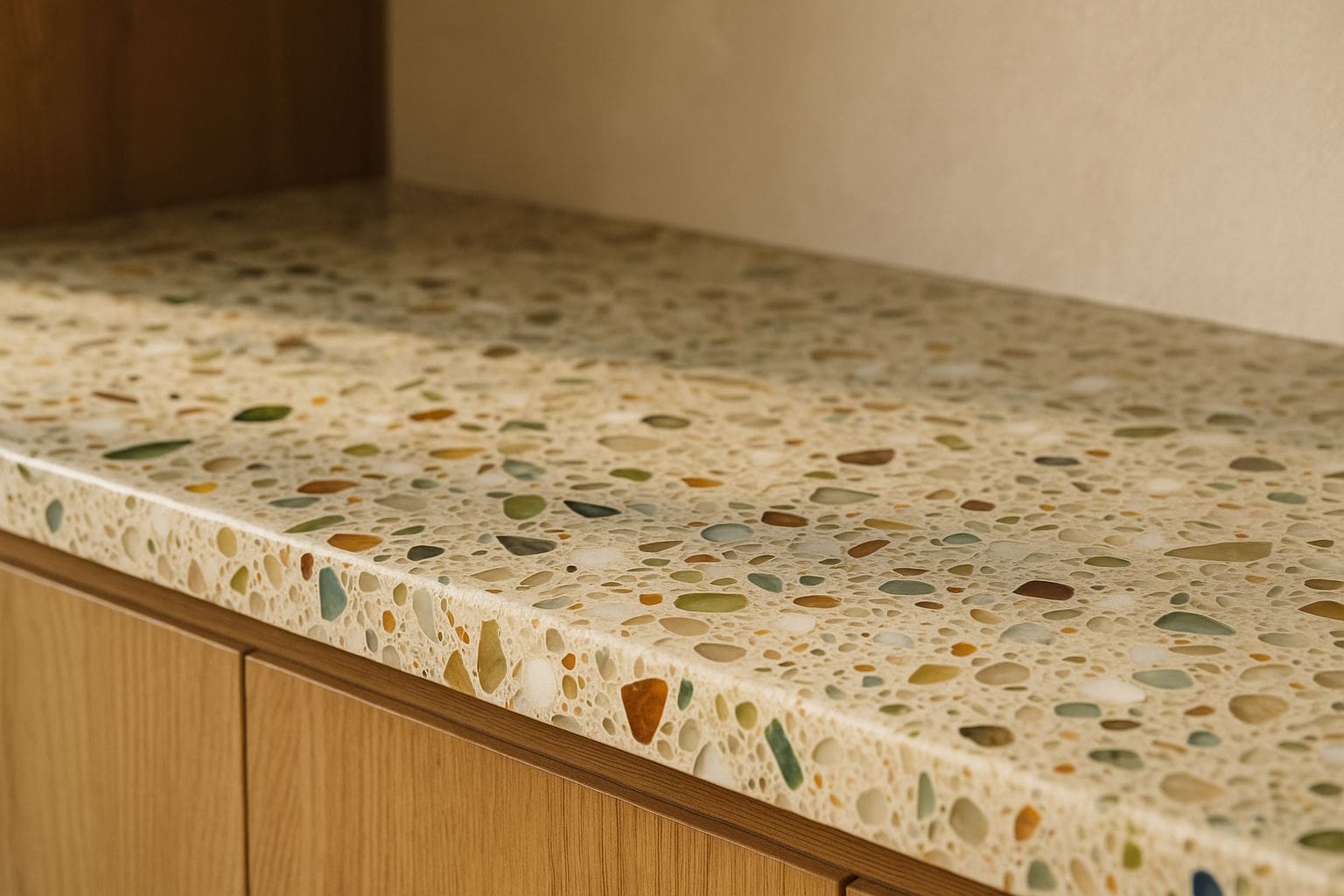
An eco-conscious interior is no longer a compromise between style and responsibility. Today, it’s a way to show good taste and thoughtful decision-making at the same time. One of the most striking examples is bioglass countertops. This material is made from recycled glass, ceramics, and even broken tile, yet in terms of durability and visual appeal, it can easily compete with stone.
So is bioglass really worth considering as an alternative to granite or quartz? Let’s take a closer look at how bioglass differs from other materials, where it performs best, and what to expect when it comes to installation and maintenance.
What Bioglass Is and How It Differs from Glass and Quartz
The word “bioglass” may sound like something fragile and unsuitable for a kitchen, but in reality, it’s quite the opposite. Bioglass countertops are strong, heavy, and feel very similar to natural stone. They are made by fusing recycled glass, tile, and ceramic into solid slabs. Inside, you’ll find fragments of bottles, ceramic cups, or old tiles that subtly show through the surface. Every countertop is truly one of a kind.
Unlike standard glass, this material is impact-resistant and doesn’t feel cold or sterile. The surface has a slightly textured finish, feels warmer to the touch, and has a distinct, tactile character.
The difference compared to quartz lies elsewhere. Quartz offers a uniform, glossy surface made from stone aggregates and resins. Bioglass, on the other hand, is all about individuality. There’s no perfectly repeated pattern. Everything feels organic, a bit unpredictable, and that’s exactly where its charm comes from. It doesn’t shine aggressively, but it draws the eye.
Most importantly, it tells a story. This isn’t just a countertop. It’s recycled material transformed into something beautiful and genuinely useful. What used to be broken bottles and discarded tile now becomes a striking accent in a kitchen or bathroom.
Why Bioglass Is More Than Just Beautiful — It’s a Smart Choice
Bioglass countertops look impressive, but what really matters is that they’re honest. No imitation. No harmful resins. Just recycled glass, ceramics, and craftsmanship. Materials that once ended up in landfills get a second life and turn into a meaningful design feature.
Sustainability here isn’t just a talking point. It’s reflected in lower production emissions, reused raw materials, and a safer environment at home. If you have kids or sensitive skin, minimizing unnecessary chemicals is a real advantage.
Their appearance deserves special mention. Bioglass is easy to recognize. Fragments of bottles, dishware, and tile seem to float within the material. Every piece is visible, and the surface invites you to look closer, almost like a piece of art. These countertops look especially good:
- in kitchens with wood elements and light-colored cabinetry,
- in bathrooms where you want a statement without overpowering the space,
- in interiors that value texture, simplicity, and natural materials.
Two Brands Worth Noticing
- Vetrazzo — bold, vibrant, almost like stained glass.
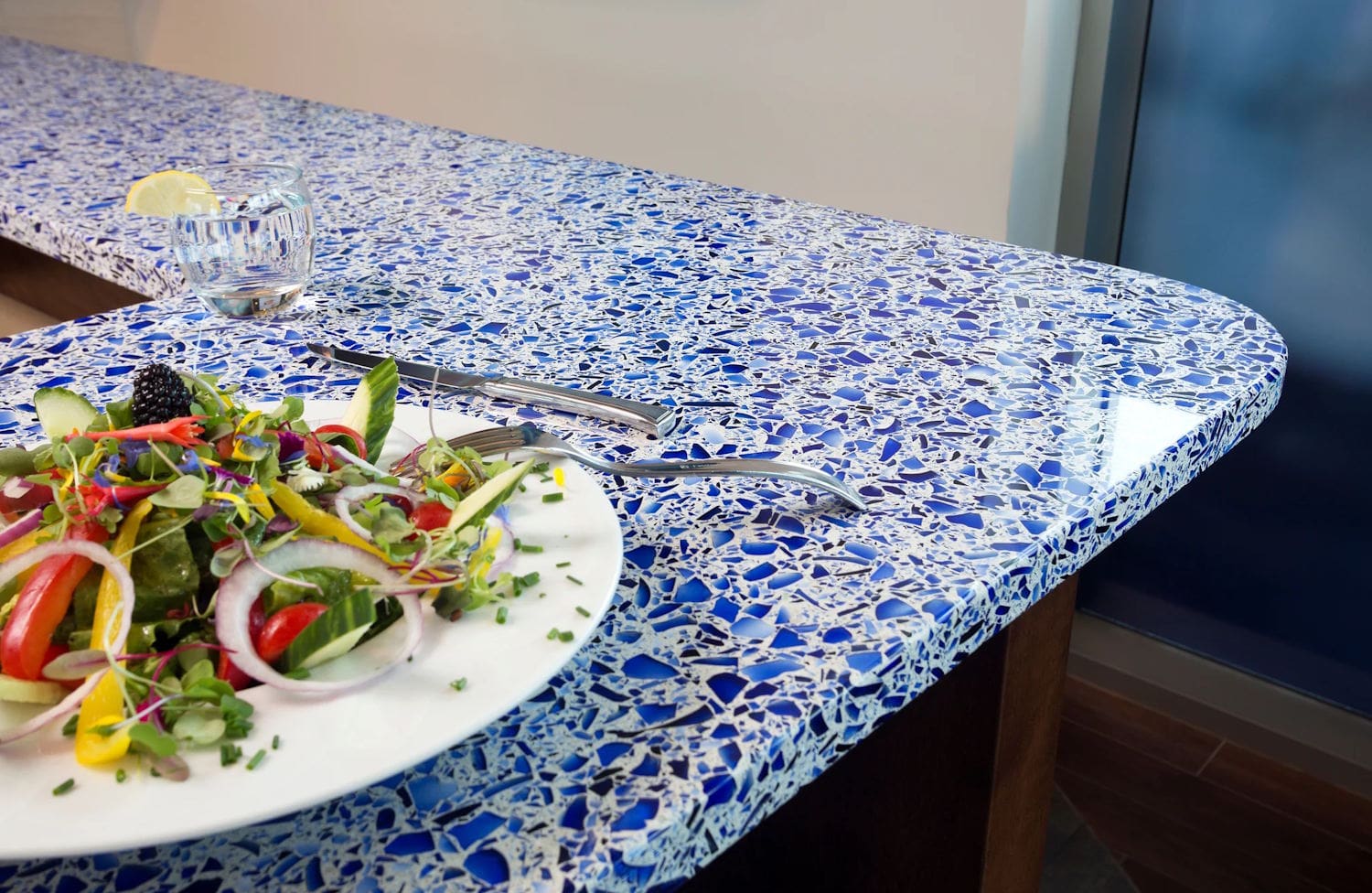
Source: blog.vetrazzo.com
- IceStone — softer, more natural, with muted tones.
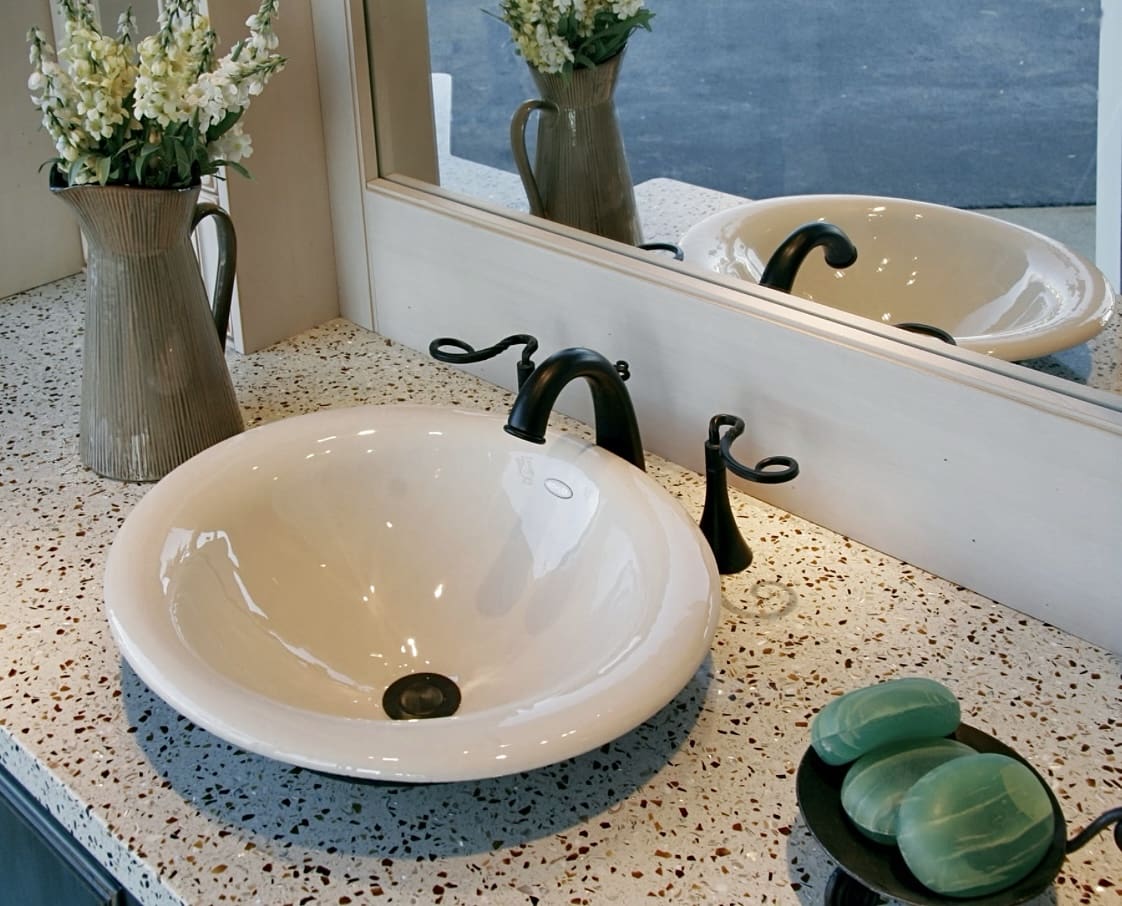
Source: icestoneusa.com
Installation and Maintenance: Simple, If You Know the Details
Bioglass countertops are durable, but they can be sensitive during transportation. This is a heavy material, and without proper handling during installation, cracks can occur. That’s why professional installation is strongly recommended, especially when cutouts are needed for sinks or cooktops.
Daily use, however, is fairly straightforward:
- Bioglass can handle temperatures up to 400°F, but it’s still best to use a trivet under hot pans, just as you would with quartz.
- Scratches are possible if you cut directly on the surface. Using a cutting board will protect both the countertop and your knives.
- The material is non-porous, so it doesn’t absorb moisture and doesn’t require regular sealing.
- Cleaning is simple. Warm water and a mild cleaner are enough. Avoid harsh chemicals and acids like vinegar or concentrated citrus cleaners.
If you’re looking for an interior with meaning, not just something that looks like everyone else’s, bioglass countertops are definitely worth considering. They’re durable, safe, easy to integrate into different styles, and they carry real value behind the look. Recycled materials. Less waste. Less chemistry. Beautiful, practical, and made with a clear conscience. What more could you want from a modern countertop?