2026-02-11
 16 minutes



U.S. Countertop Companies Are Losing Customers by Ignoring Social Media Messages
A market research insight from the National Ranking Countertops Contractors
By Max Kuchman, Founder of the National Ranking Countertops Contractors. Digital marketer with 24 years of experience in marketing and sales.
What We’ve Discovered
For the past three years, we’ve been running Countertops Contractors — a national ranking of companies that manufacture and install stone countertops across the U.S. Throughout this time, we’ve interacted daily with contractors in the industry. As of today, 2,044 companies are included in our rankings.
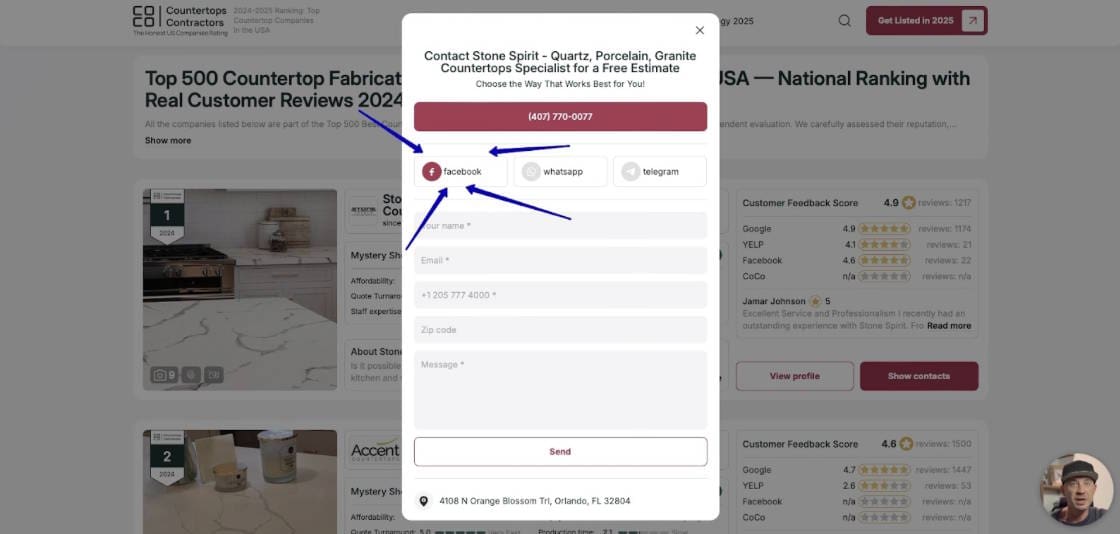
Our work goes beyond evaluating service quality, pricing, and reviews. We also regularly forward real customer inquiries to contractors. When someone submits a request through our website, it’s automatically sent to the contractor’s email. In addition, our colleague Ann manually duplicates each request by messaging the contractor via Facebook Messenger — the exact company the user selected. (We still manage to do this manually, since on average we generate about 300 leads per month for our ranked companies.)
Most contractors list their social media links on their websites, and we also include them in their profiles on our site.
And it’s this daily routine that revealed what we believe to be one of the industry’s most critical blind spots — a problem that costs many contractors real clients.
My Observations
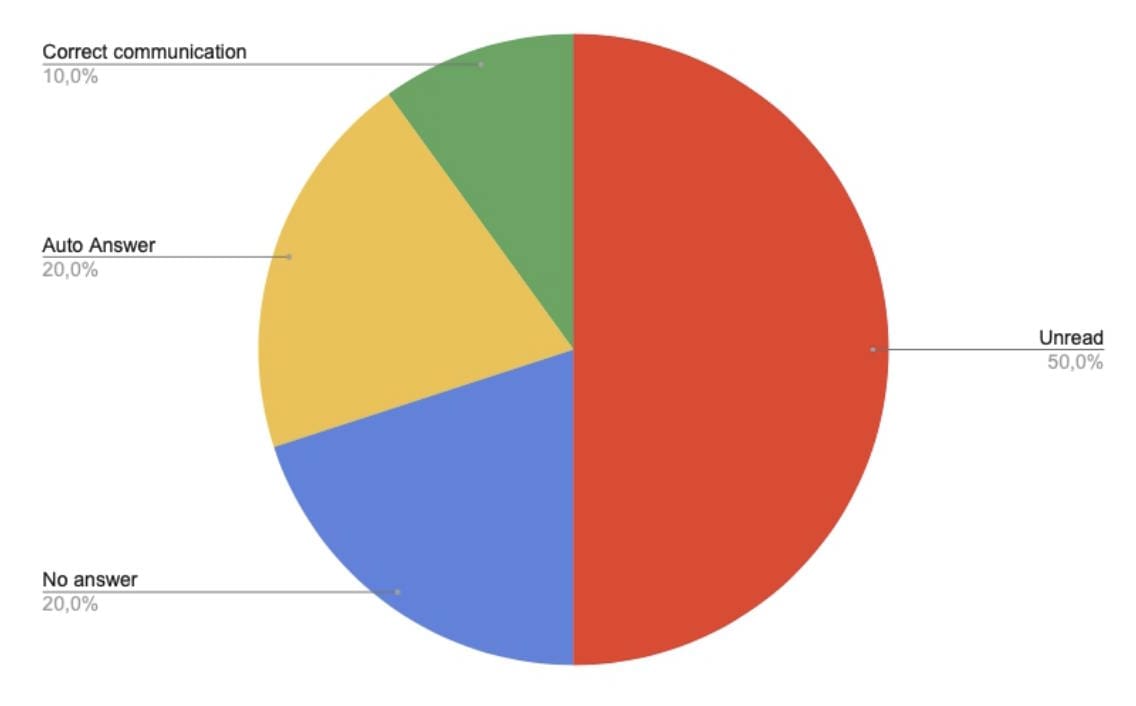
Based on our experience, over 50% of the Facebook Messenger messages we send go unread — they aren’t even opened. Another 25% are read but receive no reply. About 20% trigger auto-responses with links to the contractor’s website or phone number. Only around 10% get meaningful replies where there’s an attempt to start a conversation.
In other words, I believe this means that about 80–90% of companies either completely overlook messaging platforms or don’t use them effectively.
Why This Is a Serious Problem
Some might say, “So what? If the customer is serious, they’ll call.” But in my opinion, this reflects a fundamental misunderstanding of how customer journeys work today. The path a user takes — their Customer Journey Map (CJM)— doesn’t have to align with what’s convenient for the business. It follows what’s convenient for the customer.
Think about it: a potential client lands on the website of a countertop company they like. They see all available contact options — phone number, email, and of course, links to the company’s social media pages. Out of all the options, they consciously choose to visit the company’s social page, look around, and then message the company directly through that platform.
This choice is based on personal comfort, habit, and trust in the communication channel.
So what happens when they send a message — and either receive no response or get a generic reply like: “Thanks for your message, here’s our website and phone number”?
The message they actually receive is: “We don’t care what’s convenient for you. Talk to us on our terms.”
The Customer Journey: Three Main Profiles
As a marketer with 24 years of experience, I’ve seen how different users follow very different paths. In the U.S. home services market, I identify three main customer types:
1. The Traditionalists
(50–60% of the audience)
They prefer phone calls. They find a company, make a call, and speak directly with a manager. This remains the dominant channel in the U.S., and most companies handle it well.
2. The Structured Communicators
(25–30%)
They prefer email or online forms. These customers want to clearly explain their needs in writing and expect a detailed, well-organized reply. Again, most companies are set up to handle this effectively.
3. The Digital Communicators
(20–25%)
They’re used to chatting via messaging apps and social media. They expect fast, informal — yet professional — dialogue. They’re happy to discuss the entire project in writing.
From what I see, 80–90% of the companies in our rankings ignore this third group entirely.
The World Has Moved On — Business Hasn’t
Globally, messaging apps like iMessage, WhatsApp, Telegram, Facebook Messenger, and Instagram Direct are now the default communication tools. According to Sprout Social, 73% of social media users say they’ll switch to a competitor if a brand doesn’t respond in social media.
And this isn’t just a Gen Z issue. The core buyers of kitchen countertops in the U.S. are aged 30–49, and they actively use social platforms. Pew Research Center reports that 68% of U.S. adults use Facebook, and 47% use Instagram.
Yet I continue to see American small businesses stubbornly refusing to meet customers where they are. In my opinion, that’s a costly mistake.
The Anatomy of a Lost Deal
Let’s trace a typical journey of a Digital Communicator customer:
- Search: They discover your company via Google, referrals, or our ranking.
- Research: They visit your site, check your portfolio, and read reviews.
- Decision: They see your contact options but intentionally choose to message you on Facebook or Instagram.
- First Contact: They send a message.
- Expectation: They expect a quick reply — ideally within 5–10 minutes.
- Disappointment: They receive no answer, or a generic auto-reply.
-
Next Step: They move on to the next contractor.
- Outcome: They hire the one who replied quickly and professionally.
Your company just lost a ready-to-buy customer.
A Competitive Advantage Hiding in Plain Sight
While 80–90% of your competitors are ignoring 20–25% of their audience, you have an incredible opportunity to convert those prospects into your clients.
Some companies are starting to catch on. They not only add social media links to their websites, but also list direct links to corporate messengers like WhatsApp, Telegram, Viber, or Facebook Messenger — and most importantly, they respond quickly and correctly. These are the companies making money where others aren’t.
From our own site analytics, we can confirm that many users prefer messaging contractors via social media. It’s often more popular than making a phone call.
My Recommendations: Build a System
1. Acknowledge the Reality
Social media and messaging platforms are not a gimmick — they’re full-fledged sales channels that deserve the same focus as phones and email.
2. Understand the Speed Factor
In messaging apps, customers expect an instant reply — within 5–10 minutes. This isn’t like phone calls or email. You can’t “get back later.”
3. Stay in the Channel
Don’t ask for a phone number right away or redirect them to your website. Engage in the messenger: discuss the project, request kitchen photos, show examples, schedule a measurement. Offer a call only when truly needed.
4. Organize the Workflow
- Assign someone responsible for handling messenger communications
- Enable mobile notifications
- Create response templates
- Train your team in the proper tone and etiquette for social media interactions
5. Turn It Into a Competitive Edge
While your competitors are missing the point, you can win their clients. A fast, professional reply in a messenger creates a WOW effect and instantly sets you apart.
Final Thoughts
As a marketer with 24 years of experience, I believe there’s a fundamental misalignment in how many companies understand the modern customer journey. Businesses are stuck in old habits, while the world has moved on.
In my view, around 90% of countertop companies still ignore or mishandle messengers — and that results in losing 20–25% of potential customers who prefer digital communication.
While your competitors miss the mark, you have the chance to capture that audience.
It doesn’t require massive investment — just awareness and willingness to engage with clients on their terms.
I strongly recommend integrating messaging platforms into your sales process.
Train your managers to handle social media conversations. This, in my opinion, isn’t just a growth lever for individual businesses — it’s a growth lever for the entire industry in the U.S.
Because the customer who doesn’t hear back… simply moves on.
This article is based on three years of experience at National Ranking Countertops Contractors and daily interactions with 2,044 companies in the industry.